Buying Guides
Plastic Pallet Buying Guide: From Requirements to Approved Sample
A practical plastic pallet buying guide covering load, size, structure, equipment, environment, supplier evidence, sample testing, and total cost.
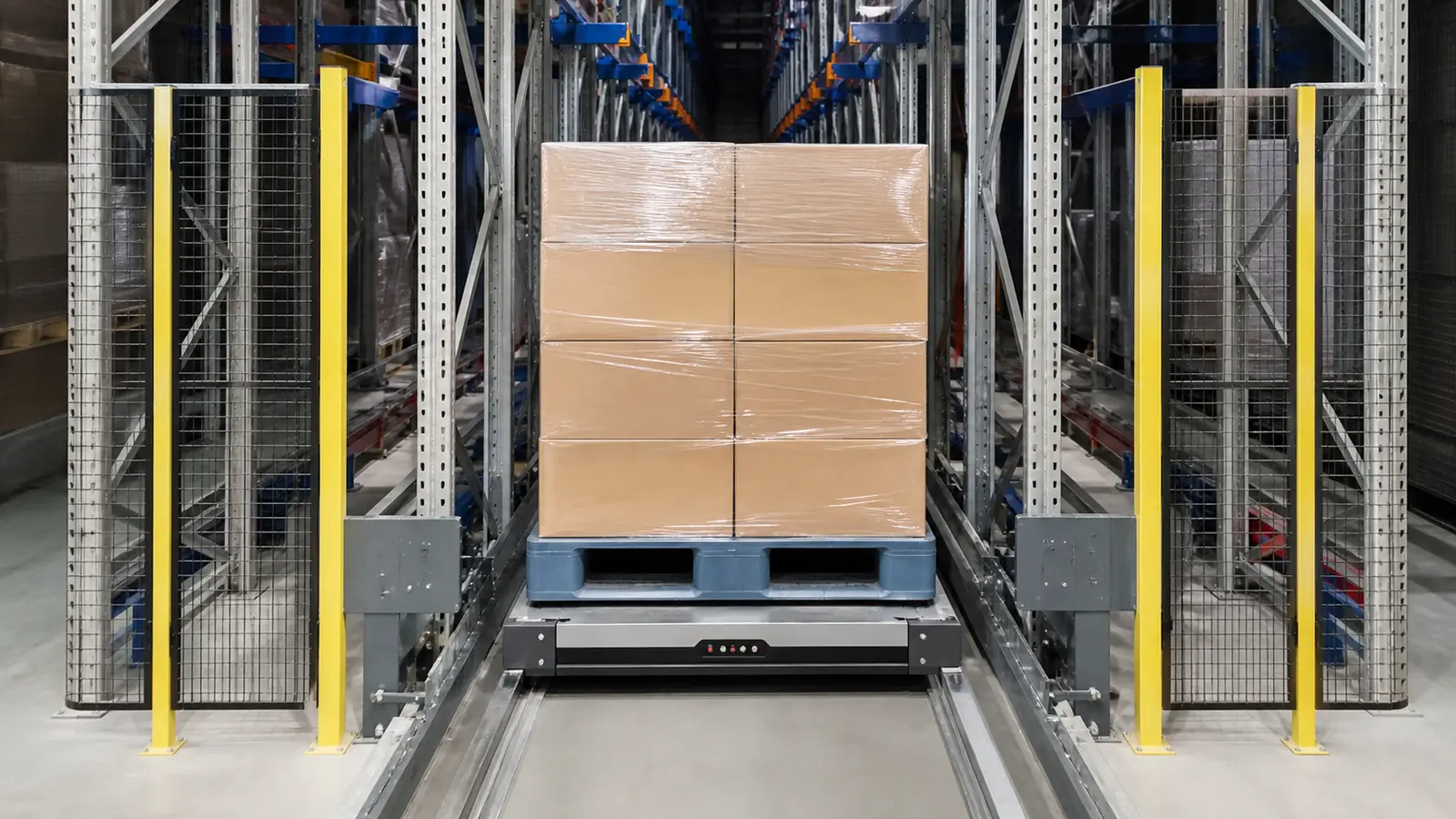
The right plastic pallet is not the one with the highest catalog load or the lowest unit price. It is the one that can move your actual goods through the actual route, work with every contact point, and remain controllable from the first approved sample to later production batches.
That makes plastic pallet purchasing a specification problem before it becomes a price problem. A useful buying process connects the unit load, storage method, handling equipment, environment, documentation, sample test, and acceptance rule. If one of those links is missing, two apparently similar quotations may describe pallets that are not functionally comparable.
This guide gives procurement, warehouse, quality, and engineering teams one practical route from an incomplete request to a purchase-ready decision. It supports shortlisting; it does not approve a model for a specific site. Final approval still belongs to the buyer and must use the supplier’s current data plus tests under the intended conditions.
The short answer: buy the route, not the pallet name
A purchase-ready pallet specification should answer ten questions:
- What goods and weight range will be carried?
- How does the load contact the deck?
- Where and for how long will the loaded pallet be supported?
- Which forklift, pallet jack, conveyor, rack, wrapper, or automated system will touch it?
- Which pallet footprint is accepted by the goods, equipment, customer, and destination?
- What temperature, moisture, cleaning, chemical, hygiene, or outdoor exposure is expected?
- Is the pallet one-way, internally reused, returned, or pooled?
- Which supplier claims require drawings, test records, declarations, or traceability?
- What must the loaded sample demonstrate before volume release?
- What will be checked when production pallets arrive?
If these questions are answered, suppliers can quote against the same job. If they are not, price comparison is mostly guesswork.
1. Build a one-page route brief
Start with the journey of one loaded pallet, not a preferred model. Record the worst credible condition as well as the normal condition.
| Field | Minimum information to record |
|---|---|
| Goods | Cartons, bags, drums, pails, crates, loose items, or mixed loads |
| Weight | Typical, minimum, and maximum loaded weight; any off-center or point loads |
| Footprint | Product footprint, overhang or underhang limits, and load height |
| Handling | Forklift type, fork dimensions, pallet jack wheel path, handling direction, attachments |
| Support | Floor, block stack, full shelf, beam rack, drive-in rack, conveyor, AS/RS, or mixed route |
| Time | Handling frequency and maximum loaded dwell time |
| Environment | Temperature range, wet/dry cycle, washdown, outdoor exposure, chemicals, hygiene zone |
| Destination | Customer footprint rules, export route, return plan, and unloading equipment |
| Control | Required drawings, documents, labels, sample tests, incoming checks, and change approval |
A route with floor storage only is not equivalent to a route that includes beam racking. A route handled only by counterbalanced forklifts is not equivalent to one that also uses low-clearance pallet jacks. Write down every transition; failures often occur between the obvious stages.
For a ready-to-send field list, use the plastic pallet RFQ specification checklist .
2. Keep static, dynamic, and racking loads separate
Catalog load figures are only useful when their support and test conditions are understood.
- Static load generally describes a pallet at rest on a broadly supporting floor. It does not establish rack suitability.
- Dynamic load generally relates to lifting and movement, but the result depends on load distribution, fork engagement, speed, surface, and handling practice.
- Racking load depends on the unsupported span, support direction, load footprint, dwell time, temperature, reinforcement, and acceptable deflection.
Never convert one rating into another by assumption. Ask the supplier to state the support condition, load pattern, test method, duration, temperature, and pallet configuration behind each figure. The current ISO 8611-1:2025 describes test methods for new flat pallets and notes that specific capacity tests do not replace field testing of a specific design. A standard reference is evidence about a method, not automatic approval of your route.
Where racking is involved, provide the clear beam span and support direction, then agree on an acceptance limit before testing. Use the deeper rack deflection acceptance framework when this is a critical route.
3. Select the footprint around the whole system
Common dimensions do not make a footprint universally compatible. The right choice must work with:
- the carton, bag, drum, crate, or container footprint;
- rack beams, conveyor rails, stops, sensors, and pallet dispensers;
- fork opening and pallet-jack wheel paths;
- truck or container loading plan;
- customer and pooled-network rules;
- empty pallet storage and return transport.
Measure the goods and the equipment. Do not select 1200 × 1000 mm, 1200 × 800 mm, 48 × 40 in, or another size only because it is familiar. Small overhang can damage packaging; excessive underhang can waste space and change load stability. The pallet size and container-loading guide provides a more detailed footprint check.
4. Match the structure to the route
| Starting structure | Often useful when | Main trade-off to confirm |
|---|---|---|
| Nestable, feet-based pallet | One-way export, light reuse, or high empty-return volume | Less continuous bottom support; pallet-jack, conveyor, and stacking behavior need checking |
| Three-runner pallet | Forklift handling, floor use, some conveyors, and some rack routes | Runner direction, rack support, underside contact, and nesting space |
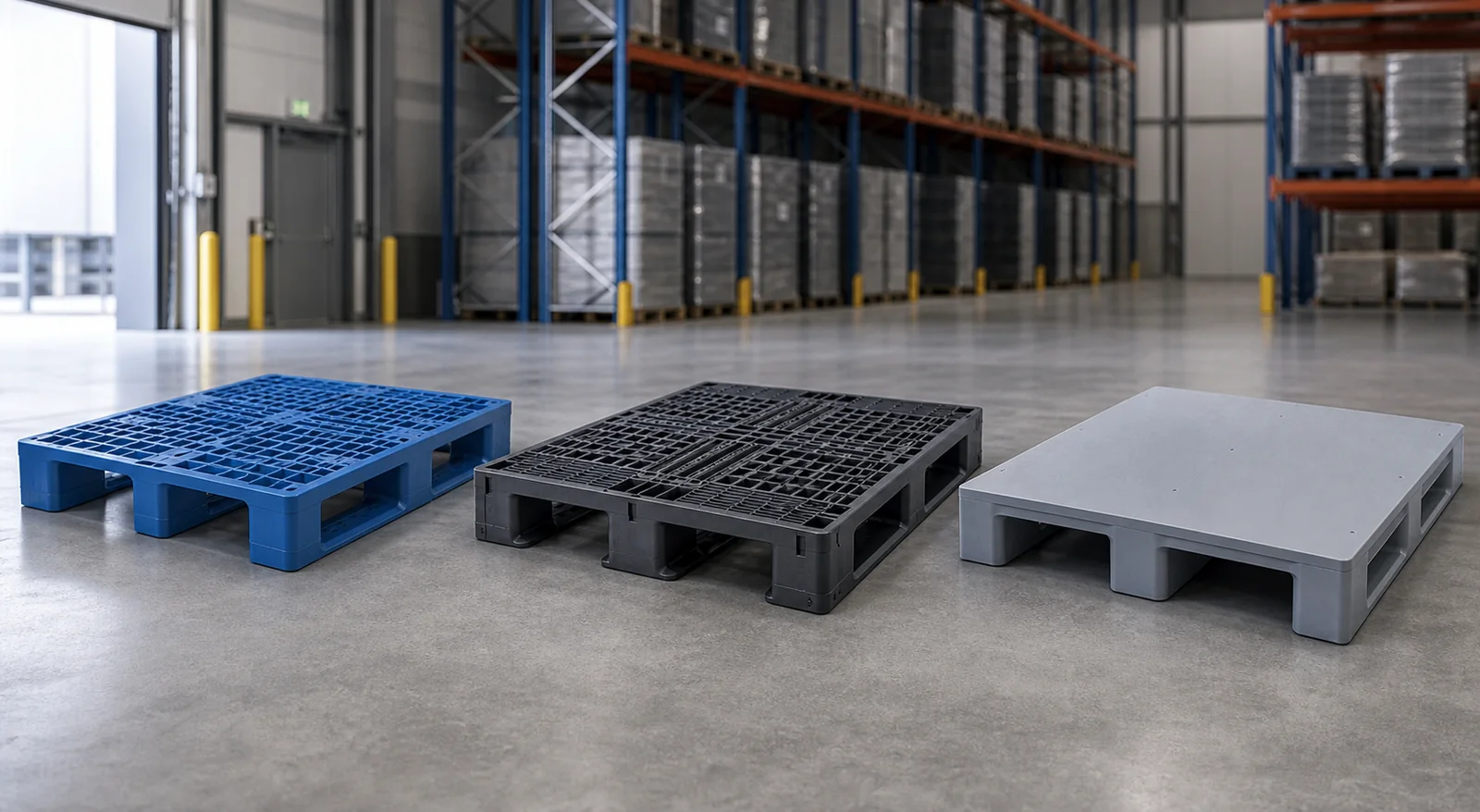
| Six-runner or perimeter-base pallet | Block stacking, multidirectional support, and stable loaded stacking | Higher weight, less nestability, wheel-path and conveyor contact constraints |
| Reinforced rackable pallet | Beam storage or longer loaded dwell | Actual span, reinforcement position, temperature, creep, corrosion protection, and deflection limit |
| Closed-deck hygienic pallet | Washdown, spill control, small packages, or easier top-surface inspection | Drainage, drying, weight, underside cavities, cleaning validation, and price |
These are starting categories, not performance guarantees. A runner pallet is not automatically rackable, and a closed deck is not automatically hygienic for every process. Compare nestable and rackable pallet logic before fixing the base design.
5. Specify the deck and bottom contact
The load does not experience an average pallet rating; it experiences individual contact points.
Map where cartons, bag corners, drum rings, pail bases, crate feet, or intermediate sheets touch the deck. Check opening size, local support, edge lips, anti-slip inserts, surface texture, and the possibility of concentrated loads. Soft bags may sag into an open deck even when the total weight is modest. Drums can place high stress through narrow rings.
Then turn the pallet over. The underside must engage forks without collision, let pallet-jack wheels pass without climbing runners, and transfer smoothly across conveyors or automated equipment. Confirm entry height, fork opening, chamfers, runner spacing, bottom flatness, and the exact contact zones. Use the pallet-jack compatibility guide and conveyor bottom-contact checks where relevant.
6. Match material and environment without relying on labels
“HDPE,” “PP,” “recycled,” “virgin,” “food grade,” and “freezer grade” are not complete performance specifications.
Ask for the declared material route and the conditions for which the model data applies. Temperature can change stiffness and impact behavior. Long dwell under load can expose creep. UV, repeated washing, chemicals, pigments, fillers, recycled content, and reinforcement can also affect performance or documentation needs.
For cold routes, state both operating temperature and transition conditions; use the freezer-grade selection framework . If resin choice matters, compare the questions in the HDPE versus PP RFQ guide .
For food, pharmaceutical, chemical, ESD, or other controlled routes, define the actual exposure and jurisdiction. A generic marketing phrase is not a substitute for the document required by the responsible customer or quality team. The food-contact document checklist shows how to separate material evidence from route approval.
For export planning, ISPM 15 addresses wood packaging material. Plastic pallet users should still confirm destination, commodity, carrier, cleanliness, and customer requirements rather than treating the absence of wood as complete shipment approval. See the ISPM 15 export framework for the boundary.
7. Compare suppliers on evidence, not adjective count
Request the same evidence package from every shortlisted supplier:
- current drawing with tolerances, weight, deck, base, entry, and reinforcement details;
- model-specific load statements with conditions and test references;
- declared resin and recycled-content route where relevant;
- available compliance or contact documents for the intended market;
- manufacturing identification, lot traceability, and change-notification method;
- packing quantity, stack height, transport protection, lead time, and spare-part policy;
- written list of assumptions, exclusions, and conditions that still require buyer validation.
Red flags include a single “load capacity” with no support condition, rack claims with no span, certificates that do not identify the quoted material or model, refusal to provide a drawing, and a sample that differs in weight or structure from the quotation.
8. Approve a loaded sample, not an empty appearance
A sample should run through a written trial using the intended goods and equipment. At minimum, record:
- pallet identity, weight, dimensions, configuration, and visible condition;
- actual load weight, footprint, distribution, packaging, and restraint;
- fork entry and exit from every required direction;
- pallet-jack wheel travel, if used;
- floor, stacking, rack, conveyor, wrapper, cold, wet, or wash steps that apply;
- deflection, instability, product damage, interference, trapped water, or handling difficulty;
- condition immediately after the trial and after the agreed dwell or recovery period;
- pass/fail limits, deviations, photos, responsible approvers, and approved use boundary.
The point is not to make one pallet survive an improvised overload. The point is to confirm a repeatable operating window. The pre-purchase load-testing guide gives a fuller test structure.
OSHA’s U.S.-specific forklift load-handling guidance emphasizes stable, centered loads and rated equipment capacity. Other jurisdictions and sites have their own rules; pallet approval must fit the applicable workplace controls and trained operating method.
9. Compare total route cost, not unit price alone
Use the same time horizon and route assumptions for every option.
Total route cost = purchase + freight + storage space + handling losses + cleaning + damage + downtime + return logistics + replacement − recoverable value
A lighter nestable pallet may reduce freight and empty storage but create limitations on racks or conveyors. A reinforced pallet may cost more initially but reduce deflection risk in a controlled rack route. A reusable pallet is only economical if return rate, cycle count, loss, repair, and retirement are measured.
A simple weighted scorecard keeps the decision visible:
| Criterion | Suggested weight | Evidence |
|---|---|---|
| Route and equipment fit | 25% | Loaded sample and equipment trial |
| Load and support performance | 25% | Conditional model data plus agreed test |
| Environment and cleaning fit | 15% | Material evidence and route trial |
| Quality control and traceability | 15% | Drawing, lot ID, inspection and change process |
| Total route cost | 15% | Common cost model and stated assumptions |
| Service and supply continuity | 5% | Lead time, capacity, packaging, support |
Adjust the weights before opening final prices. This prevents the cheapest quotation from silently redefining the requirements.
10. Lock the approved configuration into the purchase order
The purchase order should identify more than a product name. Include the approved drawing or model revision, nominal weight tolerance, material route, color, reinforcement, plugs or inserts, marking, packaging, required documents, inspection plan, and change-notification rule.
On arrival, compare production pallets with the approved baseline. Sample dimensions, weight, structure, labels, visible defects, entry points, and any critical functional feature. Quarantine unexplained differences instead of allowing the first batch to redefine the sample. Connect the approval to an incoming inspection plan and change-control record .
Copy-ready supplier brief
Use this short format to start a comparable quotation:
Goods and unit load: product type, packaging, dimensions, typical and maximum weight, contact pattern, load height, overhang limit.
Route: handling frequency, floor/stack/rack/conveyor stages, dwell time, transport and destination.
Equipment: forklift and pallet-jack details, fork size, entry direction, rack span, conveyor contact, automation or wrapper interfaces.
Environment: temperature range, wet/dry cycle, wash method, chemical or outdoor exposure, controlled-area requirements.
Commercial plan: quantity, delivery location, one-way/reuse/return model, target service life, packing and lead time.
Evidence and approval: drawing, conditional load data, material documents, traceability, loaded samples, agreed test, incoming inspection, and prior approval for changes.
A good supplier should be able to use this brief to narrow the structure, state what is known, and identify what still needs testing. If a quotation skips those boundaries, it is not yet ready for a safe price comparison.
Send your route and load requirements when you are ready to compare models. Include the one-page brief above; it is the fastest way to move from a generic inquiry to a useful recommendation.