Industry Insights
HDPE vs PP Plastic Pallets: What to Specify in an RFQ
Choose HDPE, PP, virgin, or recycled plastic pallets by matching material route to temperature, impact, cleaning, chemical exposure, and change control.
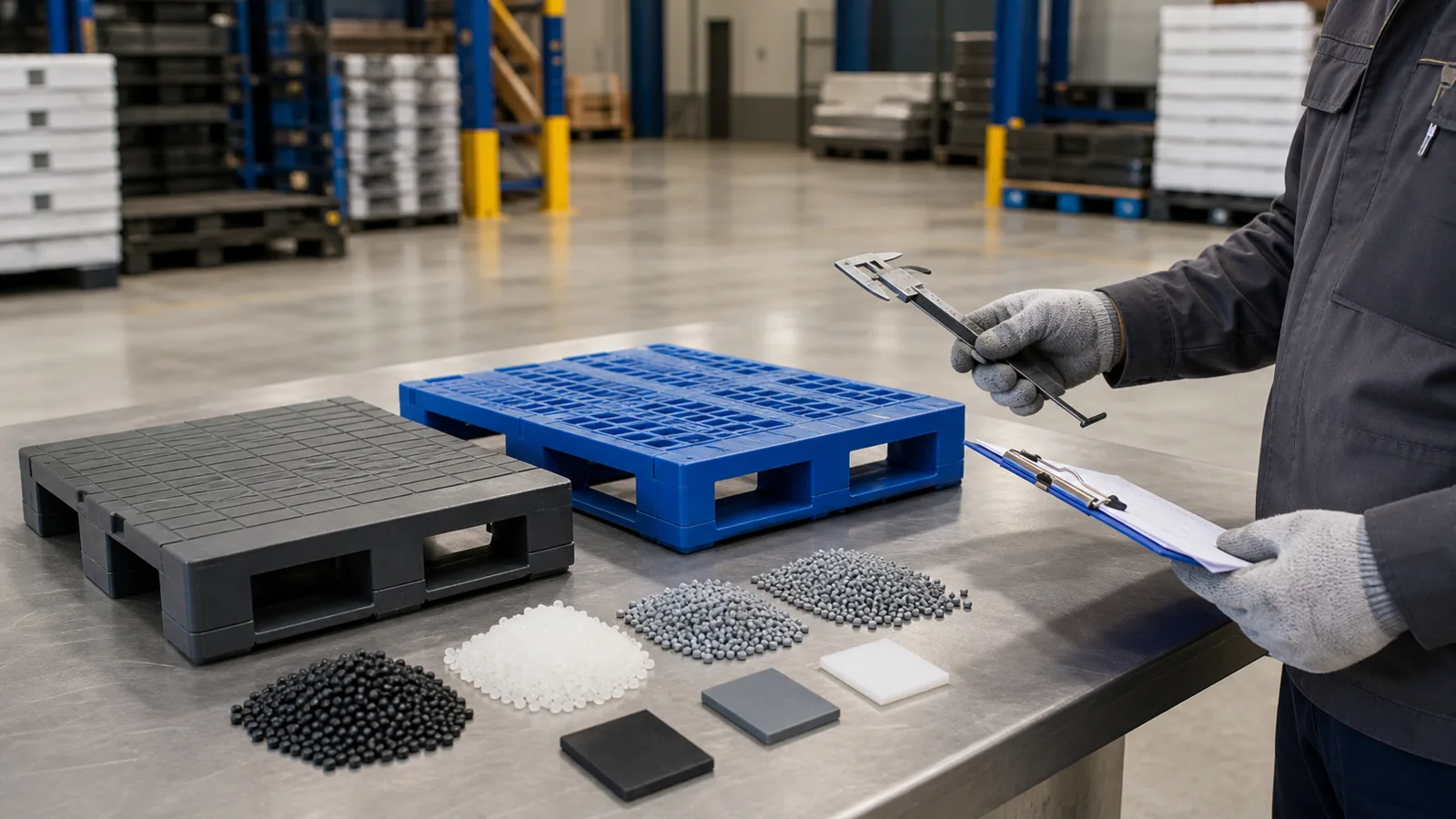
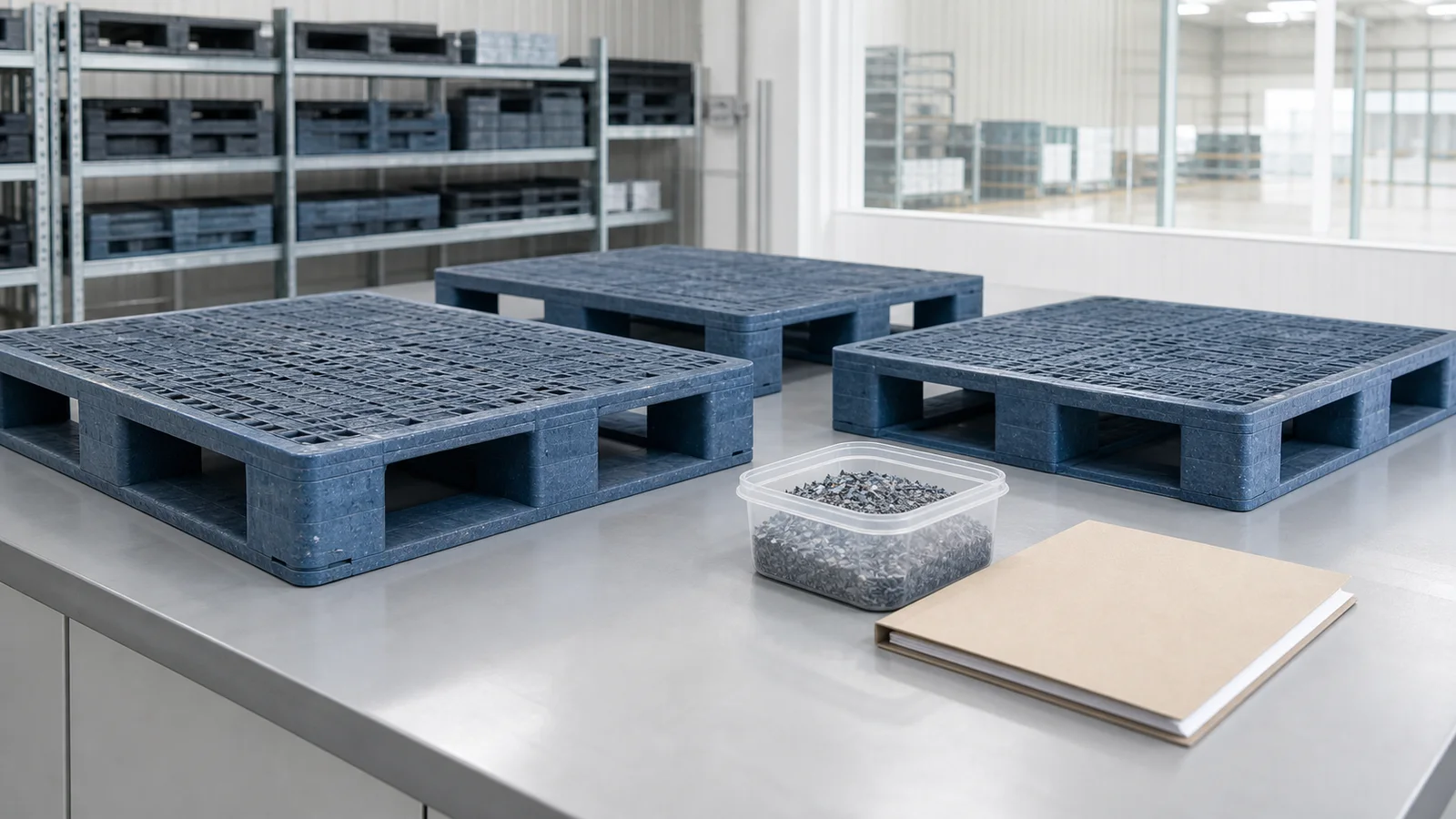
For most warehouse buyers, the right question is not “Is HDPE better than PP?” It is: which material route fits the temperature, impact risk, cleaning method, load type, audit requirement, and expected reuse cycle? HDPE is often chosen where impact toughness, outdoor handling, and low-temperature reliability matter. PP is often reviewed where stiffness, heat tolerance, dimensional rigidity, or certain cleaning conditions matter. Virgin, recycled, and blended material can all be reasonable in the right lane, but only when the supplier states the grade, recycled-content control, additives, colorant, and change-control rule for the exact pallet model.
Two quotes that both say “HDPE pallet” may not describe the same product. One may use controlled virgin resin; another may use mixed recycled material; a third may use impact modifiers, UV package, or colorant changes that affect the result. Treat material as part of the specification, not as a catalog label.
Material name is only the first line of the spec
HDPE and PP are both common pallet materials. Public polymer references such as the British Plastics Federation pages on HDPE and PP explain their broad material families, but a finished pallet depends on more than the resin name.
Ask what is actually being molded:
- resin family and grade or grade range;
- virgin, recycled, or controlled blend;
- expected recycled-content variation between batches;
- impact modifier, UV stabilizer, anti-static additive, color masterbatch, or other additive package;
- injection-molded or blow-molded process;
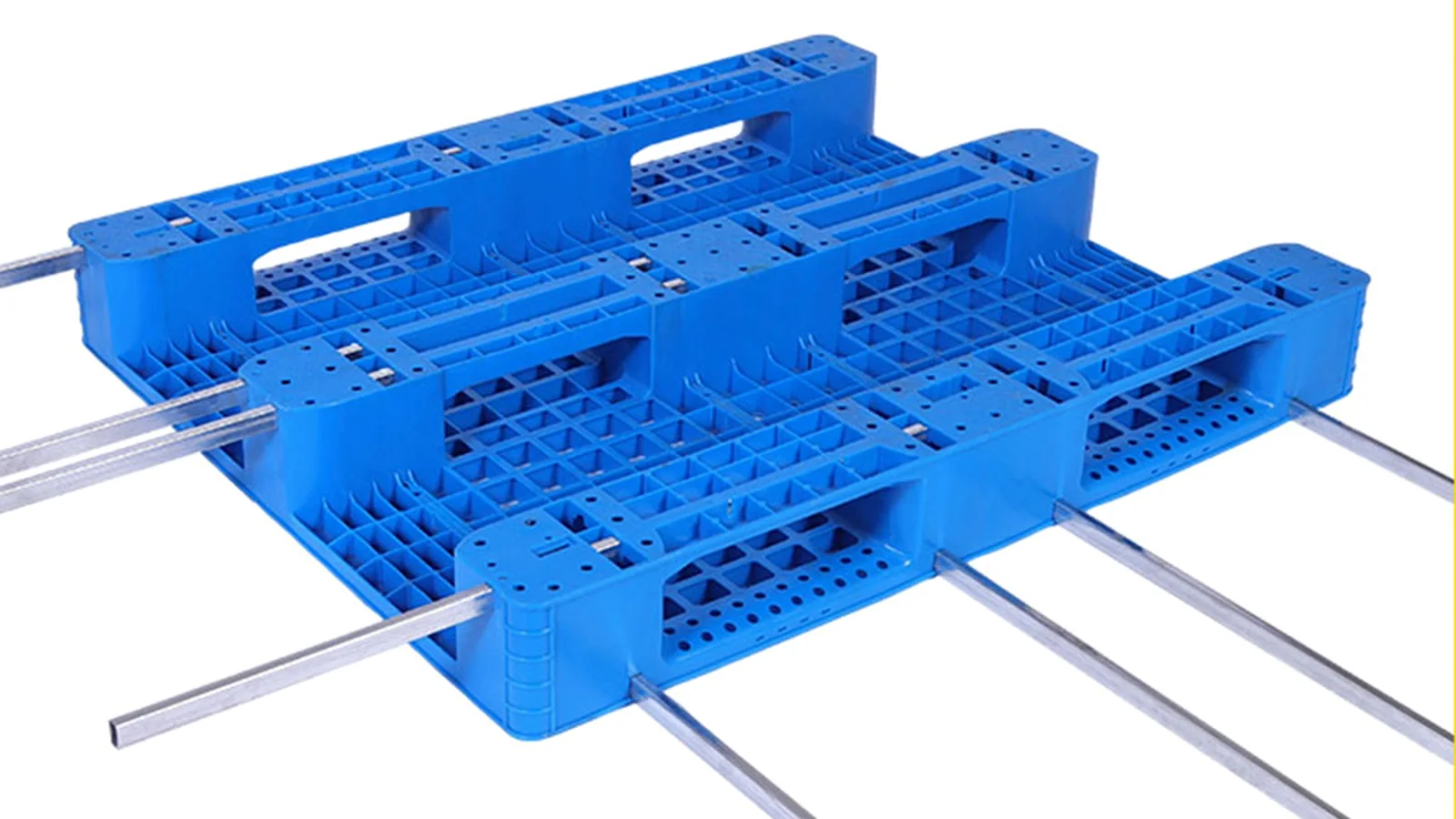
- whether steel reinforcement, plugs, labels, or inserts interact with the material choice;
- whether the supplier will notify the buyer before changing resin, additive, recycled-content source, or colorant.
This is especially important when a pallet will be used in cold rooms, food plants, chemical areas, automated warehouses, or customer-audited logistics routes. In a simple ambient warehouse with sealed cartons, the material review can be short. In a freezer, washdown, EHS, or hygiene route, it should be written down.
A practical material matrix for buyers
Use this table to decide what to ask next. It does not approve a pallet by itself; it points the RFQ toward the right evidence.
| Use condition | Common material direction | What to confirm before approval |
|---|---|---|
| Ambient warehouse, sealed cartons, normal forklift handling | HDPE, PP, or controlled recycled blend may all be candidates | Dynamic load, deck support, fork-entry durability, batch consistency, and sample handling route |
| Cold room, freezer, outdoor winter route, repeated impact | HDPE or impact-modified formulation is often reviewed first | Low-temperature impact behavior, actual temperature range, dwell time, and forklift impact points |
| Hot wash, warm cleaning, higher dimensional stiffness need | PP may be reviewed where heat and stiffness matter, subject to grade | Cleaning temperature, detergent, warpage risk, surface condition after repeated cycles |
| Food, beverage, pharmaceutical, or clean area | Often virgin or tightly controlled material route, depending on exposure | Resin/additive documentation, colorant status, cleanability, and market or customer requirements |
| Chemical residue, sanitizer, oils, or process liquid exposure | Material choice must follow the exact chemical route | Chemical list, concentration, contact time, temperature, cleanup method, and finished-pallet sample test |
| One-way export or cost-sensitive closed loop | Recycled or blended material may be acceptable in some lanes | Load limits, odor, color consistency, brittleness, variation between batches, and customer restrictions |
Many procurement teams can stop at this level for normal dry-goods storage: define the route, ask the supplier to identify the material route, and approve samples against handling. The escalation begins when the pallet must survive low temperature, repeated washing, chemical contact, high audit risk, or long reuse cycles.
Where ordinary purchasing can stop
For a standard warehouse pallet used under sealed cartons at ambient temperature, do not turn the RFQ into a laboratory program. State the material preference, confirm whether recycled content is allowed, and require consistency across shipments.
A compact specification may be enough:
Pallet material shall be declared as HDPE, PP, or approved blend for the exact pallet model and color. Supplier shall state whether virgin or recycled material is used, identify any relevant additives, and notify the buyer before material, colorant, or recycled-content source changes. Samples must pass the buyer’s normal loading, forklift handling, stacking, and inspection route before bulk approval.
That clause is more useful than “HDPE only” because it gives both sides a record. It also prevents a supplier from changing a material source after sample approval without discussion.
If the pallet is part of a broader sourcing package, add the clause to the site’s plastic pallet RFQ checklist rather than creating a separate material document that nobody maintains.
When the material question needs escalation
Some lanes deserve a deeper review before the first bulk order.
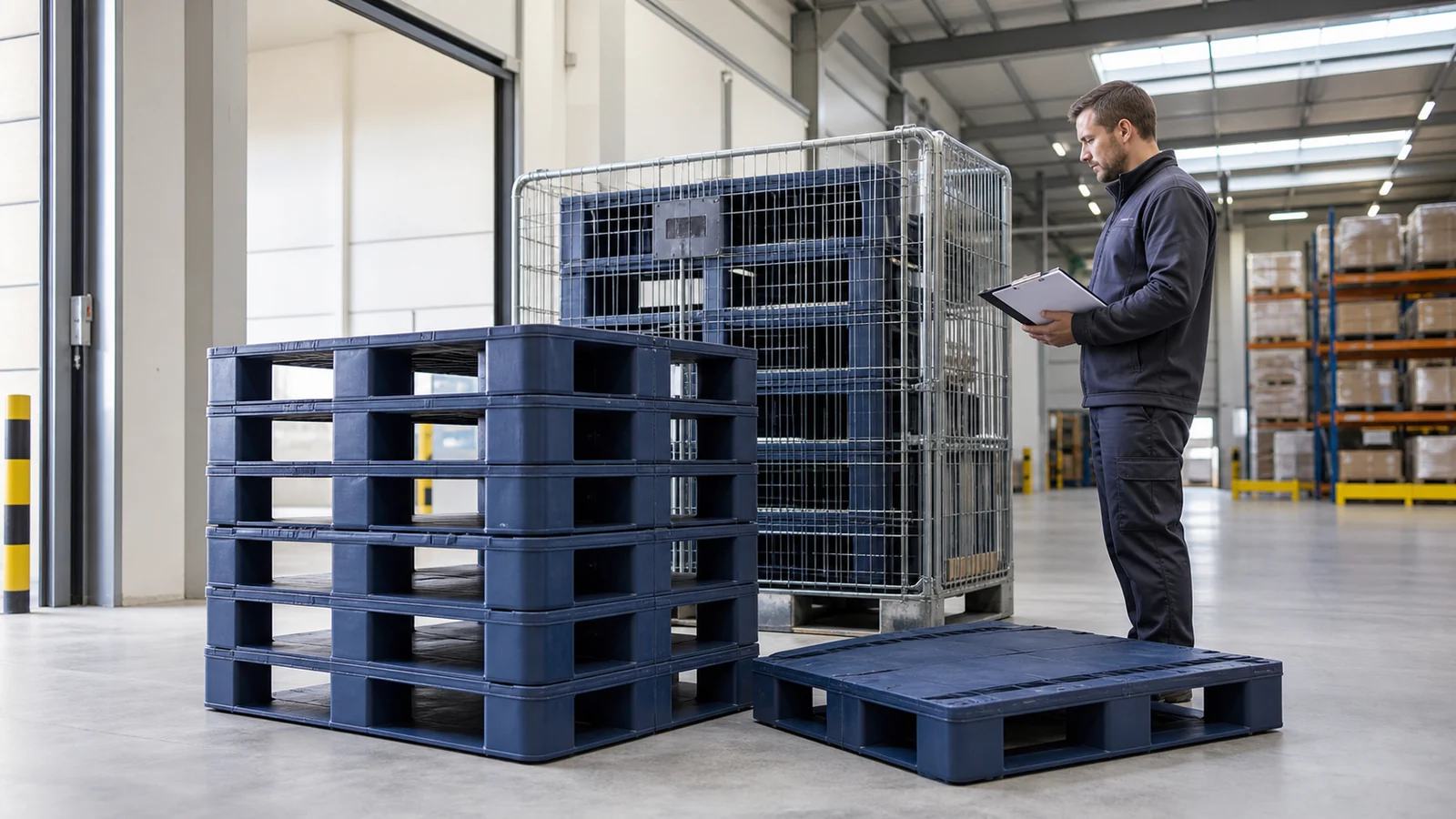
Low temperature. A pallet that works at room temperature may crack or whiten faster in freezer handling, especially at fork entries and impact corners. For cold-chain projects, combine the material requirement with a freezer-grade plastic pallet selection check . Ask for sample testing at the real temperature profile, not only an ambient catalog sheet.
Chemical or sanitizer exposure. HDPE and PP both have useful chemical resistance ranges, but the exact substance, concentration, temperature, and contact time change the answer. If the pallet sees detergent, sanitizer, oil, process liquid, or leaked product, review it with the chemical compatibility guide .
Food-contact or food-area claims. “Virgin material” and “food grade” are not the same statement. Direct food contact, primary packaging contact, sealed-carton logistics, and food-area support have different document needs. For recycled plastic in food packaging contexts, FDA maintains guidance on recycled plastics in food packaging , and destination markets may use different rules. For pallet-specific RFQ wording, use the food-contact pallet document checklist .
Automation and long reuse cycles. Material variation can show up as warpage, runner contact changes, scanner issues, brittle corners, or inconsistent nesting. If a pallet must run through conveyors, AS/RS, palletizers, or return pools, material change control matters as much as the first sample.
What to ask suppliers to show
Buyers do not need confidential resin formulas. They do need enough information to manage risk and compare quotations.
Request these items when they apply:
- material family and whether the pallet is virgin, recycled, or blended;
- color and additive status for the exact model;
- whether recycled content is post-industrial, post-consumer, internal regrind, or another controlled source, if the supplier can disclose it;
- known restrictions for freezer, heat, chemical, hygiene, ESD, food-area, outdoor, or rack use;
- sample lot identification and whether the production lot will use the same material route;
- written change-control rule for resin source, additive package, recycled-content source, and colorant;
- any available test report, declaration, or limitation note tied to the actual pallet model.
For a low-risk warehouse purchase, a short material statement plus sample approval may be enough. For audited or high-risk routes, the document should be signed or otherwise controlled so QA, procurement, and operations know what was approved.
Sample checks before bulk approval
Do not approve material only from a word in the quote. Load and handle sample pallets through the real route.
Check:
- visual consistency, odor, flash, brittle edges, and color variation;
- fork-entry impact points after normal handling;
- deck and runner flatness after loading and storage;
- behavior after cleaning, drying, cold exposure, outdoor staging, or chemical contact where relevant;
- label, barcode, RFID, and color-mark durability if used;
- whether production samples match the same material statement as the approved sample.
The common failure is not that the buyer picked “the wrong polymer” in the abstract. It is that the buyer approved a sample under one material condition and then treated all future pallets with the same shape as equivalent.
Bottom line for the RFQ
Use this simple buying rule:
Specify the material route, not just the material name. For ordinary dry-goods handling, state HDPE, PP, or approved blend, recycled-content allowance, and change-control expectations. For cold, hot wash, chemical, food-area, automation, or long-life projects, require supplier confirmation for the exact pallet model, material route, additive/color status, use limits, and sample validation under the real route.
HDPE and PP can both be good pallet materials. The better choice is the one whose grade, processing, structure, and controls match the job the pallet must do every day.