Industry Insights
Used Plastic Pallet Acceptance Framework Before Purchase
Decide when used, reused, or recycled-content plastic pallets are safe to investigate, restrict, sample, or reject before purchase.
A used plastic pallet offer can look attractive when the unit price is lower than a new pallet. The risk is that the buyer may not know where the pallet has been, what it carried, how it was cleaned, whether it was damaged, or whether the load rating still matches the current condition. That uncertainty may be acceptable for a low-risk internal floor-storage route. It may be unacceptable for racking, automation, food-area handling, customer-audited logistics, chemical exposure, odor-sensitive goods, or a returnable pool with traceability rules.
Use this framework before an RFQ, sample approval, or receiving release. It does not certify a pallet, approve food-area use, or replace site testing. It helps procurement, QA, EHS, and warehouse teams decide whether a used, reused, second-hand, or recycled-content plastic pallet offer should proceed, proceed with limits, require more evidence, or stop.
Decide by route, not by unit price
Keep three ideas separate.
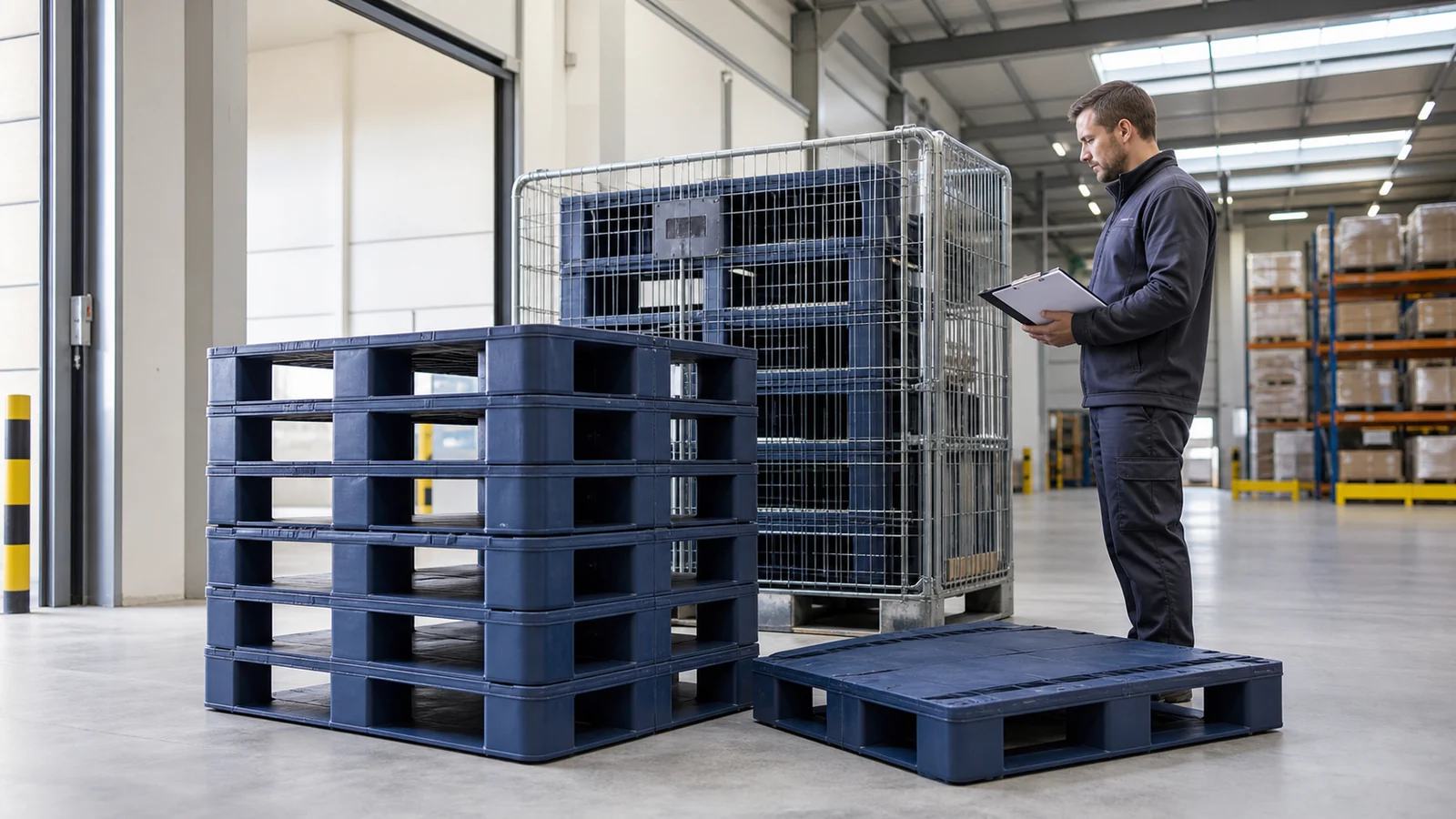
- A reusable plastic pallet may be part of a controlled loop where the owner knows the route, cleaning method, damage history, and release rules.
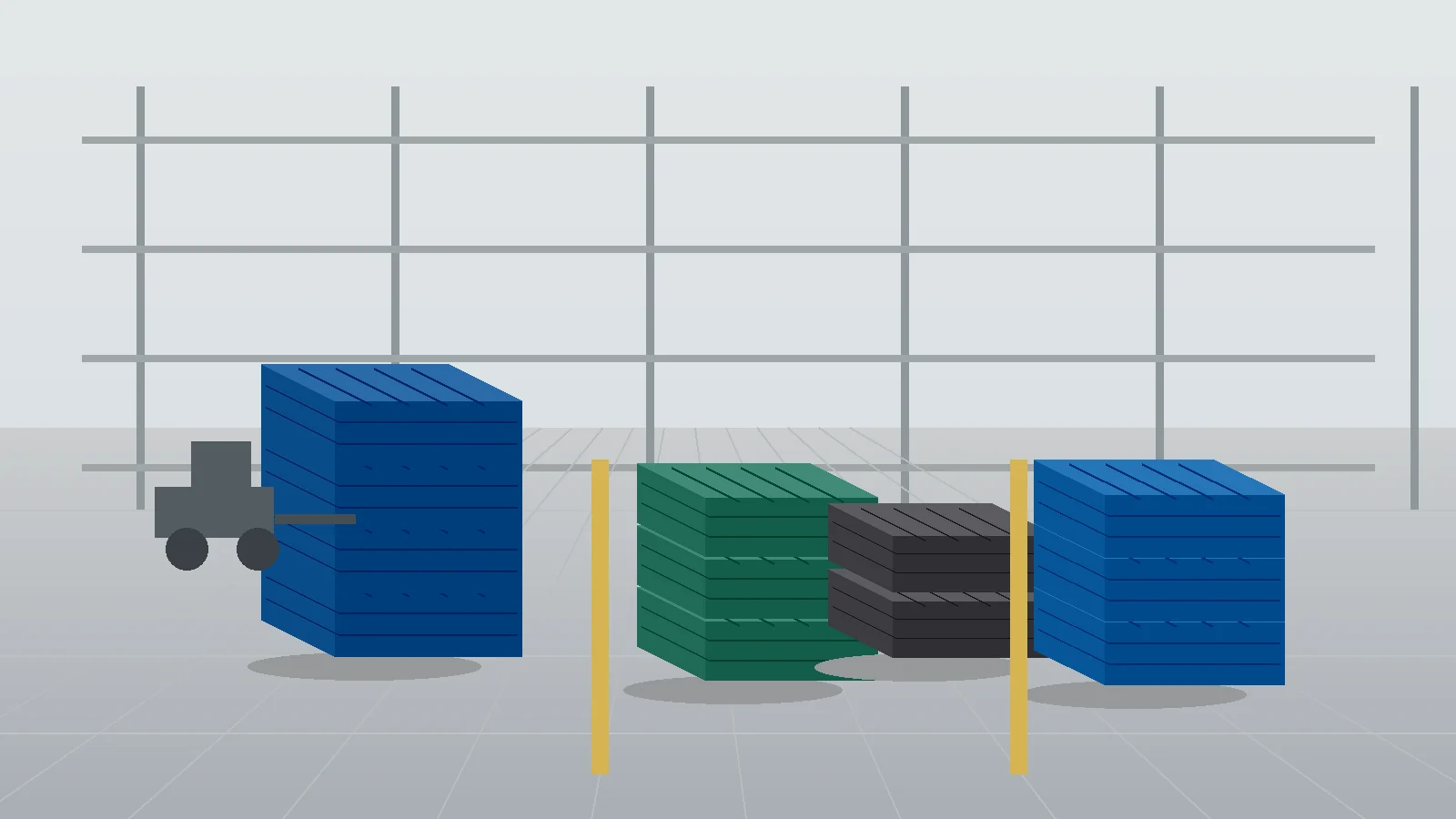
- A used or second-hand plastic pallet may have an unknown route history, unknown exposure, mixed models, or inconsistent condition.
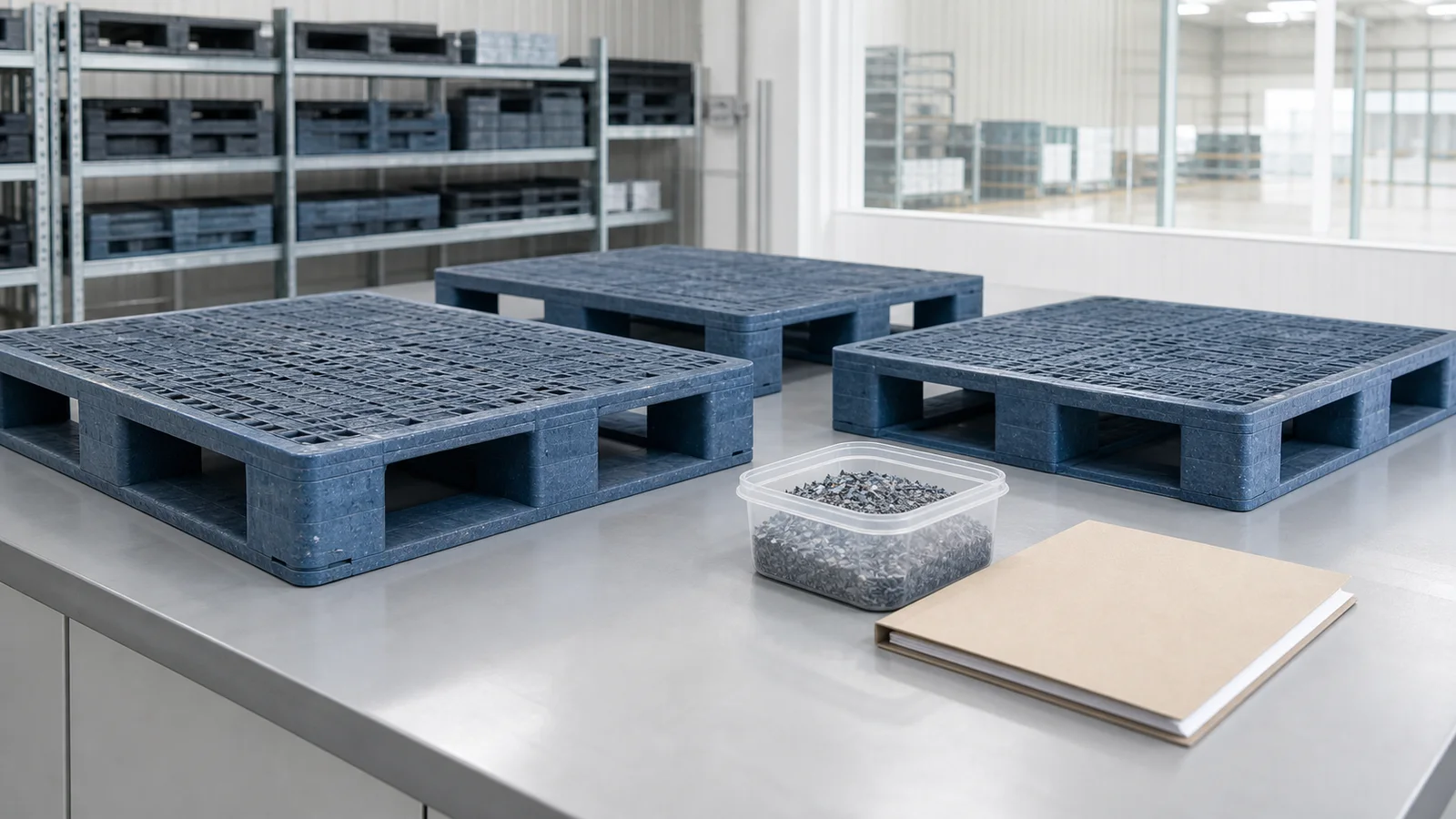
- A recycled-content statement describes a material route. It does not prove pallet condition, hygiene suitability, previous exposure, load performance, or customer acceptance.
The plastic pallet RFQ specification checklist is still useful, but used pallets need an earlier gate: is this route safe enough to investigate at all?
Quick acceptance matrix
| Intended route | Possible decision | First evidence to request | Stop condition |
|---|---|---|---|
| Low-risk internal floor storage, dry goods, no customer audit | Investigate or sample with limits | Photos, model, size, visible condition, seller identity, previous use if known | Mixed models, damage, odor, embedded residue, or no seller accountability |
| Controlled closed-loop reuse with known owner and route | Investigate if records are available | Loop owner, cleaning or inspection rule, lot or asset ID, release limits | No route record or no inspection rule |
| Racking, high stacking, long storage, or heavy loads | Hold until load evidence and sample checks are complete | Load-rating context, support method, span, test reference, current condition | Unknown support history, cracked runners, deformation, or no test context |
| Conveyor, AS/RS, AGV, palletizer, or scanner route | Hold for route trial | Dimensions, bottom contact points, deflection risk, labels or RFID position | Warped deck, variable model mix, missing automation trial, or loose inserts |
| Food-area, pharmaceutical, customer-audited, or odor-sensitive route | Usually reject unless controlled evidence is strong | Material route, previous exposure, cleaning records, customer requirements, QA review | Unknown history, odor, residue, recycled-content claim without route documents |
| Chemical, spill, oil, sanitizer, or process-liquid exposure | Usually reject or restrict to non-sensitive internal use | Previous exposure, chemical compatibility review, surface condition | Unknown chemical exposure, swelling, staining, trapped liquid, or odor |
This matrix is a screening tool. It does not replace supplier documents, current product data, site trials, or customer approval.
Separate five risks before asking for samples
First, ask about previous-route history. A pallet from a clean internal loop is not the same as a mixed lot from unknown warehouses. If the seller cannot identify the source, treat the pallet as unknown history.
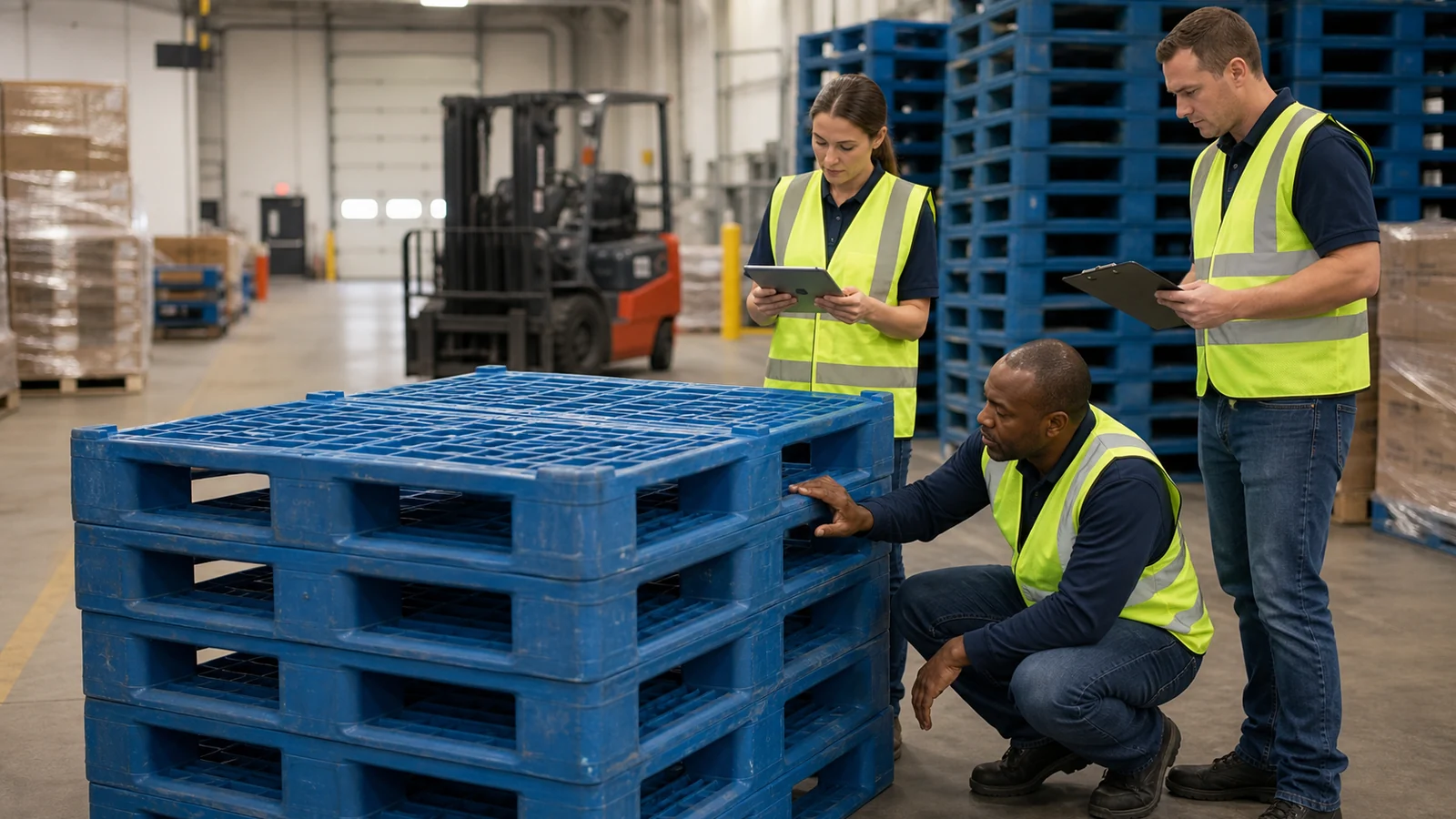
Second, inspect physical condition. Cracked runners, distorted decks, missing plugs, loose anti-slip parts, embedded debris, strong odor, or heavy staining should stop routine acceptance. The incoming inspection plan can record visible condition, but it cannot recover missing route history.
Third, separate load support from general condition. A pallet may look intact and still be unsuitable for beam racking, long storage duration, concentrated loads, or automation contact. For U.S. workplace context, OSHA requires stored materials to be stable and secure in 29 CFR 1910.176 . That rule does not approve a pallet model, but it supports asking how the pallet will support the actual load. ISO 8611-1:2025 is a flat-pallet test-method reference , and ISO 8611-2:2025 addresses performance requirements and test selection . Those references still do not prove that a used pallet lot matches a tested new pallet.
Fourth, control hygiene and food-area questions. For U.S. food-contact context, FDA guidance on recycled plastics in food packaging discusses concerns such as contaminants, non-food-contact materials, and adjuvants. For EU food-contact material context, the European Commission explains controls for plastic recycling and food-contact materials . These sources do not approve a specific pallet for a buyer’s food-area route. They show why material source, previous exposure, and customer requirements need QA review.
Fifth, confirm traceability and customer acceptance. A customer-owned pool, export program, or audited warehouse may require asset IDs, color rules, labels, cleaning records, or supplier declarations. If a used pallet lot cannot meet those rules, lower unit price is not the deciding factor.
Documents to request before a trial
Before accepting samples, ask the seller for:
- pallet model, size, deck and base structure, and photos of the exact lot;
- seller identity, ownership status, and previous route if known;
- material route where disclosed, such as HDPE, PP, recycled content, or controlled blend;
- visible markings, lot IDs, labels, RFID, or customer-owned pool identifiers;
- load-rating statement with support condition, span, load distribution, and test context;
- cleaning, inspection, repair, or retirement rule, if the pallets came from a controlled loop;
- written limitations for food-area, racking, automation, chemical, freezer, or customer-audited use.
If the seller cannot answer these questions, keep the offer out of sensitive routes. If material route is central to the decision, use the HDPE vs PP plastic pallet RFQ guide to frame the question without assuming that a polymer name proves performance.
Where new or controlled pallets are usually safer
Used pallets with unknown history are usually poor candidates for:
- beam racking, drive-in racking, shuttle systems, AS/RS, conveyors, palletizers, or other routes where dimensions and deflection matter;
- food-area, pharmaceutical, hygiene-sensitive, allergen-controlled, or customer-audited operations;
- chemical, oil, sanitizer, odor-sensitive, or residue-sensitive goods;
- freezer or cold-chain routes where impact history and material behavior matter;
- high-value closed-loop programs that require traceability, labels, RFID, or repeatable quality records.
For these routes, new or controlled-loop pallets are usually safer because the buyer can define the specification, request current documents, and test against the actual route. The load test guide explains why static, dynamic, and racking assumptions should stay separate. The foreign-material risk checklist and change-control log help after a pallet direction is already under review.
If the buyer still wants to proceed
Proceed only with a written release limit. For example, a used pallet lot may be limited to dry internal floor storage, a single product family, manual handling, or a short trial period. Do not let a limited trial become approval for racking, automation, food-area, customer-facing, or export routes.
Record who owns the decision: procurement, QA, EHS, warehouse engineering, customer quality, or supplier quality. Record the accepted route, the evidence reviewed, the rejected routes, and the next inspection trigger. If the lot changes, open a new review instead of assuming it is the same as the sample.
Practical sourcing boundary
When you ask Baoheng to review a pallet direction, share the goods, unit load, support method, handling equipment, route, cleaning exposure, food-area or customer-audit requirements, and any used-pallet documents already available. The selection support form is a good place to start when the product family is not fixed.
Final acceptance still depends on the buyer’s site conditions, customer requirements, current supplier data, and any required QA, EHS, or legal review. If the route cannot tolerate unknown history, the responsible decision may be to specify new or controlled-loop plastic pallets instead of trying to make a used lot fit.