Industry Insights
Plastic Pallet Foreign-Material Risk Checklist
Use this checklist to hold, clean, clarify, reject, or release plastic pallets for food warehouse routes without overstating compliance.
A plastic pallet can be washable, reusable, and easier to inspect than some alternatives, but that does not make it automatically suitable for every food warehouse route. A pallet may arrive with unknown previous use, embedded residue, persistent odor, damaged edges, trapped water, pest evidence, allergen cross-contact risk, or missing supplier documents.
Use this checklist before releasing a pallet into food storage, ingredient receiving, packaging-material handling, customer-return sorting, or other food-adjacent warehouse routes. It is a practical hold/release tool, not a regulatory approval, cleaning validation, or substitute for your food-safety team. The U.S. food CGMP rule in 21 CFR Part 117 , EU Regulation (EC) No 852/2004 , and U.S. sanitary-transport rules in 21 CFR Part 1 Subpart O support route-based contamination control within their scopes. They do not approve any pallet model because it is plastic.
Start With the Route, Not the Material
Record the route before judging the pallet. A pallet released for wrapped finished goods may not be acceptable for exposed ingredients, primary packaging, allergen-controlled areas, wet washdown, or a customer’s restricted route.
Separate the approval scope:
| Route question | Why it matters | Status |
|---|---|---|
| Will the pallet touch food, food-contact packaging, secondary packaging, or only handling equipment? | The route changes the risk review and documentation needed | Release / hold |
| Is prior use known and compatible with the next route? | Unknown or chemical exposure should not be cleared by appearance alone | Hold / clarify |
| Was the pallet exposed to odor, pests, moisture, allergen material, spilled product, or trailer contamination? | Exposure history can matter even when the pallet looks intact | Hold / clean / reject |
| Does the site require a specific pallet color, status tag, or segregated lane? | Mixing routes can defeat the checklist | Release / segregate |
| Who owns final release: QA, sanitation, operations, customer quality, or supplier quality? | A release decision needs a named owner | Record owner |
If the route is not known, hold the pallet until the responsible site team decides where it may be used.
Check for Visible Foreign-Material Risk
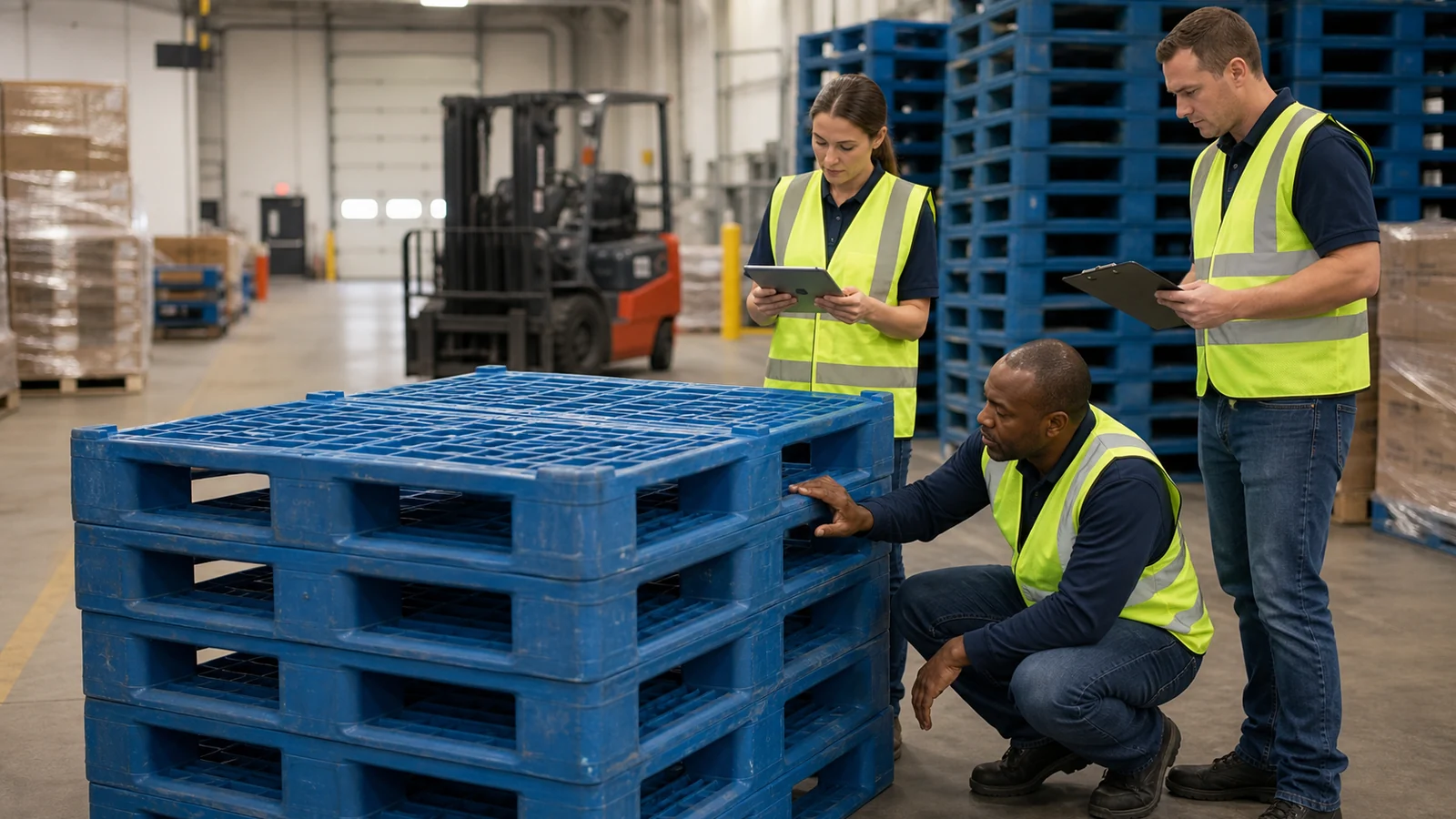
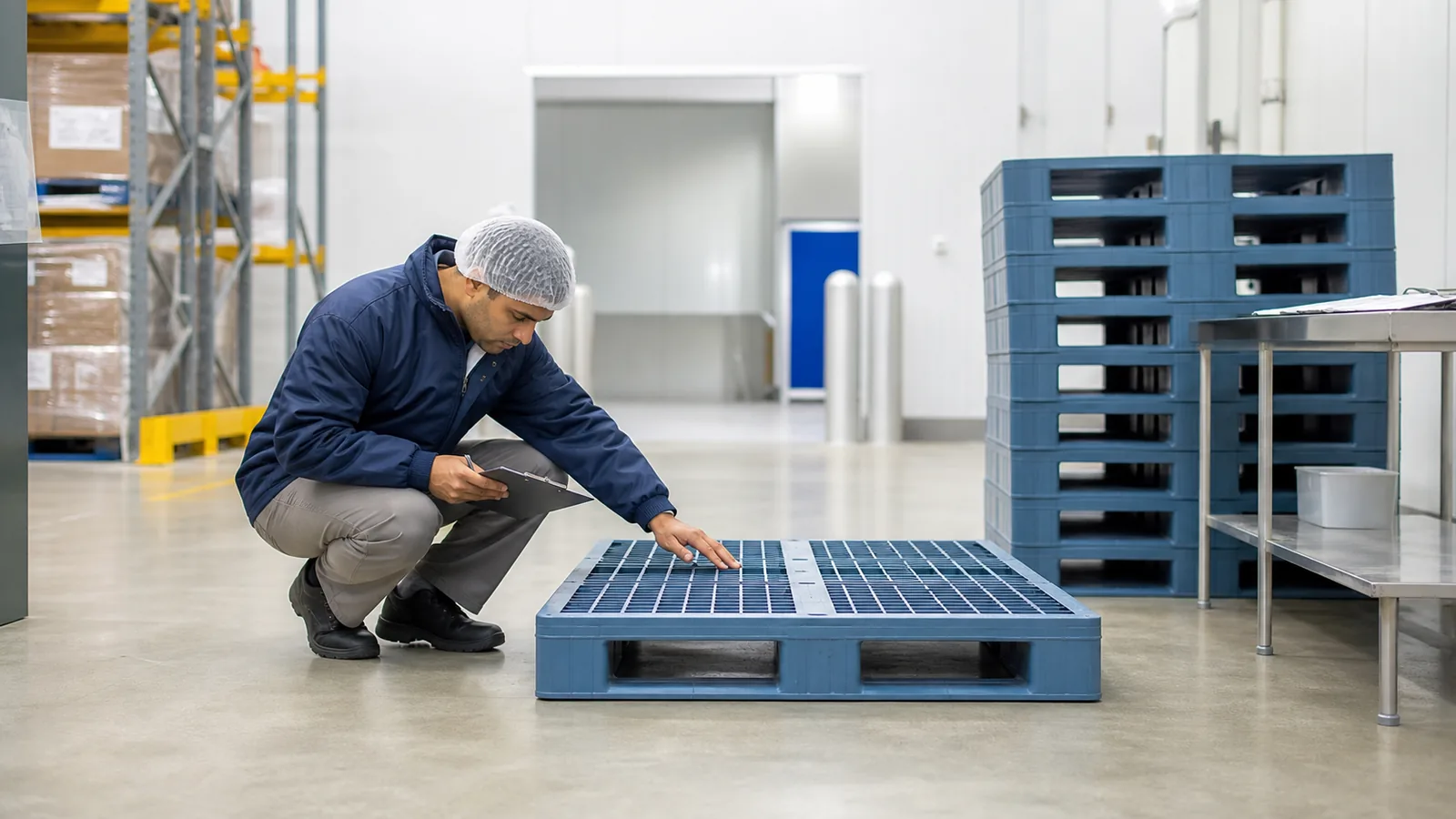
Inspect the top deck, underside, runners, corners, drain points, labels, and any cavities. Cosmetic scuffs may be acceptable in some routes, but damage that traps residue or releases fragments should trigger review.
Hold or quarantine the pallet when you find:
- embedded product residue, powder, film, tape, labels, splinters, fibers, or loose plastic;
- cracks, gouges, sharp edges, broken corners, or damaged runners that can shed material or trap soil;
- persistent odor after normal cleaning;
- staining that suggests unknown chemical, oil, allergen, or spoiled-product exposure;
- trapped water, slime, or debris inside ribs, runner channels, feet, or label areas;
- pest evidence or foreign objects caught in the base;
- a mismatch between pallet color, tag, or route status and the intended food area.
Specific reject thresholds depend on pallet design, route sensitivity, and site standards. For future lots, connect this checklist to your incoming inspection plan so repeated defects are recorded consistently.
Do Not Treat Cleaning as Automatic Release
Cleaning is a step, not the final approval. A washed pallet may still be unsuitable if it remains wet, smells unusual, holds residue in damaged areas, has unknown chemical exposure, or lacks the documentation your site requires.
Before release after cleaning, record:
| Cleaning release item | Acceptable evidence | Hold point |
|---|---|---|
| Cleaning method used | Site-approved method and date | Method unknown or not approved for the route |
| Drying status | Pallet is dry enough for the next product and storage condition | Water remains in traps or contact areas |
| Odor and residue | No persistent odor or visible residue after cleaning | Odor, staining, sticky film, powder, or hidden debris remains |
| Chemical compatibility | Supplier or site confirms cleaning chemistry is suitable for the pallet material | Detergent, sanitizer, or temperature limit is unknown |
| Route restriction | Pallet is tagged for the approved route only | Pallet could return to a higher-risk area by mistake |
Use the site’s sanitation program for method approval. The separate plastic pallet sanitation SOP can help organize cleaning steps, but release still depends on the actual route, pallet condition, and site validation.
Request the Supplier Documents That Match the Risk
Do not ask for a vague “food-safe pallet” statement and stop there. Ask for current, model-specific documents that match the use.
For food warehouse routes, procurement may need:
- current drawing and pallet structure details;
- material declaration and colorant or additive information where relevant;
- food-contact statement only if the supplier is making that claim for the actual model and intended use;
- cleaning, temperature, chemical, and storage limits;
- load rating definitions and support conditions when stacked, racked, washed, or moved;
- sample variance and inspection points;
- any stated limitations on food-contact, food-adjacent, export, wet, cold, or returnable use.
Supplier documents support the decision; they do not replace site approval. Pair this checklist with the food-contact plastic pallet document checklist when the route involves food-contact or packaging-material claims.
Decision Table: Release, Hold, Clean, Clarify, or Reject
| Status | Use when | Next action |
|---|---|---|
| Release for stated route | Route is known, pallet condition is acceptable, required documents are available, and cleaning status is controlled | Record route, owner, date, and any restrictions |
| Clean and retest | Soil, dust, normal handling marks, or washable residue are present and the route allows cleaning | Clean with approved method, dry, then inspect again |
| Hold for supplier clarification | Material, intended use, drawing, cleaning limit, or food-contact statement is missing | Ask supplier for current model-specific documents |
| Quarantine for QA review | Unknown exposure, odor, pest evidence, allergen concern, chemical history, or route mismatch appears | Keep segregated until QA or site food-safety owner decides |
| Reject or restrict to non-food route | Damage can shed fragments, trap residue, or cannot be cleaned for the intended route | Remove from food route and document reason |
Make the release statement narrow. “Released for wrapped finished goods in dry storage after cleaning on 2026-07-14” is useful. “Approved for food use” is too broad unless your site documents exactly what that means.
Where Pallet Structure Helps and Where It Does Not
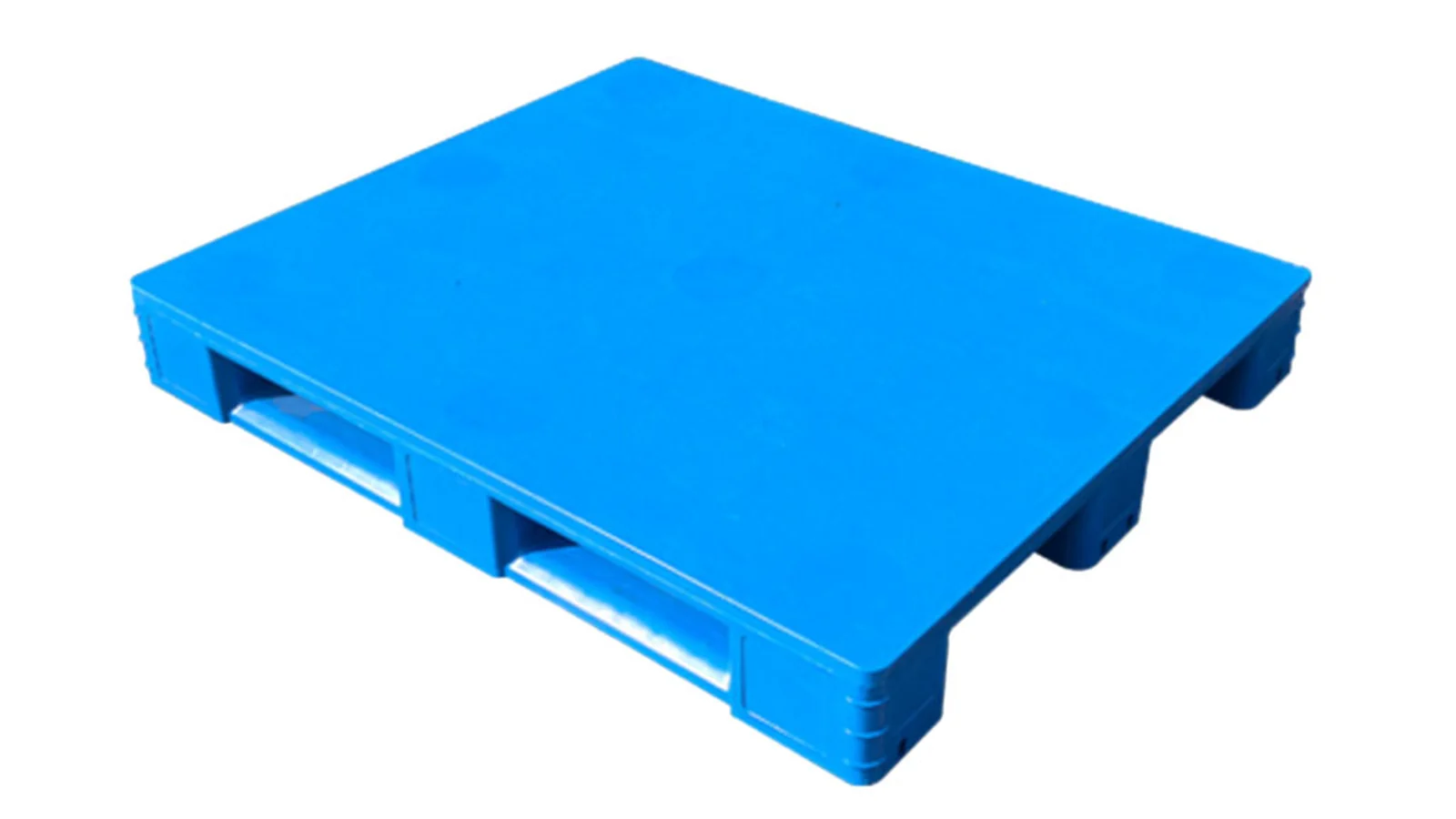
Pallet structure can make inspection and cleaning easier, but it cannot guarantee food safety. A closed-deck plastic pallet may reduce open top-deck debris traps, while open ribs, deep runners, damaged label pockets, and underside cavities still need inspection. Spill-control pallets can be useful for contained liquid-risk areas, but the spill-containment pallet selection checks should stay separate from general food-route approval.
Do not select a pallet only because it looks smooth or because it is plastic. Check load, handling equipment, stack or rack support, washing method, temperature, route segregation, and customer requirements. For some routes, the right answer may be a different pallet structure, a restricted-use lane, a single-use export package, a validated cleaning process, or rejection of return pallets with unknown history.
Questions Before Bulk Approval
Ask internally:
- Which product, packaging, or warehouse zone will this pallet enter?
- What previous-use history must be known before release?
- What observations require hold, cleaning, quarantine, or rejection?
- Who approves cleaning release and route changes?
- How will status tags, color lanes, or quarantine areas prevent route mixing?
Ask the supplier:
- What material and structure are used for the quoted model?
- Which food-contact or food-adjacent claims are supported, and for what intended use?
- What cleaning chemicals, wash temperatures, drying conditions, and storage limits are allowed?
- Which pallet areas should incoming inspectors check for damage or trapped residue?
- What changes in material, color, mold, or design would require reapproval?
Baoheng can review pallet structure options when you share the route, product area, load, cleaning method, storage condition, and document requirements. Final release still belongs to the buyer’s food-safety system, current supplier data, customer requirements, and local regulatory review.