Industry Insights
Closed-Deck vs Open-Deck Plastic Pallets: 7 RFQ Checks
Compare closed- and open-deck plastic pallets by load contact, cleaning, drainage, equipment, storage, and supplier evidence before requesting a quote.
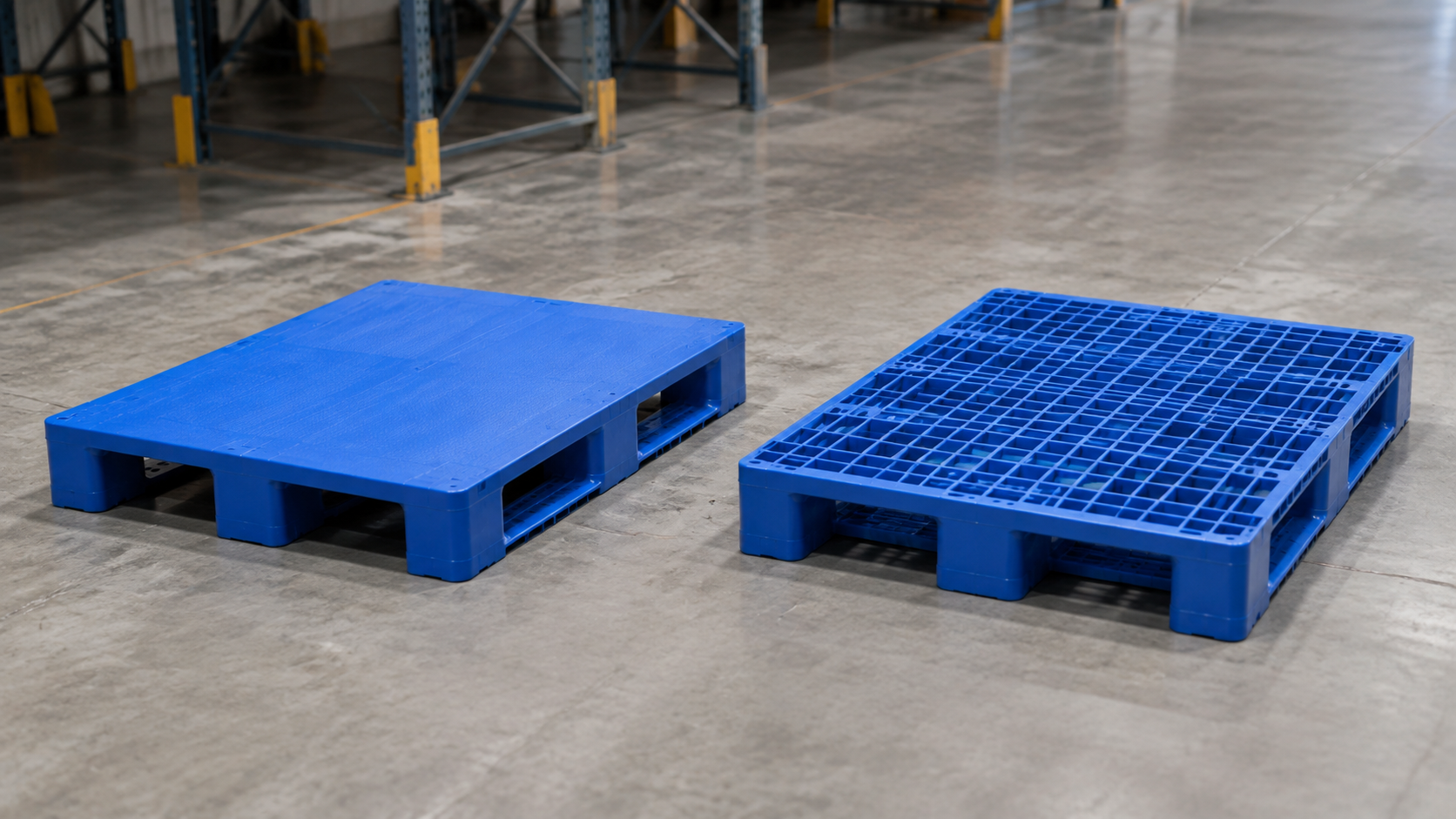
A closed deck is worth specifying when the load needs continuous top support or when your process benefits from a surface that is easier to see and wipe during inspection. An open deck may be the better fit when drainage, airflow, lower tare, or a simple dry-goods lane matters more.
That is the short answer. The purchasing answer needs seven checks, because deck style alone does not prove load capacity, rack safety, hygiene suitability, or equipment compatibility.
Start with the lane, not the label
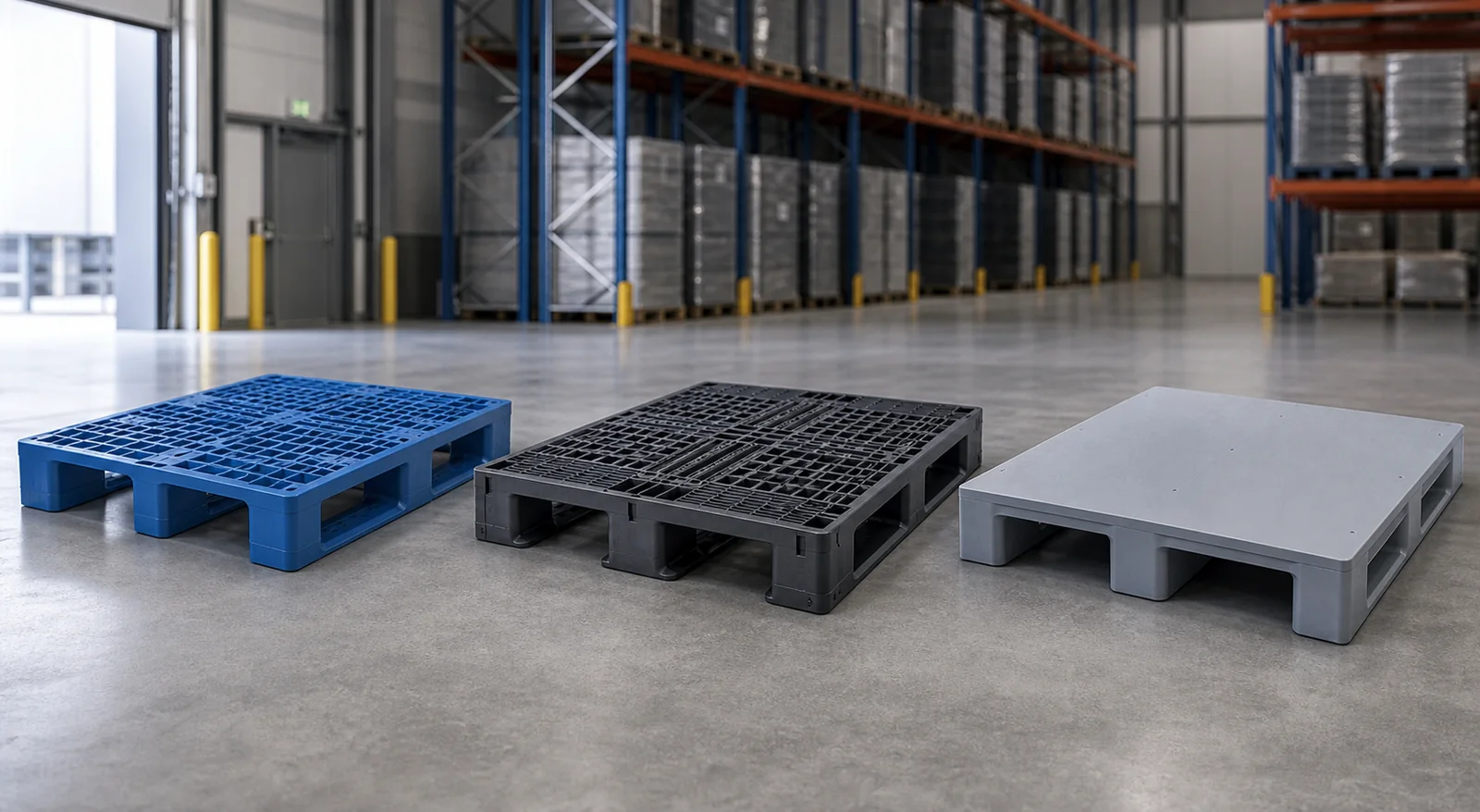
“Closed deck” describes a continuous or nearly continuous upper surface. “Open deck” describes a ventilated or grid-style surface. Neither term defines the underside, fork entries, runners, material, reinforcement, load rating, or manufacturing quality.
Before comparing models, write down the actual lane:
- product and packaging footprint;
- unit-load weight and how that weight contacts the deck;
- floor stacking, racking, conveyor, or other support conditions;
- forklift and pallet-jack approach;
- temperature, moisture, dust, spills, and cleaning exposure;
- destination requirements and acceptance evidence.
If those conditions are unknown, choosing by deck appearance is premature.
Closed deck versus open deck: practical trade-offs
| Decision point | Closed deck may help when… | Open deck may help when… | What still needs validation |
|---|---|---|---|
| Load contact | bags, small cartons, pails, or irregular bases need broader support | rigid cartons already bridge the openings safely | actual contact pattern and unit-load stability |
| Visible inspection | the top surface must be checked quickly for residue or damage | the lane is dry and inspection access is already adequate | underside, corners, joints, and damaged areas |
| Washing | the process benefits from a broad wipeable top surface | rinse water must pass through the deck quickly | detergent, temperature, pressure, rinse, drying, and release method |
| Drainage and airflow | neither is a primary constraint | ventilation or rapid drainage is important | whether the load blocks openings and whether water remains elsewhere |
| Weight and handling | added surface area is justified by the lane | lower tare is important to manual or transport handling | the complete pallet weight and handling route |
| Equipment | the selected model has verified contact points | the selected model has verified contact points | forks, wheels, conveyor sensors, supports, rack span, and deflection |
These are screening questions, not universal performance claims. Two pallets with the same top-deck label can behave differently because their geometry, material, underside, reinforcement, and production tolerances differ.
The seven RFQ checks
1. Map the load contact
Measure the cartons, bags, trays, drums, or pails that touch the pallet. Mark concentrated feet, soft bag areas, unsupported corners, and permitted overhang. A closed surface can offer more continuous contact, but the buyer should verify the real first-layer pattern rather than assume that “closed” automatically prevents deformation.
2. Define the hygiene boundary
State whether goods are fully enclosed, whether the pallet enters a controlled zone, and what contamination or cross-contact risks the site manages. In the United States, FDA’s sanitary transportation rule includes pallets in its definition of transportation equipment and requires covered equipment to be suitable and adequately cleanable for its intended use. The rule does not turn a closed-deck pallet into a certified food-contact product, and FDA says the shipper defines the necessary sanitary specifications and cleaning procedures for the operation.
Baoheng currently has no confirmed food-contact certification or corresponding third-party report. Do not use “food-grade” or “approved for direct food contact” as a shortcut. For Baoheng products, new material may be considered for food-company storage, turnover, and logistics where there is no direct food contact; the final material and model must be confirmed for the order.
3. Write the cleaning-and-drying process
“Washable” is not a complete specification. Record the actual method: cleaning agent, concentration, water temperature, pressure, cycle time, rinse, drying time, inspection points, and release criterion. A closed top can simplify some visible checks; an open grid can speed drainage through the top. Either design can retain water or residue in other features, so inspect the complete pallet.
If the cleaning process is not yet defined, treat that as a site condition to confirm—not as a promise the pallet supplier can infer.
4. Decide whether drainage or continuous support wins
Ask which failure costs more in the real lane: trapped residue or water, inadequate support under the package, reduced airflow, or added tare. Test the trade-off with the actual load. For wet handling, also check where discharged water goes and whether stacked empty pallets can dry between cycles.
5. Separate deck choice from structural approval
Deck style does not establish static, dynamic, or racking performance. Record payload, load distribution, rack span, support direction, stacking pattern, forklift entry, and any conveyor contact points. ISO 8611-1:2025 describes test methods for new flat pallets, including nominal-load, maximum-working-load, and durability-comparison testing, and notes that load tests do not replace field tests on the specific pallet design.
Use the applicable test scope and a field trial to agree acceptance criteria. Do not transfer a rating from a different support condition or pallet model.
6. Confirm material and customization by model
Baoheng products can use HDPE or PP, and new or recycled material can be selected according to product and order requirements. That does not mean every combination is available for every model. Recycled material is not suitable for food, pharmaceutical, or other high-hygiene applications under Baoheng’s confirmed sales boundary.
Color, logo, printing, size, mold development, steel reinforcement, and packaging can be discussed subject to product feasibility, cost, quantity, and lead time. RFID is not currently offered as a supported customization.
7. Agree evidence and acceptance before the order
Ask the supplier to identify the exact model, dimensions, weight, material option, handling configuration, and declared load conditions. Then define what your receiving team will verify. Baoheng can provide English product specifications, dimension drawings, loading quantities, and a formal quotation. Paid samples are available; the buyer may also arrange a factory visit or commission an independent pre-shipment inspection.
Baoheng does not currently claim public certifications or third-party test reports. If your procurement policy requires a particular certificate, report, or test method, state it before model selection so availability can be checked rather than assumed.
A simple decision rule
Shortlist a closed deck when continuous package support or straightforward top-surface inspection is important. Shortlist an open deck when ventilation, drainage through the deck, or lower tare is important. Keep both options in the trial when the lane has competing needs.
Approve the model only after the complete route has been checked: load, support, rack or floor condition, handling equipment, cleaning, temperature, material, and acceptance evidence.
What to send for a useful recommendation
To compare available pallet options, send:
- product type and preferred pallet dimensions;
- quantity;
- intended use and whether the pallet will be racked, stacked, or conveyed;
- load weight and how it is distributed;
- forklift or pallet-jack entry requirements;
- cleaning, temperature, and hygiene conditions;
- destination port and any required documents or inspection method.
Send these operating conditions through the inquiry form . Baoheng can then check model fit, material options, loading quantities, and quotation conditions without treating the deck label as the whole specification.