Industry Insights
Plastic Pallet Change-Control Log After Sample Approval
Use a change-control log to decide when repeat plastic pallet orders need supplier clarification, retesting, route limits, or rejection.
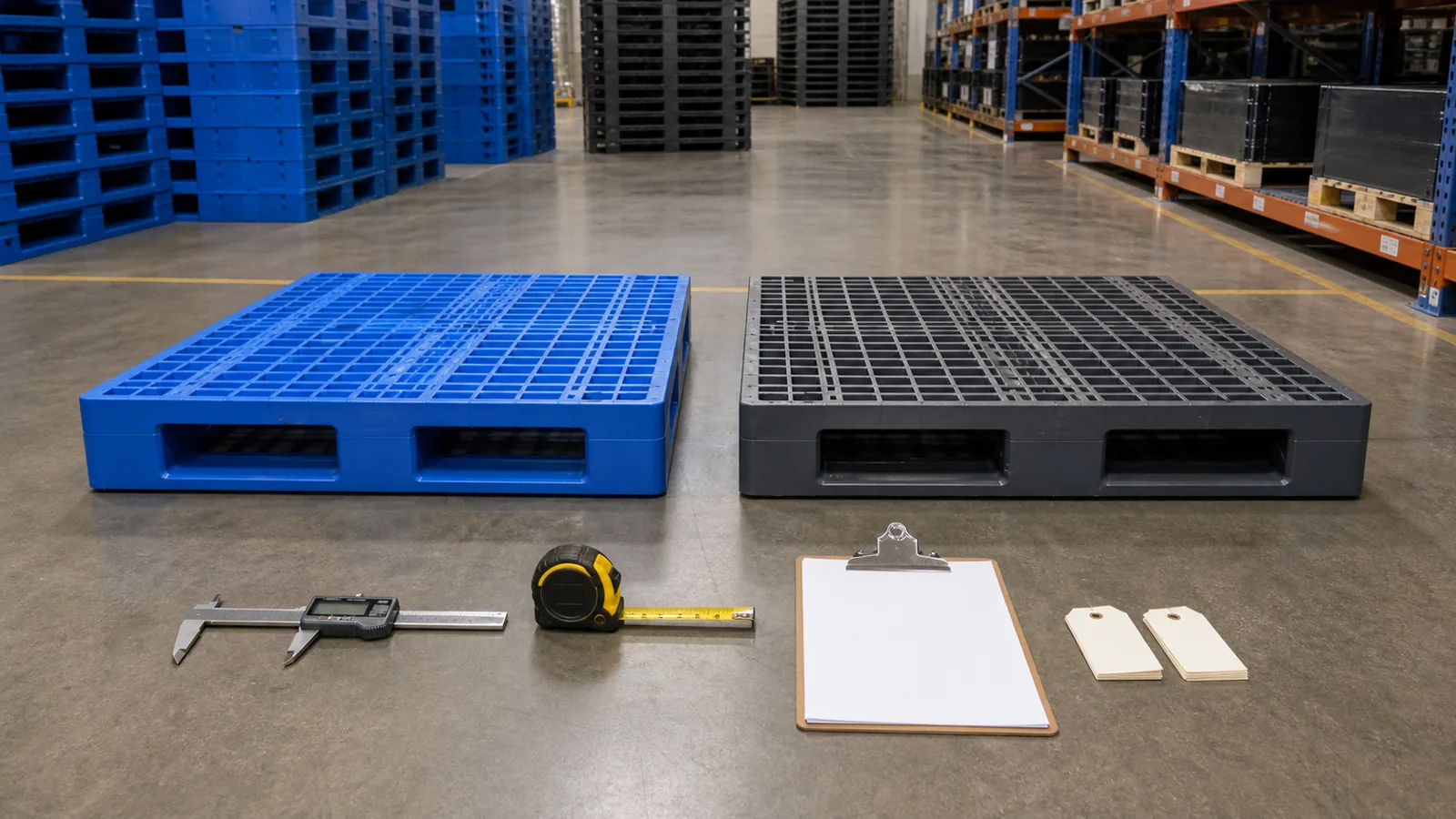
A plastic pallet sample can pass the trial and still become a weak control point if nobody records what was actually approved. Repeat orders may arrive with the same size and product name, but a different material route, color, insert, label position, reinforcement, mold revision, supplier site, or stated use limit. Those differences may be harmless in a dry floor-storage route. They may be unacceptable in racking, automated handling, food-area use, cold rooms, chemical exposure, or customer-audited logistics.
Use this change-control log after sample approval and before routine release of repeat lots. It is not a certification, legal compliance file, or substitute for site testing. It is a practical SOP for deciding whether a changed plastic pallet lot should be released, held for supplier clarification, sampled again, retested, restricted to a lower-risk route, or rejected.
Start with the approved baseline
Before the next purchase order becomes routine, create a baseline record for the approved pallet. The record should be specific enough that receiving, QA, procurement, and the supplier can compare future lots against the same facts.
Include:
- pallet model, size, drawing or revision, deck and base structure;
- material route, such as HDPE, PP, virgin, recycled, or controlled blend, where disclosed;
- color, additive or anti-slip features, reinforcement, labels, RFID, logos, or molded marks;
- approved load assumptions, including static, dynamic, racking, support span, and load distribution when relevant;
- approved route, handling equipment, cleaning method, temperature exposure, and customer restrictions;
- sample photos, trial notes, supplier documents, and any limit stated by the site or supplier.
The plastic pallet RFQ checklist helps define many of these fields before quoting. After approval, the change-control log keeps those assumptions alive.
Changes that should stop automatic release
Do not treat every repeat shipment as identical just because the catalog name matches. Hold the lot for review when the supplier or buyer changes any item that can affect the approved route:
| Change trigger | Why it matters | First action |
|---|---|---|
| Material family, recycled-content source, colorant, or additive package | May affect impact behavior, odor, food-area documents, cleaning, or batch consistency | Request current material and limitation statement |
| Pallet weight range, reinforcement, runner, deck, or base geometry | May affect load support, fork entry, stacking, racking, or automation contact | Compare with approved sample and test record |
| Label, RFID, logo, plug, or anti-slip insert location | May affect cleaning, scanner read, deck support, or trapped debris | Check route impact and customer requirements |
| Mold revision, production site, or substitute model | May change dimensions, flatness, contact points, or quality history | Treat as non-routine until evidence matches |
| Load rating wording, support condition, or route limitation | May invalidate earlier static, dynamic, or racking assumptions | Ask for test context and route-specific limits |
| Buyer moves the pallet to food, rack, automation, cold, chemical, or customer-audited use | The old approval may not cover the new route | Escalate to site owner and retest if needed |
For U.S. workplace safety context, OSHA requires stored materials to be stable and secure in 29 CFR 1910.176 , and powered industrial truck rules address stable handling in 29 CFR 1910.178 . These rules do not approve a pallet model, but they support reviewing changes that can affect load support or handling stability.
Change-control log template
Use one row for each changed item. Keep the decision narrow and tied to the route.
| Field | What to record |
|---|---|
| Approved baseline item | The sample-approved fact: model, material route, color, drawing, support condition, label position, or route limit |
| Observed or proposed change | What is different in the repeat lot or new use |
| Source of change | Supplier, buyer route change, substitute model, production lot, customer request, or document update |
| Affected route | Floor storage, racking, conveyor, pallet truck, freezer, washing, food area, export, or customer pool |
| Risk tier | Low, medium, or high based on load, hygiene, automation, safety, or customer impact |
| Evidence requested | Drawing, material statement, test report, declaration, sample photos, lot ID, or supplier limitation note |
| Owner | Procurement, QA, EHS, warehouse engineering, operations, customer quality, or supplier quality |
| Decision | Release, release with limit, hold, sample again, retest, restrict to another route, quarantine, reject |
For higher-risk routes, connect the log to a real test plan. The plastic pallet load test guide explains why static, dynamic, and racking validation should stay separate and tied to actual support conditions. ISO 8611-1:2025 is a pallet test-method reference, but it still does not approve a specific pallet for a buyer route.
Decide whether clarification is enough
Supplier clarification may be enough when the change is low risk, fully documented, and does not affect the approved route. For example, a non-functional packaging change for a dry floor-storage pallet may only need a record update.
Clarification is usually not enough when the change affects:
- racking load, beam span, support method, or long storage duration;
- conveyor, palletizer, AGV, AS/RS, scanner, or pallet-truck contact;
- direct food, primary-packaging, food-area, allergen, sanitation, or customer audit requirements;
- freezer, hot wash, outdoor UV, chemical, sanitizer, oil, or process-liquid exposure;
- material route, recycled-content source, colorant, additive, odor, or supplier production site;
- customer-owned pool rules, labels, RFID, or loss-control records.
For food-related routes, keep the legal and document scope narrow. FDA guidance on recycled plastics in food packaging and the European Commission page on plastic recycling for food contact materials can help frame material questions in their jurisdictions. They do not approve a specific pallet model or route. Ask for current supplier documents and let the responsible QA, customer, or legal owner confirm the actual exposure.
Fit the log into receiving inspection
Incoming inspection catches visible lot problems. Change control decides whether the lot is still the same approved lot type. Use both controls.
When a lot arrives, receiving should check the model, color, markings, labels, weight range, visible structure, and supplier documents against the approved baseline before ordinary inspection release. If the lot is different, stop routine release and open a change-control row. The incoming inspection plan can then record condition, dimensions, defects, and functional checks without losing the larger approval question.
Material-route questions should also link back to the HDPE vs PP plastic pallet RFQ guide . A pallet described as the same polymer family is not automatically the same approved formulation, recycled-content route, or additive package.
Supplier questions before release
Ask the supplier short, evidence-based questions:
- What changed compared with the approved sample and previous production lot?
- Did the approved sample use the same material route, colorant, reinforcement, mold revision, labels, and production site?
- Are the drawing, test report, material statement, food-area document, or use limitation still current?
- Which order numbers, lot IDs, or shipment dates are affected?
- Can a new sample be supplied before release to rack, automation, food-area, cold, chemical, or customer-audited routes?
- What future change-notification rule can be written into the purchase specification?
Record the answer. A verbal “same as before” is weak evidence when the route is high risk.
Practical repeat-order rule
Release a repeat plastic pallet lot only when six facts are clear: the approved baseline, the observed change, the affected route, the evidence requested, the responsible owner, and the release limit. If any of those facts is missing, treat the order as non-routine.
Baoheng can review pallet options when you share the approved sample record, load, support method, handling equipment, cleaning or food-area requirements, automation needs, and the proposed supplier change. Final release still depends on the buyer’s site conditions, customer requirements, current supplier data, and any required regulatory or safety review.