Industry Insights
Plastic Pallet Fork Entry Clearance Test Record
Use this field record to check plastic pallet fork entry, pallet-truck wheel paths, bottom contact, and loaded handling before bulk approval.
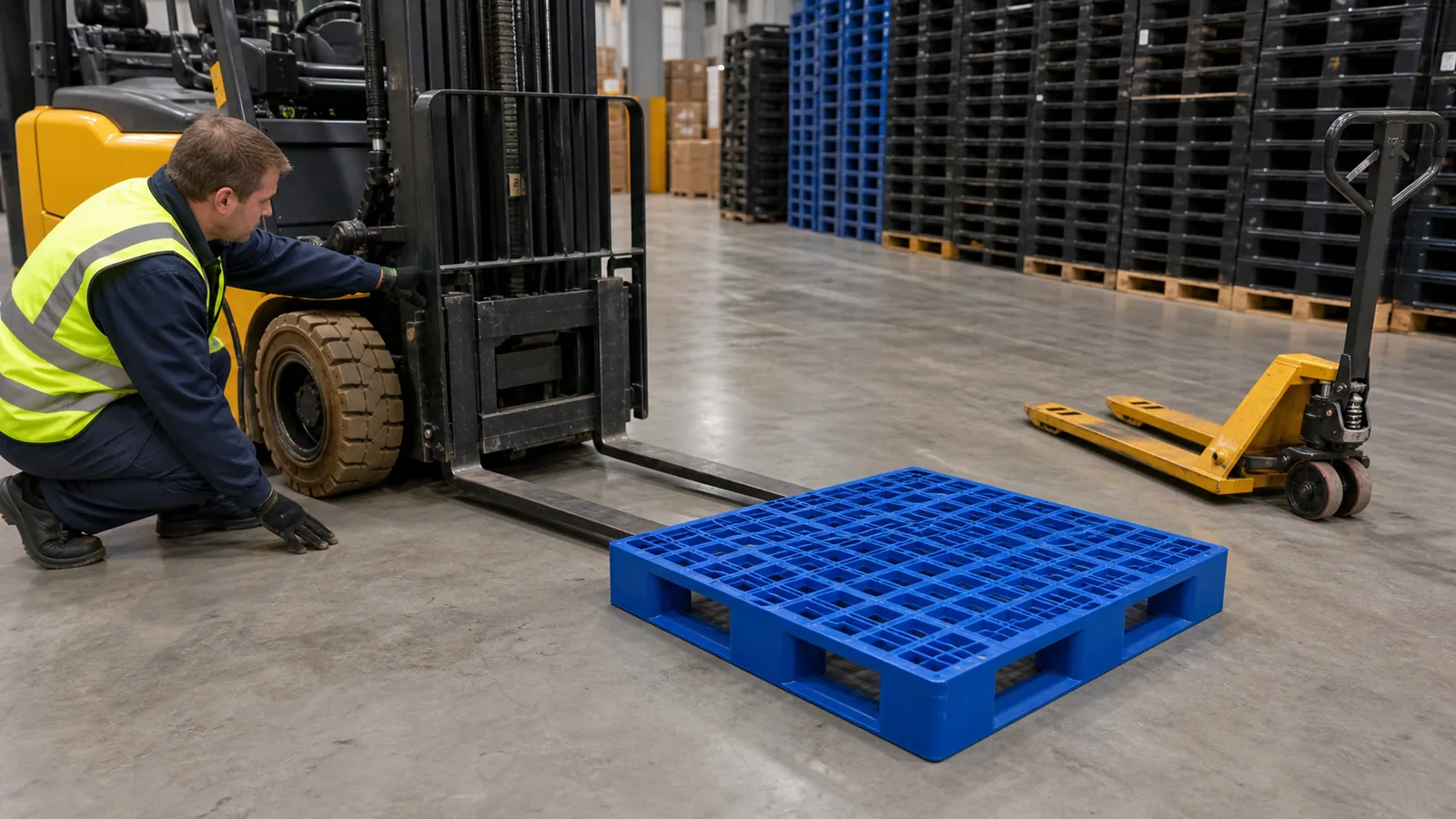
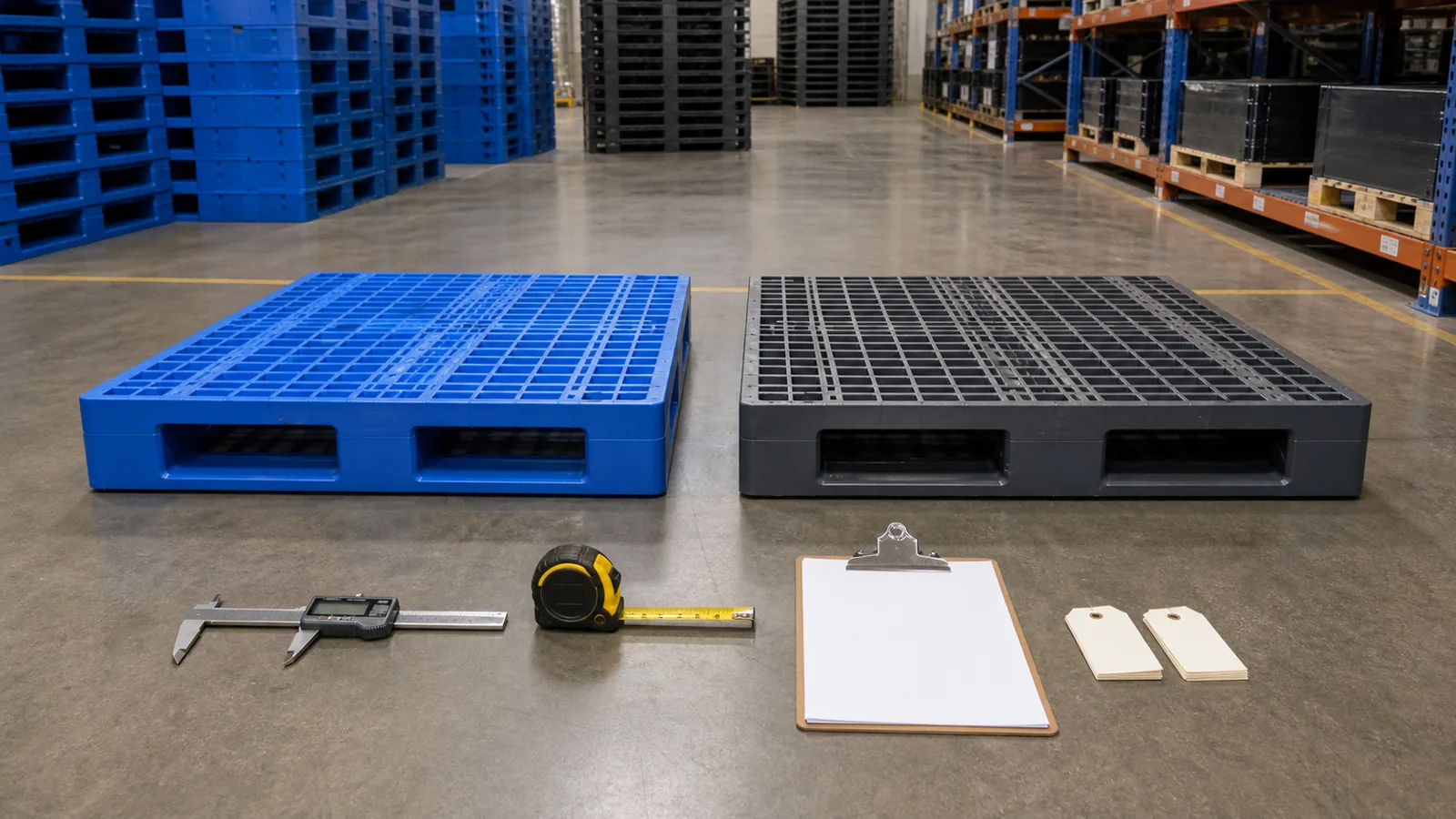
A plastic pallet sample can look correct on paper and still fail on the warehouse floor. The footprint may match the route, and the quoted load rating may look acceptable, but the fork pockets, bottom deck, runner spacing, pallet-truck wheel path, ramp transition, or loaded sag may not match the site’s real handling equipment.
Use the record below before bulk approval. It is not a replacement for supplier drawings, formal load testing, or your site’s safety review. It is a practical way to capture the route evidence that procurement, warehouse, maintenance, and EHS teams need before they decide whether a sample can move forward.
Start With the Route, Not the Footprint
Do not approve a pallet sample because it is only “1200 x 1000 mm” or “forklift compatible.” A plastic pallet must work with the actual forks, pallet trucks, floor conditions, dock plates, ramps, operators, and load cases on the route.
The UK Health and Safety Executive’s warehousing and storage guidance supports a risk-based view of warehouse handling, and OSHA’s powered industrial truck regulation is specific to the United States. These sources do not approve any pallet model. They do support the practical point that handling equipment, loads, and operating conditions matter.
Record the approval scope clearly: tested equipment, tested load, tested route, date, operators, and exceptions. If the pallet will later move through a different truck type, ramp, rack, conveyor, freezer, or site, treat that as a separate validation.
Field Record 1: Equipment Before the Sample Moves
Complete this section before the sample is lifted. Use measured site values, not catalog assumptions.
| Item to record | Why it matters | Result |
|---|---|---|
| Forklift fork width, thickness, length, spacing, and fork-tip condition | Forks may enter but still contact bottom ribs or stop short under the load | Pass / hold / retest |
| Hand or electric pallet-truck fork length, wheel layout, and lift height | Pallet-truck wheels can hit legs, runners, or underside ribs even when forklift entry is acceptable | Pass / hold / retest |
| Required entry direction | A pallet that works from two sides may fail when the route needs four-way entry | Pass / hold / retest |
| Floor, ramp, dock plate, and threshold condition | Small clearance problems often appear at transitions, not on smooth test floors | Pass / hold / retest |
| Operator comments during empty movement | Forced handling, unusual steering, or repeated impact should not become the normal method | Pass / hold / retest |
If manual or electric pallet trucks are common on the route, pair this record with the detailed pallet-jack compatibility guide . Forklift entry and pallet-truck wheel travel are related checks, but they are not the same approval.
Field Record 2: Map the Pallet Contact Points
Inspect the sample underside before loading it. For rackable plastic pallets , focus on runner continuity, fork entry, and loaded runner contact. For nestable plastic pallets , pay close attention to leg spacing, wheel paths, and whether empty nesting features create handling contact. For perimeter-base or double-faced designs, check bottom deck contact and the direction from which the pallet must be entered.
Record these observations:
- fork-entry height and width at every required side;
- visible rib, runner, or leg contact points;
- bottom-deck scratches after empty handling;
- wheel path for each pallet-truck type;
- whether the pallet can be lowered without dragging;
- any mold flash, damage, or deformation that affects entry.
Standards can help buyers use consistent language, but they do not replace a site test. ISO 8611-1:2025 covers test methods for flat pallets and points to the value of field tests for specific pallet designs. Treat ISO context as part of the specification discussion, not as proof that one pallet will fit every equipment route.
Field Record 3: Empty Handling Check
Run the empty sample through the normal movement before adding load. Keep the test controlled and stop if the pallet requires unsafe force or unusual operator behavior.
Record whether the pallet:
- enters smoothly from each required direction;
- lifts without fork-tip or wheel contact;
- travels without dragging, chatter, or wheel hang-up;
- turns in the tightest normal aisle or staging area;
- lowers cleanly without catching on deck ribs or runners;
- remains stable when the operator stops and sets it down.
An empty-pass result is only permission to continue testing. It is not a bulk-order approval.
Field Record 4: Loaded Route Check
Loaded testing should represent the normal route, not the easiest possible condition. Record the product footprint, approximate weight, load distribution, wrapping or containment method, travel distance, lift height, and every transition point.
Keep load types separate. Static load, dynamic handling load, and racking load are different approval questions. This clearance record checks handling fit. It should be connected to a separate plastic pallet load test before bulk order when the route involves heavy floor stacking, rack storage, long dwell time, cold rooms, or sensitive product.
Hold the sample for review if loaded movement creates:
- new underside contact that did not appear empty;
- visible sag that reduces fork or wheel clearance;
- repeated impact at ramps, dock plates, or thresholds;
- load shift caused by pallet tilt or unstable support;
- product, packaging, or pallet damage after the route;
- operator workarounds that would be unsafe or hard to repeat.
If the same pallet will run on conveyors, add the conveyor bottom-contact checks before assuming the underside is compatible with both trucks and conveyor support.
Approval Decision: Pass, Hold, Redesign, or Clarify
Use a narrow approval statement. “Passed on line A with truck model B, load C, route D, and entry directions E/F” is useful. “Approved for all warehouse use” is not.
| Status | Use when | Next action |
|---|---|---|
| Pass for tested route | Empty and loaded checks are acceptable, and exceptions are absent or controlled | Add conditions to the purchase specification |
| Hold for supplier clarification | Marginal clearance, unexplained contact, or missing drawings remain | Ask for current drawings and model-specific assumptions |
| Retest with route change | A different truck, ramp, load, temperature, rack, or conveyor will be used | Run a separate field record |
| Reject or redesign | Repeated contact, forced entry, unsafe handling, or loaded instability appears | Change pallet structure, equipment, or route before ordering |
For incoming lots, connect this approval scope to your incoming inspection plan so later shipments are checked against the same critical dimensions and contact points.
Supplier Questions Before Bulk Order
Ask the supplier for current drawings, fork-entry dimensions, compatible handling assumptions, load rating definitions, material and temperature limits where relevant, sample variance, and any route observations from comparable applications. These answers should support your field record; they should not replace it.
Baoheng can review pallet structure options when you share equipment details, load conditions, entry direction, and photos or notes from the sample route. The responsible approval still belongs to the tested site conditions, current product data, and your safety and quality requirements.
Practical Rule
Treat fork-entry clearance as a field observation, not a catalog promise. A plastic pallet sample is ready for bulk approval only when the buyer can show which equipment, load, route, and handling conditions were tested and where the approval stops.