Industry Insights
Plastic Pallet Barcode and RFID Checklist for Food Traceability
Use this RFQ checklist to separate FDA food traceability records, GS1 logistics IDs, pallet asset IDs, and supplier label or RFID options.
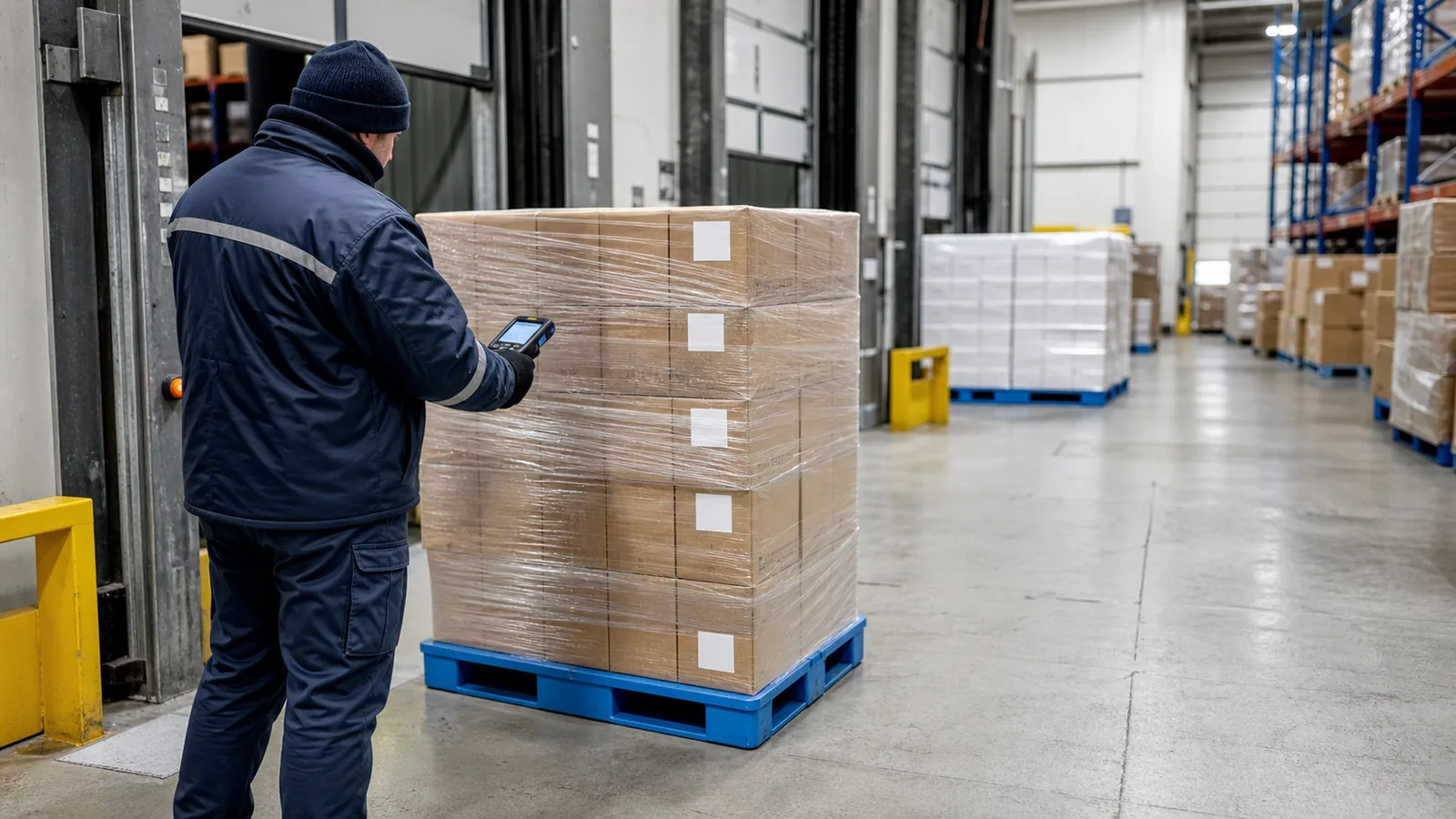
A food customer may ask whether your plastic pallets can carry barcodes, QR codes, or RFID tags for traceability. That is a practical request, but it is easy to answer the wrong question. A label on a pallet can help connect a shipment, reusable asset, or warehouse status record. It does not, by itself, prove compliance with a food traceability rule.
For U.S.-bound routes involving foods on the FDA Food Traceability List, the buyer must confirm the applicable rule, exemptions, Critical Tracking Events, Key Data Elements, traceability lot codes, and customer data fields with the responsible food-safety or legal owner. The pallet supplier can help with model identification, label placement, RFID options, molded marks, and sample checks. Those are useful inputs, but they are not a substitute for the buyer’s food traceability records.
Use this checklist before adding barcode, QR, RFID, or serialized asset requirements to a plastic pallet RFQ.
1. Define the data owner before the label type
Start by asking who owns each record. The U.S. FDA page for the Food Traceability Rule explains additional recordkeeping requirements for certain foods, and the separate Food Traceability List defines the covered foods. Those pages do not approve a pallet design or label method. They show why the buyer must know which food records must be available and who maintains them.
Before choosing a label, confirm:
- whether the route involves U.S.-bound covered foods;
- which company owns the food lot, shipment, receiving, and transformation records;
- which customer, WMS, ERP, EDI, or portal fields must be populated;
- whether the pallet is a reusable asset, a one-way shipping platform, or a customer-owned pool unit;
- which data fields the pallet supplier can actually provide.
If those answers are missing, delay the pallet marking decision. A readable code is not useful when nobody knows which record it should open.
2. Keep four identifiers separate
Many traceability projects fail because one code is expected to mean too much. Keep these identifiers distinct, then link them in the buyer’s records where needed.
| Identifier | What it should identify | Who normally controls it |
|---|---|---|
| Food traceability lot code | The food lot or batch record required by the buyer’s food traceability process | Food business, customer, or responsible record owner |
| Logistics-unit ID | The shipped handling unit, such as a palletized load | Shipper, customer, 3PL, or system owner |
| Reusable pallet asset ID | The physical plastic pallet that may return, be cleaned, or be inspected | Pallet owner, pool operator, or buyer |
| Supplier pallet production lot | The pallet model, production batch, color, material route, or shipment lot | Pallet supplier and buyer QC |
GS1 guidance identifies logistics units such as pallets with Serial Shipping Container Codes, and the GS1 Logistic Label Guideline describes the SSCC as the mandatory element on a GS1 Logistic Label. The broader GS1 Global Traceability Standard also distinguishes product, batch or lot, logistics-unit, and asset identifiers. That standards language is useful, but the customer’s system still decides what data must be captured.
For reusable plastic pallets, avoid using the same number as both the pallet asset ID and the food shipment ID. The goods may be delivered while the empty pallet still needs to return, be cleaned, be quarantined, or be reassigned.
3. Add these questions to the pallet RFQ
Once the data roles are clear, the RFQ can ask the supplier for practical options. Use these questions with the broader plastic pallet RFQ checklist .
| RFQ item | What to ask | Why it matters |
|---|---|---|
| Pallet identity | Exact model, size, color, material route, production lot or batch marking | Keeps supplier QC separate from food lot records |
| Visible marking | Molded logo, hot stamp, service class, color, serial number, or barcode/QR label | Supports visual segregation and manual checks |
| RFID option | Tag type, proposed position, protection method, reader assumptions, and replacement method | RFID performance depends on route and equipment |
| Label position | Which sides can be marked and whether the code remains visible after loading or wrapping | Operators scan what they can see quickly |
| Cleanability | Whether label recesses, tag housings, rivets, or adhesive edges create dirt traps | Food-area routes need hygiene review beyond traceability |
| Data supplied | Model, production lot, shipment lot, pallet serial range, and any replacement-label process | Buyer needs records that can be audited later |
| Limits | Washing, cold room, abrasion, chemical, UV, or impact limits disclosed by the supplier | Prevents an “RFID available” claim from becoming a route approval |
If the pallet will enter a food-area or direct food-contact route, keep material and hygiene review separate from label selection. The food-contact pallet document checklist and sanitation controls may be more important than the code printed on the pallet.
4. Test the route before bulk approval
A sample label or RFID tag should be tested where the pallet will actually move. Do not approve it only from a catalog photo or desk scan.
Run a short trial that covers:
- scanning an empty pallet stack;
- scanning a loaded pallet from the normal operator side;
- scanning after stretch wrapping or strapping;
- receiving scan at the destination or customer dock;
- cleaning, wipe-down, or wash exposure if the route requires it;
- cold-room, condensation, or freezer exposure where relevant;
- fork-entry, rack, or stack contact points that may scratch or hide the code;
- exception status updates such as clean, quarantined, damaged, downgraded, returned, or retired.
Record failed reads and operator workarounds. If staff must rotate the pallet, remove wrap, bend awkwardly, or guess which code to scan, the marking method is not ready for rollout. For broader reusable-pallet design, compare this trial with the existing plastic pallet traceability labeling system .
5. Know when to escalate
Pallet procurement should stop and involve other owners when:
- the FDA rule applicability, exemptions, or Food Traceability List exposure is unclear;
- customer data fields, EDI requirements, or portal upload rules are not defined;
- the buyer expects one code to identify the food lot, shipment, and returnable pallet at the same time;
- the pallet enters direct food-contact, primary-packaging, allergen-control, or high-hygiene zones;
- the label or RFID tag has not been tested under washing, cold, abrasion, or impact exposure;
- a supplier statement says “traceability compliant” without explaining what is being identified.
The incoming inspection plan can help verify markings at receiving. If pallets will be washed or released by zone, connect the label decision to the plastic pallet sanitation SOP .
Practical RFQ rule
Ask for the data map first, the physical marking second, and the sample trial third. A plastic pallet can carry useful identification, but the buyer still needs to define the food records, logistics-unit records, pallet asset records, customer system fields, and exception statuses.
When you ask Baoheng to review a pallet direction, share the pallet route, food or packaging exposure, target market, customer data fields, label or RFID preference, cleaning method, scan points, and handling equipment. A supplier can help check marking options and pallet structure. The buyer, customer, and responsible food-safety or legal owner must still confirm the regulatory scope and data ownership.