Industry Insights
ISPM 15 and Plastic Export Pallets: What Buyers Still Need to Check
Use a three-part check to separate ISPM 15 material scope from destination rules, cargo requirements, and plastic pallet fit.
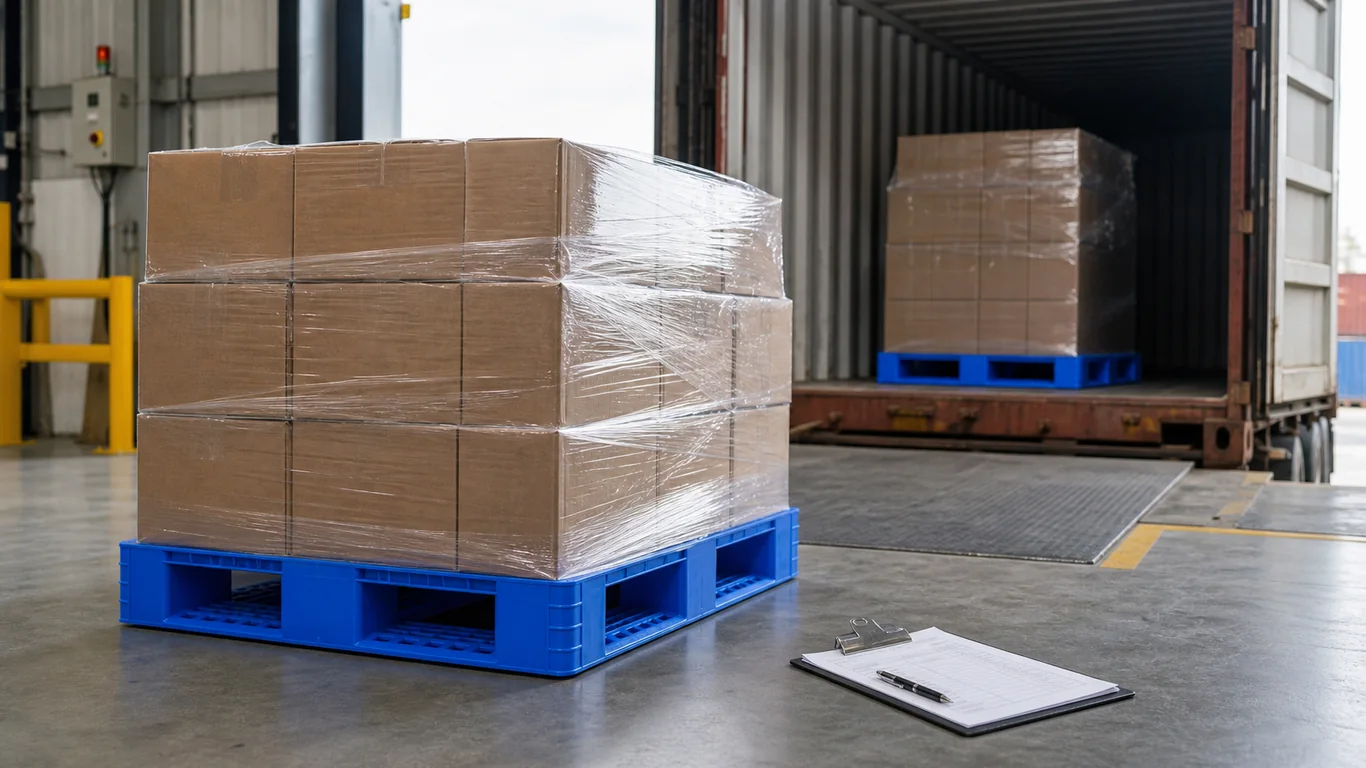
A pallet made entirely from plastic is outside the wood-packaging treatment and marking scope of ISPM 15. That is useful, but it answers only one question. It does not by itself approve the shipment, the cargo, the pallet’s load performance, food-contact use, or entry into a particular country.
An export buyer can avoid both overclaiming and unnecessary paperwork by separating the decision into three checks:
- Is any regulated wood packaging material present?
- What does the destination and the cargo require?
- Does the selected plastic pallet fit the actual load and handling system?
1. Record the ISPM 15 material-scope decision
ISPM 15 addresses phytosanitary measures for wood packaging material made from raw wood and used in international trade. The standard covers items such as wood pallets and dunnage; it also identifies exemptions for some processed wood products. A plastic pallet is not wood packaging material.
For procurement and shipping records, identify:
- the pallet as plastic;
- the supplier and exact pallet model;
- the dimensions and ordered quantity;
- whether any separate wood blocks, braces, skids, cases, or dunnage will be added.
This creates a clear reason why the plastic pallet itself is outside the ISPM 15 wood-treatment and IPPC-marking scope. Do not describe the pallet as “ISPM 15 certified,” and do not treat the absence of an IPPC mark on plastic as a defect. ISPM 15 marks apply to compliant wood packaging material under the responsible national system; they are not a general shipment-approval mark.
Mixed packaging changes the answer
A plastic pallet does not remove the need to check other packaging. If the completed load also uses raw-wood dunnage, bracing, frames, crates, or other regulated wood packaging, those components must be assessed separately. Record the whole packaging assembly, not only the pallet material.
2. Confirm destination and cargo requirements separately
Being outside ISPM 15 scope is not the same as customs clearance. Before shipment, the importer or its broker should confirm the current requirements for the destination, transit points, and cargo with the relevant customs, plant-protection, food-safety, or other competent authority.
The separate questions may include:
- import conditions for the commodity;
- cleanliness or freedom from soil, plant debris, and contamination;
- documentation requested by the importer, carrier, port, or regulator;
- restrictions that apply to the cargo rather than the pallet;
- hygiene or material requirements for the intended use;
- local rules for returnable packaging or waste.
For example, USDA APHIS lists plastic pallets among alternatives that are not subject to its U.S. wood-packaging regulation. That is a useful U.S.-specific confirmation, not a promise that every shipment will clear U.S. customs or that the same wording applies in every market.
Use this concise statement in an internal shipment file when it is accurate:
The load uses model [model] plastic pallets. No raw-wood pallet or wood dunnage is included. ISPM 15 wood-treatment and marking requirements therefore do not apply to the plastic pallets. Destination and commodity requirements were checked separately by [responsible party] on [date].
If wood is present, replace that statement with a component-by-component record.
3. Approve the pallet for the actual handling job
ISPM 15 scope says nothing about whether a pallet can safely carry a particular load. Complete the operational specification before ordering.
| Check | Information to confirm |
|---|---|
| Load | Product, packaging, total mass, load distribution, overhang, and load securing |
| Handling | Forklift or pallet-truck type, fork direction, fork dimensions, and handling frequency |
| Storage | Floor stacking, block stacking, racking, or other supports; required duration and temperature |
| Interfaces | Container opening, rack beams, conveyors, pallet inverters, stretch wrappers, and destination equipment |
| Material and hygiene | New or recycled material requirement, cleaning method, contamination controls, and any regulated end-use condition |
| Identification | Logo, printed text, or other supported marking required for ownership and receiving |
Do not approve a model from a generic “static,” “dynamic,” or “rack” load figure alone. Ask what support and test conditions the figure assumes, then compare those conditions with the real load and equipment. If racking, conveyors, automated handling, low temperature, unusual chemicals, or concentrated loads are involved, review those interfaces explicitly and run a representative trial where appropriate.
A practical supplier request
Send the same information to every supplier so that quotations are comparable:
- destination country and any known transit requirements;
- cargo type and intended use;
- required pallet length, width, height, and entry direction;
- typical and maximum completed-load mass and its distribution;
- floor, stacking, racking, conveyor, or other support conditions;
- forklift and pallet-truck details;
- temperature, cleaning, and hygiene conditions;
- quantity, container plan, marking, and packaging requirements.
Baoheng can use these inputs to help compare available models and container quantities. Material, structure, reinforcement, customization, price, and lead time must be confirmed for the selected model and order rather than inferred from the general fact that it is plastic.
The decision in one sentence
Choose a plastic pallet only after documenting all three layers: outside ISPM 15 wood-packaging scope, acceptable for the destination and cargo, and suitable for the real handling system.
To request a model comparison, send the product type, size, quantity, intended use, load requirement, destination port, and any racking or equipment constraints through the inquiry form .