Industry Insights
Wooden to Plastic Pallets: Warehouse Upgrade Decision Guide
Decide when replacing wooden pallets with plastic pallets is justified, what conditions to verify, and what RFQ data to send before a warehouse upgrade.
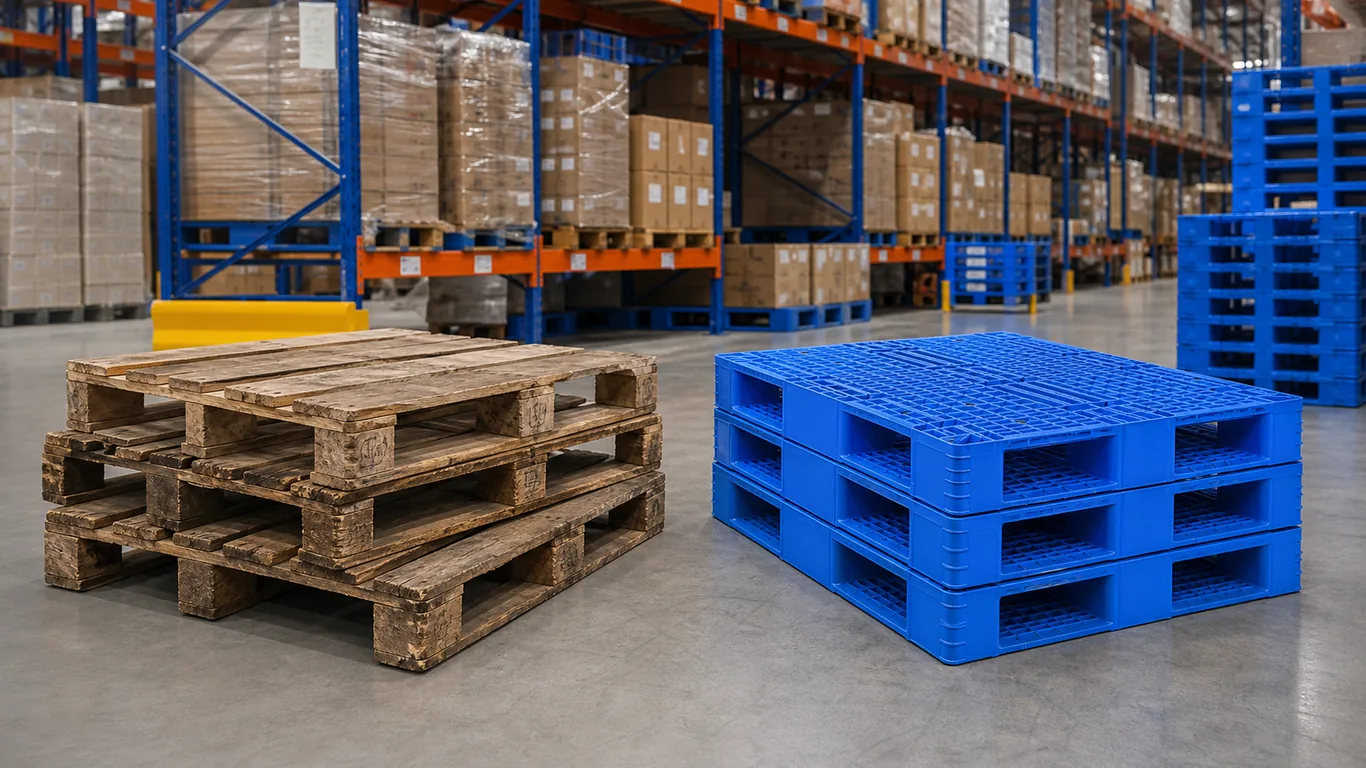
Replacing wooden pallets with plastic pallets is worth reviewing when pallet damage, moisture, hygiene controls, export paperwork, automated handling, or racking consistency create more cost or risk than the purchase price suggests. Wood can still be the practical choice for low-risk, one-way domestic moves where breakage, cleanliness, and dimensional repeatability are not critical. The useful question is not “Which material is better?” It is whether a specific pallet model, load rating, deck and base structure, material route, and inspection plan fit your goods, equipment, storage method, and reuse cycle.
Use this guide before asking for quotations. It helps warehouse, logistics, quality, and procurement teams define where plastic pallets can reduce uncertainty, where wood may remain acceptable, and what facts must be confirmed before a bulk order.
A quick decision rule
Start with the operating lane, not the catalog.
| If your lane looks like this | Practical direction |
|---|---|
| One-way shipment, low value goods, no hygiene exposure, no racking, local destination | Wood or light-duty export plastic may both be considered. Compare landed cost, disposal, customer restrictions, and damage history. |
| Reusable closed loop, repeated forklift handling, wet floor, outdoor staging, or customer-visible storage | Review plastic pallets because moisture resistance, cleaning, and dimensional consistency may reduce operating friction. |
| Selective racking, high-bay storage, AS/RS, heavy loads, or long dwell time on beams | Do not treat “plastic” as enough. Specify rackable structure, beam span, load distribution, deflection limit, reinforcement, and sample validation. |
| Food, beverage, pharmaceutical support areas, washdown, or audited logistics | Confirm hygiene expectations, material route, cleaning chemistry, color control, and any required documents for the actual pallet model. |
| Chemical, oil, or leaking liquid exposure | Standard pallets may not be sufficient. Review containment, chemical compatibility, cleanup method, and EHS requirements. |
This rule is only a first screen. Final approval should be based on the exact pallet data sheet, supplier limitations, and handling tests under the real route.
What changes when you move from wood to plastic?
Wooden and plastic pallets solve different problems. A responsible comparison should include more than unit price.
| Decision factor | Wooden pallets | Plastic pallets |
|---|---|---|
| Unit price | Usually lower and widely available | Usually higher, with more variation by material, mold, structure, and reinforcement |
| Dimensional consistency | Can vary by supplier, moisture, repair quality, and batch | Molded dimensions are usually more consistent, but tolerances still need confirmation |
| Moisture and cleaning | Can absorb moisture and retain dirt; cleaning options are limited | Does not absorb water like wood; cleaning depends on deck design, surface condition, detergent, and temperature |
| Damage mode | Broken boards, loose nails, splinters, warpage | Cracked corners, runner wear, deck deformation, fork-entry damage, or brittle failure if material or use is wrong |
| Racking suitability | Must be confirmed by structure and condition; damaged boards increase risk | Must be confirmed by rack rating, beam span, support direction, load distribution, and deflection behavior |
| Export compliance | Wood packaging may require ISPM 15 treatment in many international lanes | All-plastic pallets are outside wood-treatment rules, but destination, customer, and document requirements still need review |
| End of life | Repair, reuse, disposal, or recycling depend on local systems | Reuse and recycling may be possible when material stream and recovery route are controlled |
Plastic pallets do not automatically remove operational risk. They make sense when the model is selected for the actual lane and managed with sample approval, incoming inspection, and retirement criteria.
Load ratings must be read with conditions
When comparing options, separate the three load ratings and ask how each was measured.
- Static load applies when a pallet is resting on a flat, solid surface. It does not prove the pallet is safe on rack beams.
- Dynamic load applies when the pallet is lifted and moved by forklift or pallet jack. Fork length, entry direction, acceleration, and floor condition matter.
- Racking load applies when the pallet is supported by beams with the center span suspended. Beam spacing, support direction, load distribution, temperature, dwell time, and safety margin materially affect performance.
Do not compare load numbers from different suppliers unless the support condition and test method are comparable. A pallet rated for a uniform boxed load may behave differently under drums, sacks, partial cartons, metal parts, or other point-loaded goods.
For racked storage, use the racking pallet steel reinforcement checklist before approving a design. If the site already has rack beams, measure the clear span and confirm whether the pallet will be supported by runners, perimeter base, deck edges, or another contact pattern.
Choose the structure for the storage method
Plastic pallet structure is not cosmetic. It controls how load transfers into the floor, rack, forklift, truck, or container.
| Structure | Where it often fits | Boundary to confirm |
|---|---|---|
| Nestable nine-leg pallet | Export, empty return, light-to-medium floor handling, cost-sensitive lanes | Usually not the default for sustained beam racking unless specifically designed and rated for it |
| Three-runner rackable pallet | Selective racking, repeated forklift handling, standardized warehouse loops | Beam span, runner direction, reinforcement, rack load, and deflection limit |
| Perimeter-base or stackable pallet | Floor stacking, stable block storage, heavy internal circulation | Pallet jack access, nesting loss, deck flatness, and stacking method |
| Double-faced pallet | Heavy floor stacking or reversible handling in some operations | Compatibility with pallet jacks, conveyor contact, and load orientation |
| Spill containment pallet/platform | Oils, chemicals, drums, leaking liquids, EHS-controlled zones | Sump capacity, chemical compatibility, drain rules, and local regulatory expectations |
If your network includes export lanes and racked domestic storage, a two-pallet strategy may be safer and cheaper than forcing one compromise model everywhere. Use nestable vs rackable pallet selection to define those lanes before issuing an RFQ.
Material and hygiene claims need limits
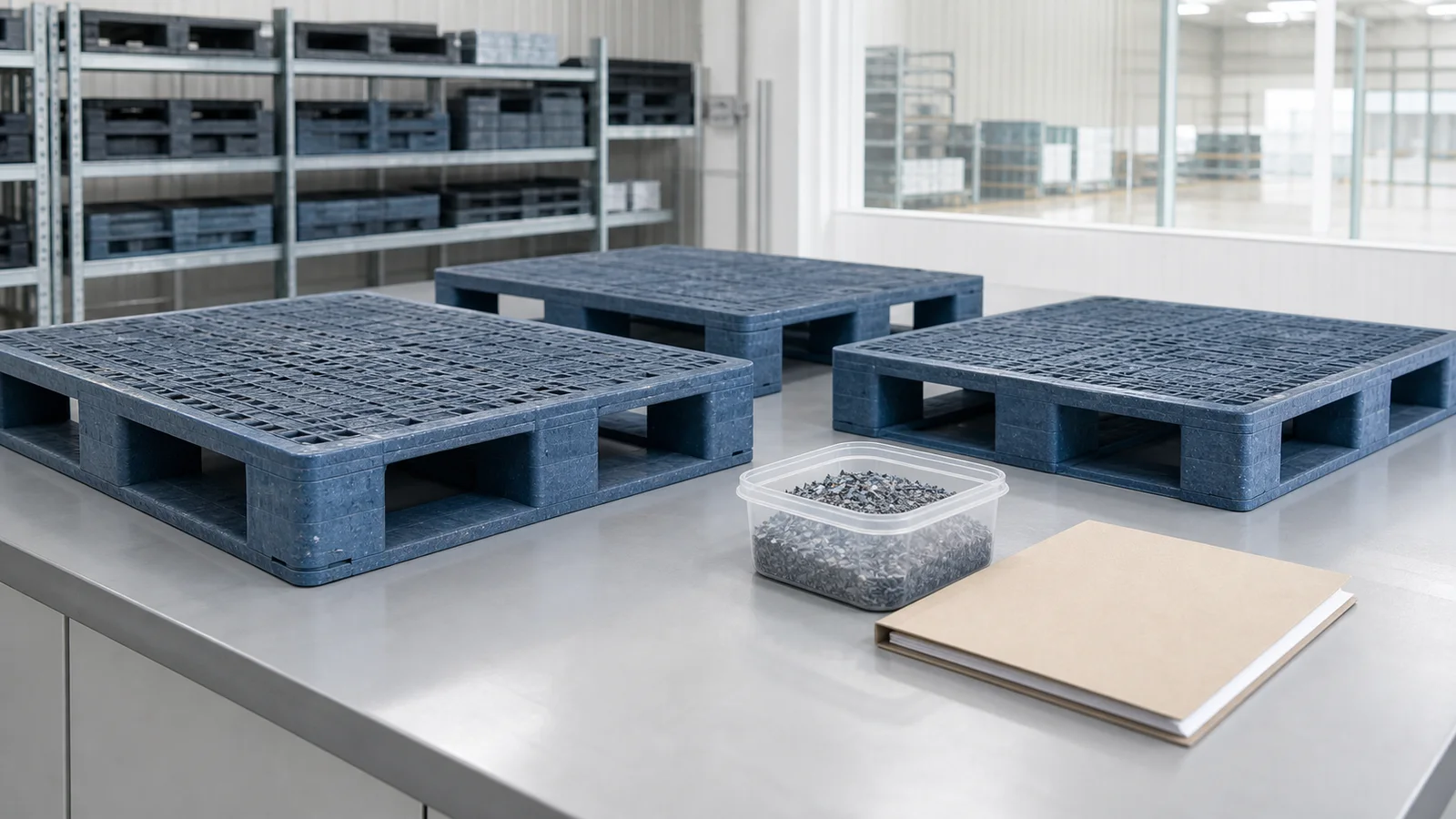
HDPE and PP are both common pallet materials. Virgin, recycled, and blended routes can all be valid when they match the use case and are controlled. The key is to specify the material route, not just the resin name.
Ask the supplier to state:
- whether the pallet is HDPE, PP, or a declared blend;
- whether the route is virgin, recycled, internal regrind, or a controlled mix;
- any relevant UV, color, anti-static, impact modifier, or other additive package;
- whether the same material route will be used for production after sample approval;
- what conditions are outside the supplier’s recommended use.
For food, beverage, and pharmaceutical support areas, do not treat “plastic,” “new material,” or “food grade” as interchangeable claims. Direct food contact, sealed-carton logistics, clean-area support, and general warehouse handling can require different documents. Use the food-contact pallet document checklist where hygiene or customer audits are part of the decision.
For material selection details, pair this page with the HDPE vs PP pallet RFQ guide .
Calculate cost by lane, not by pallet price
A simple total-cost review is often enough. Avoid using an invented lifespan or saving claim unless your own records support it.
Build a lane-level comparison with these buckets:
- purchase price per usable pallet;
- expected number of trips or months in service, based on your own damage and loss history;
- repair, sorting, disposal, or cleaning labor;
- product damage, rejected loads, downtime, and safety incidents related to pallet condition;
- freight impact, especially empty return volume and container/truck utilization;
- document, quarantine, or customer-compliance cost for export and audited lanes;
- end-of-life recovery, recycling, or disposal route.
For many sites, the strongest case for plastic pallets is not a universal “they last longer” statement. It is a documented reduction in breakage, cleaning difficulty, dimensional variation, export preparation, or rack-related uncertainty in a specific lane.
RFQ information to send before quotation
A supplier can only recommend a suitable model if the RFQ describes the work the pallet must do. Send this information with photos where possible:
- pallet footprint required and acceptable alternatives;
- product type, packaging type, palletized load footprint, typical load, peak load, and point-load risk;
- storage method: floor stack, block stack, selective rack, drive-in rack, AS/RS, conveyor, or mixed use;
- rack beam span, support direction, dwell time, temperature, and stacking height where relevant;
- forklift, pallet jack, conveyor, stretch wrapper, and truck/container constraints;
- hygiene, cleaning, sanitizer, outdoor, cold room, freezer, UV, chemical, ESD, or color-coding requirements;
- export destination and whether wood packaging, ISPM 15, or customer-specific packaging rules influence the comparison;
- expected reuse cycle, return logistics, loss rate, and inspection process;
- documents required before approval, such as data sheet, material statement, test report, or limitation note.
For a full procurement template, use the plastic pallet RFQ specification checklist .
Pilot and acceptance checklist
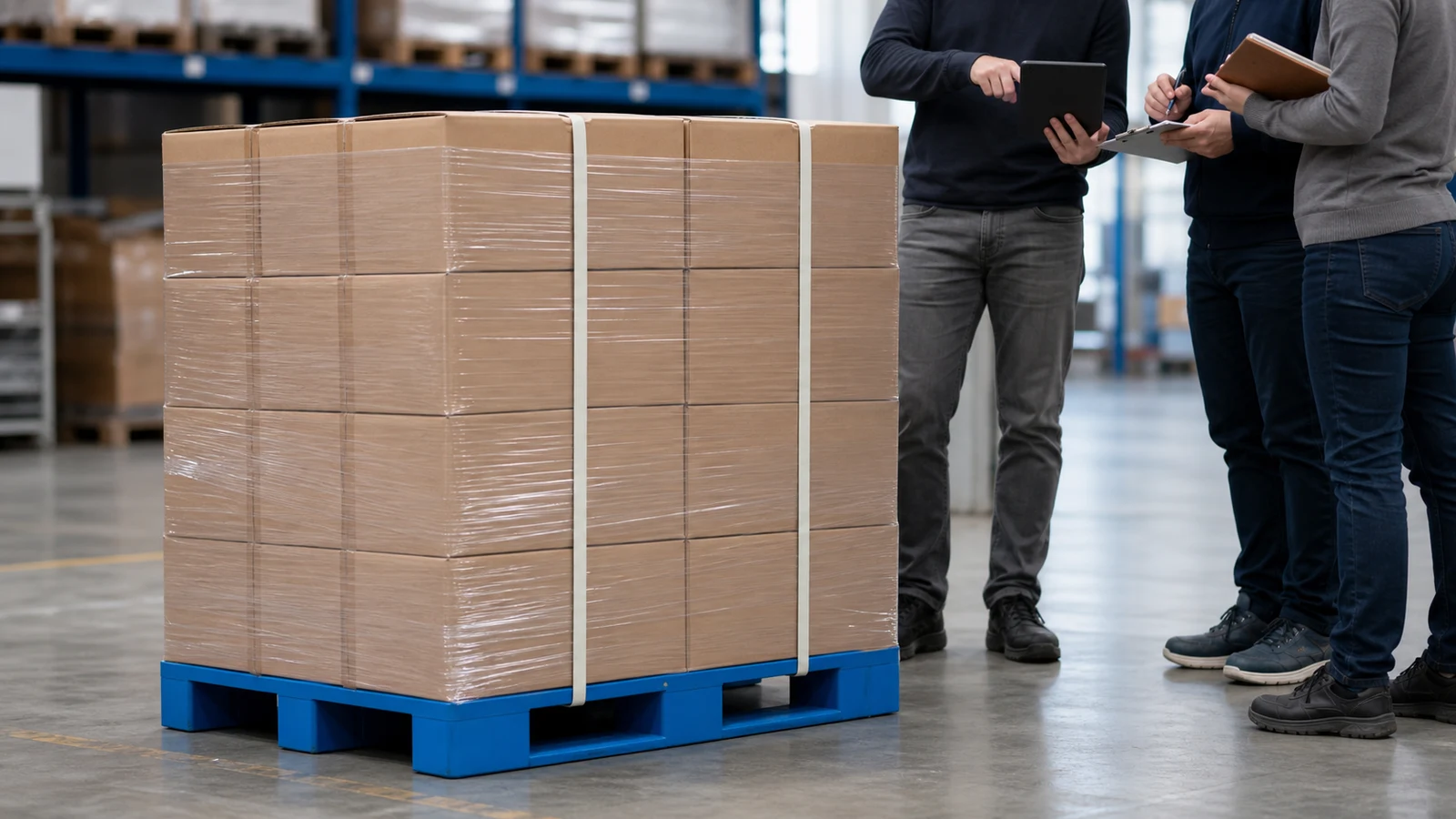
Before replacing a large pallet pool, run a controlled pilot in the harshest realistic lane, not only in the cleanest area.
Check:
- sample dimensions, weight, deck flatness, runner contact, color, labels, and visible molding quality;
- forklift and pallet jack entry from all required directions;
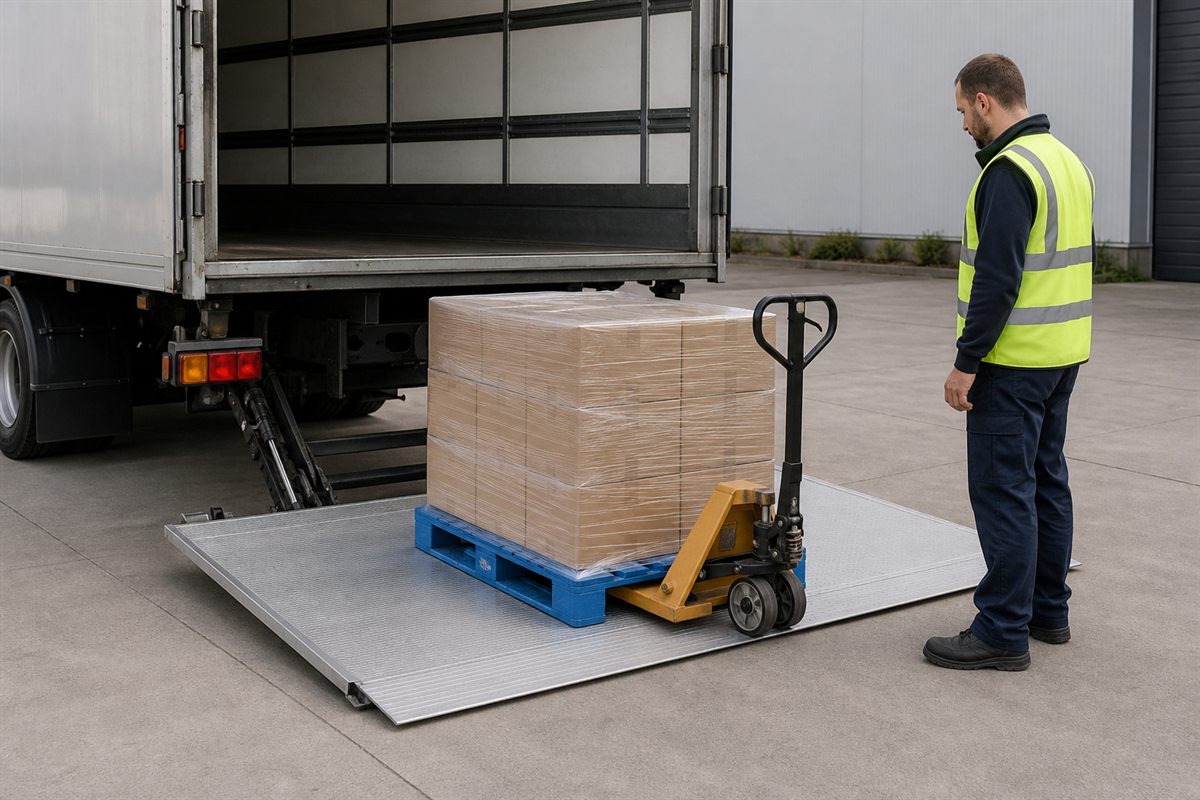
- loaded movement through normal turns, ramps, dock plates, and truck loading;
- rack deflection after the planned dwell time if beam storage is used;
- stacking stability and carton overhang behavior;
- cleaning, drying, condensation, odor, or residue where hygiene matters;
- damage at fork-entry points, corners, runners, and deck edges after repeated handling;
- whether the delivered production lot matches the approved sample and material statement.
Define a pass/fail rule before the trial. Photos, measurements, and short inspection notes are more useful than a general statement that the pallet “worked well.”
Bottom line
Switching from wooden to plastic pallets is a warehouse-system decision. Plastic pallets are strongest where repeatability, cleanliness, reuse, export simplicity, or rack safety justify a controlled specification. Wood may still be practical where the lane is low-risk, short-term, and price-sensitive.
Before approving the change, define the lane, load, support method, structure, material route, cleaning or export requirements, sample test, and acceptance criteria. That gives procurement, operations, quality, and suppliers the same basis for a useful quotation and a safer rollout.