Industry Insights
Plastic Pallet, Pallet Box, or Tote Selection Guide
Choose between plastic pallets, pallet boxes, totes, crates, and trays by load, handling route, cleaning, return, and sample-test needs.
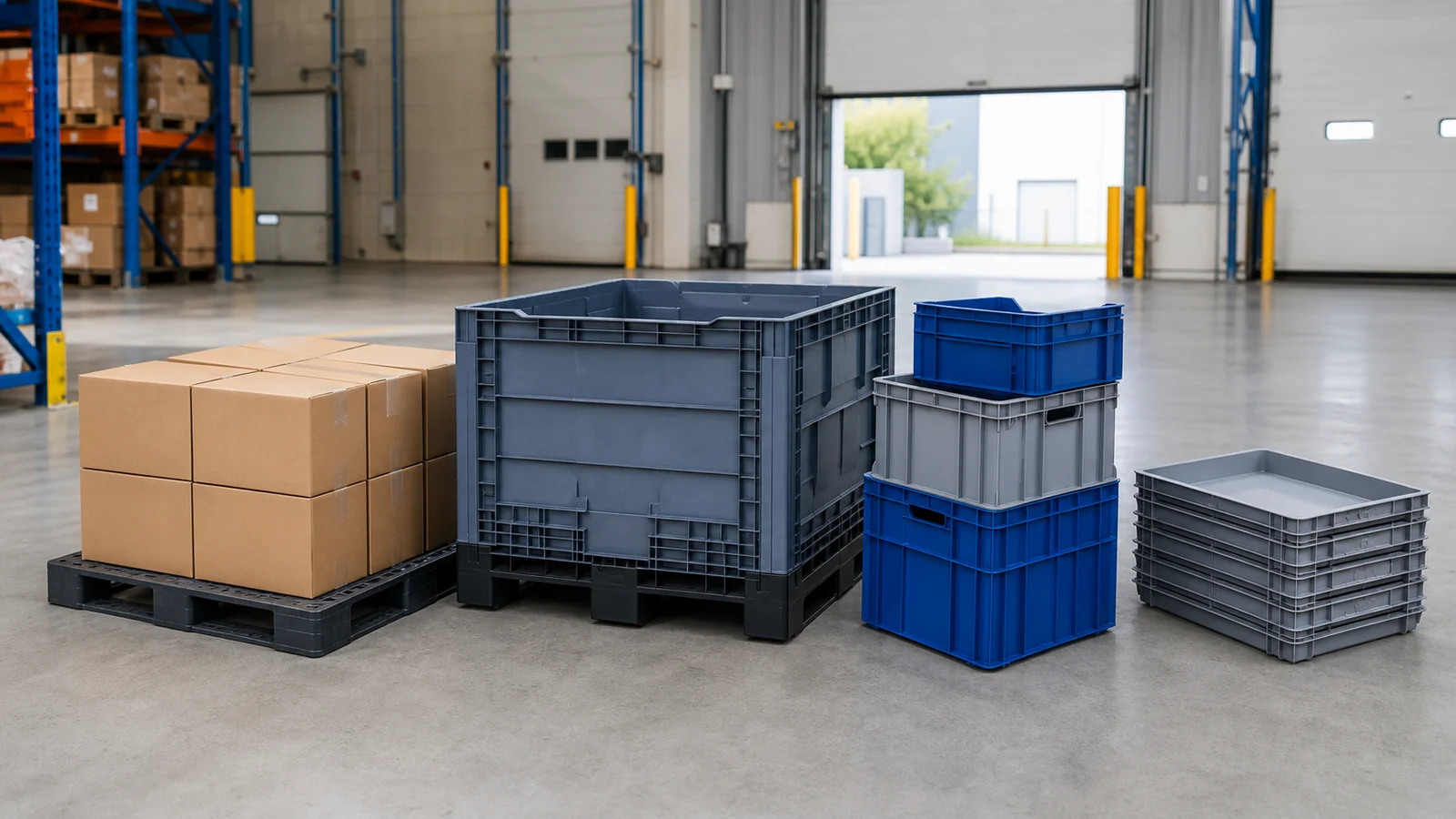
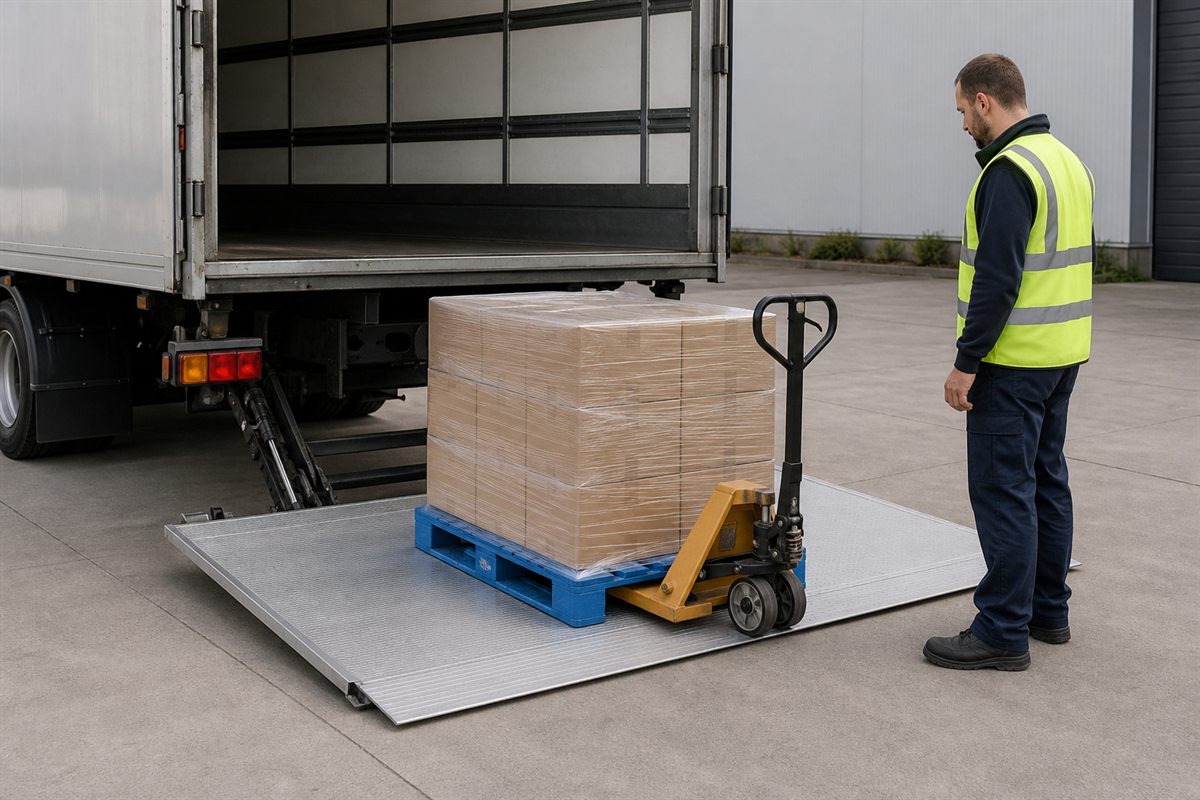
A plastic pallet is not always the right first answer. Sometimes the load needs a flat support surface. Sometimes it needs sidewalls. Sometimes it needs a small container for picking, a tray for freezing or drying, or a carrier that can be washed and returned without creating new handling problems.
Before asking for a price, define the job of the load carrier. The useful question is: what must the carrier do between receiving, storage, picking, transport, washing, return, and the next use? That route decides whether you should start with a plastic pallet, pallet box, crate, tote, or tray.
This guide is a selection framework, not model approval. Any final decision still needs the supplier’s current product data and sample checks under the actual load, support, temperature, cleaning, and handling conditions.
Start with the route, not the product name
Begin with six facts:
- goods format: cartons, bags, loose parts, pails, produce, trays, or mixed SKUs;
- support need: full deck, ribbed deck, runners, sidewalls, dividers, or shelf contact;
- access need: forklift, pallet jack, manual picking, conveyor, AS/RS, line-side use, or return handling;
- environment: ambient, cold room, washdown, outdoor staging, wet area, food support area, or chemical exposure;
- return plan: one-way export, internal reuse, customer return, pooled circulation, or no planned return;
- documentation need: drawing, material route, test reference, food-contact file, traceability, or reusable-packaging record.
Pallet testing language such as ISO 8611-1:2025 can help buyers discuss tests for flat pallets, but it does not approve every real warehouse route. The carrier should be judged as part of the full unit load, not as an isolated product. Virginia Tech’s Center for Packaging and Unit Load Design is a useful reminder of that broader view.
Quick decision matrix
| If the main job is… | Start by reviewing… | Why | Still confirm |
|---|---|---|---|
| Supporting stable cartons, wrapped loads, or palletized bags | Plastic pallet | Gives a flat handling base for forklift, pallet jack, floor storage, rack, or conveyor routes | Load distribution, deck support, runner/base design, rack span, pallet-jack entry, sample test |
| Containing loose, irregular, or returnable bulk goods | Pallet box or bulk container | Sidewalls reduce loose movement and can simplify returnable handling | Internal size, usable volume, base entry, stacking/folding, cleaning, drainage, lid |
| Moving small parts, WIP, picking-face inventory, or line-side goods | Crate or tote | Easier hand access and smaller replenishment quantity | Stack/nest fit, handholds, label position, shelf/conveyor fit, palletized transfer |
| Freezing, drying, draining, or separating process layers | Tray | Supports process flow rather than only transport | Temperature, airflow, drainage, stack clearance, wash release, product contact documents |
| Reducing empty-return space | Nestable pallet, folding crate, or foldable pallet box | Empty volume may fall when the return route is controlled | Nesting height, stuck-unit risk, return damage, transport stability |
Use the matrix to choose a starting point, not a final model. A wrong category can make every later specification harder.
When a flat plastic pallet is the right starting point
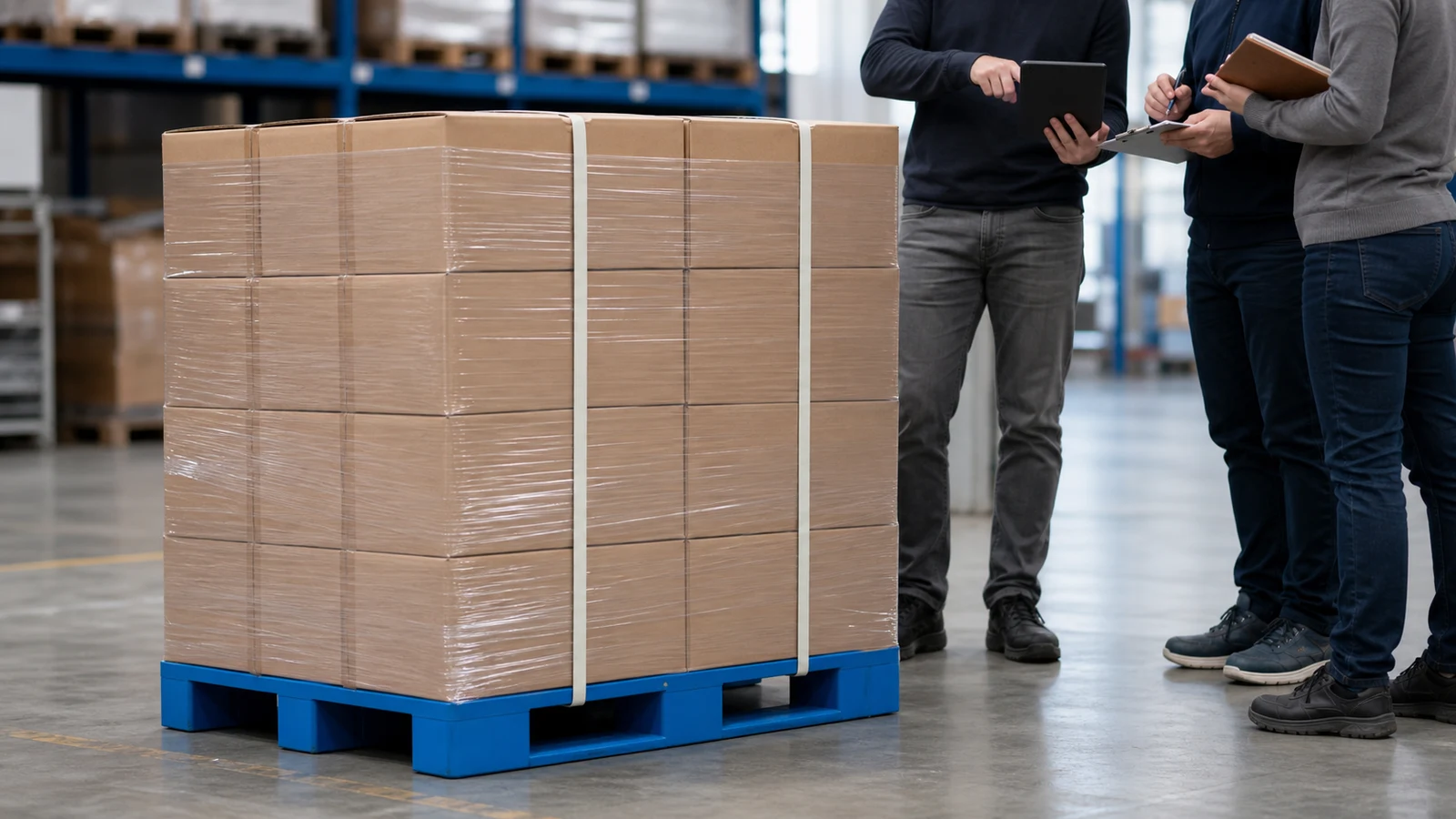
Start with a flat pallet when the goods are already stable enough to sit on a deck and the main task is support, transport, storage, or transfer. Typical examples include sealed cartons, wrapped unit loads, crates consolidated for shipment, or bagged goods where deck contact is sufficient.
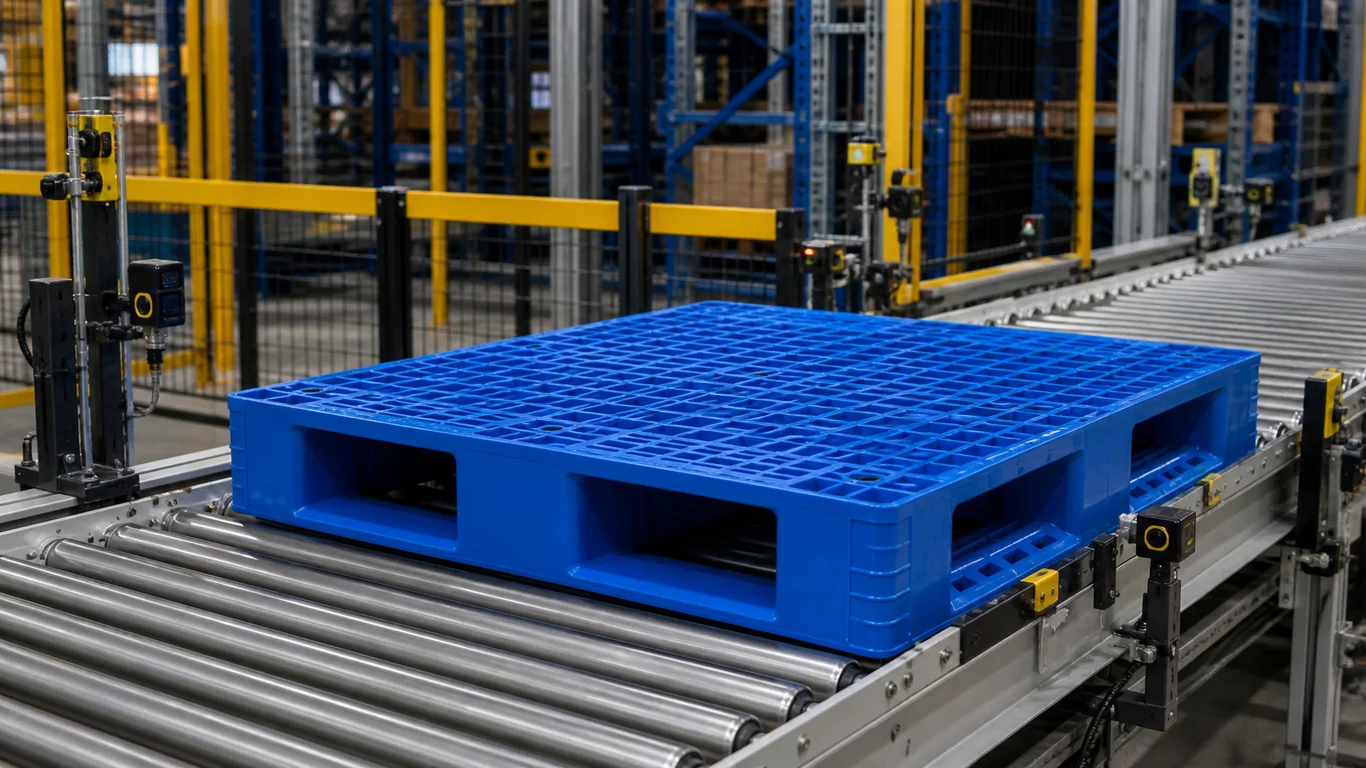
Then choose the structure by route. A nestable pallet may suit one-way export or empty return. A rackable pallet may be needed for beam storage, subject to rack span, load distribution, temperature, dwell time, and deflection acceptance. A pallet for automation needs bottom contact, dimensional stability, and detection checks, not only a load rating.
Use the plastic pallet RFQ checklist to define the basic fields. If you are unsure whether the route needs nesting or racking, compare the logic in nestable vs rackable plastic pallets . For pallet-jack routes, review pallet-jack compatibility before approving samples.
When a pallet box or bulk container is the better candidate
Choose a pallet box or bulk container when the problem is containment, not only support. Loose components, irregular returns, produce, bulk parts, and unpacked goods may shift, spill, deform, or require extra secondary packaging on a flat pallet. Sidewalls can make the unit easier to handle and count, but they also add weight, cost, cleaning surfaces, and empty-return questions.
For return lanes, folding or sleeve-pack formats may reduce empty space. That benefit is route-specific. A folded box that saves space in a catalog can still fail if the return stack is unstable, dirty, wet, or hard to close. Use the foldable pallet box return-space calculation before treating folding ratio as a saving.
Review the pallet boxes and bulk containers family when the goods need sidewalls, reusable bulk handling, or returnable containment. Confirm internal dimensions, usable volume, base entry, stacking or folding behavior, lid needs, cleaning route, and any documentation required by the customer.
When crates, totes, or trays make more sense
Crates and totes usually make more sense when the carrier must support picking, kitting, line-side replenishment, work-in-process, or small-part control. They may be moved by hand, shelves, carts, conveyors, or goods-to-person systems, then consolidated onto a pallet for transport. In that case, the tote and the pallet should be planned together.
Use crates, boxes, and totes when the operation needs smaller units, hand access, nesting, stacking, or SKU separation. Check handholds, label positions, washing and drying, nesting behavior, and the way the full stack is palletized.
Trays are different again. A freezing tray or drying tray is often chosen for process flow: airflow, drainage, separation, cooling, drying, or wash release. Review freezing and drying trays when the load carrier is part of the process, not just a transport base.
Scenario A/B/C: how to judge the route
A. Stable cartons moving through forklift and pallet-jack routes. Start with a pallet. Define pallet size, deck type, bottom structure, pallet-jack entry, wrapping, floor or rack storage, and sample-test conditions.
B. Loose parts or irregular returns. Start with a pallet box or bulk container. Define usable volume, sidewall strength, empty return, cleaning, labeling, and whether the goods need a lid or liner.
C. Small parts for picking or line-side use. Start with crates or totes, then plan how they move on pallets, carts, shelves, or conveyors. Do not make the pallet solve a picking-access problem.
D. Wet, cold, freezing, drying, or washdown routes. Start with drainage, drying, temperature, and cleaning release. A tray, cleanable crate, or closed-deck pallet may be suitable, but the final choice depends on the product and process.
When not to choose a plastic pallet or our products
Pause when the exact model data is missing for the load, support, equipment, or environment. A pallet that is fine on the floor may not be safe in racking. A tote that works on shelves may not work on a conveyor. A pallet box that contains parts may be too heavy, too hard to wash, or too costly to return.
Also pause when the route involves dangerous goods, direct food contact, pharmaceutical controls, chemical exposure, static-sensitive areas, fire-risk storage, or legal compliance claims without the required documents. OSHA powered industrial truck guidance is a reminder that handling safety is part of the route, but it does not approve a carrier model. EU packaging rules such as Regulation (EU) 2025/40 may also affect reusable transport packaging planning, but legal scope and reporting responsibility must be confirmed with the responsible operator or adviser.
Sometimes the better answer is a customer-specified pool pallet, metal stillage, disposable export packaging, custom dunnage, or a certified system outside the supplier’s scope. A responsible shortlist should say that early.
Questions to ask before approving samples
Before requesting a price, send suppliers a short route brief:
- What are the goods, dimensions, weight range, and contact pattern?
- Will the carrier support cartons, bags, loose parts, pails, trays, or mixed SKUs?
- Which equipment will touch it: forklift, pallet jack, conveyor, AS/RS, shelf, cart, wrapper, or truck?
- Will it be stored on the floor, stacked, racked, nested, folded, washed, frozen, dried, or returned?
- Which claims are supplier model data, and which require loaded sample testing?
- What documents are available: drawing, material route, test reference, food-contact file, traceability option, packing data, or change-control rule?
- What should trigger rejection after use: cracks, deformation, contamination, missing label, worn entry, trapped water, or unstable folding?
If you are preparing a mixed carrier RFQ, share the goods, route, equipment, and return conditions first. A supplier can then help you rule out the wrong carrier category before spending time on detailed model selection.