Industry Insights
Foldable Pallet Boxes: How to Calculate Return-Space Savings Before You Buy
A practical method for B2B logistics teams to calculate whether foldable pallet boxes can reduce empty-return volume, storage pressure, and circulation cost before placing a bulk order.
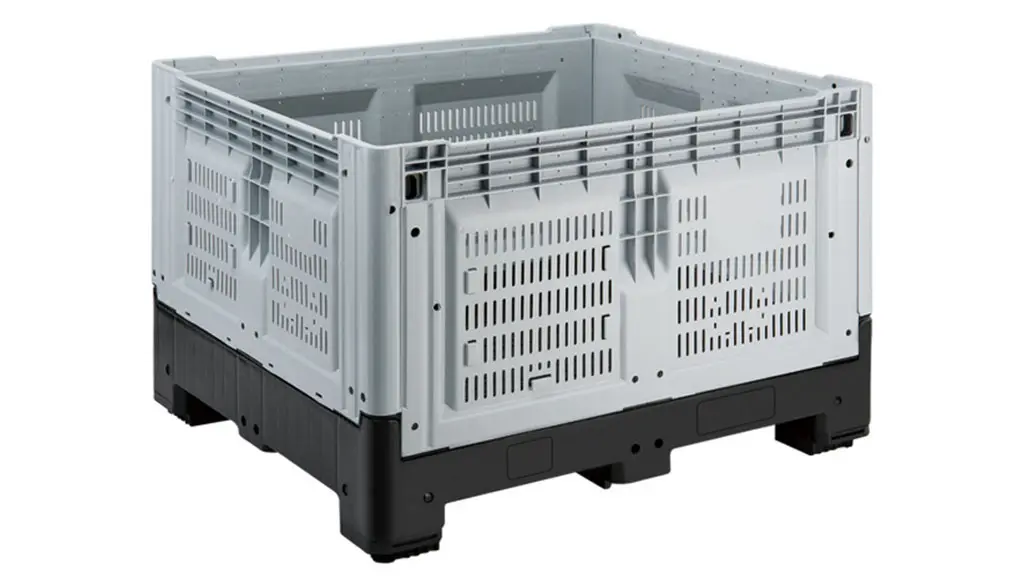
Foldable pallet boxes are often selected for one clear reason: they carry bulk goods on the outbound trip and collapse into a smaller footprint on the return trip. For logistics managers, however, the real question is not whether the box folds. The question is whether the folding ratio creates enough savings to justify the change in packaging, handling, cleaning, and control.
A good decision starts with numbers. Before ordering a full fleet of collapsible pallet boxes, buyers should calculate how much empty-return volume can actually be removed from the lane, how many boxes are needed in circulation, and where operational limits may reduce the expected benefit.
This article provides a practical calculation framework for returnable bulk packaging projects in manufacturing, distribution, food processing, retail supply, and component logistics.
1) Define the lane before comparing packaging
Foldable pallet boxes perform best in repeatable lanes where empty packaging returns to the shipper, supplier, or pooling point. They are less convincing when packaging is rarely recovered, customer unloading is uncontrolled, or reverse logistics is too fragmented.
Start by documenting one lane, not the whole network:
- shipping origin and return destination,
- customer or plant receiving point,
- average outbound shipments per week,
- average loaded boxes per shipment,
- empty-return frequency,
- transport mode and vehicle size,
- storage space available for empty boxes at both ends.
This prevents a common purchasing error: using a product-level folding ratio while ignoring lane behavior. A box may fold to one-third of its loaded height, but the lane may still fail to use that advantage if empty boxes wait too long, return in mixed batches, or move on trucks that are already weight-limited rather than volume-limited.
If the project also involves pallet circulation, the same lane discipline used in an empty-return logistics playbook can help teams separate transport savings from inventory-control problems.
2) Calculate empty-return cube, not only unit count
The simplest comparison is the number of empty containers per truck. The more useful comparison is cubic volume.
Use this basic method:
- Measure the external footprint and loaded height of the current container or rigid box.
- Measure the folded height of the foldable pallet box.
- Calculate empty volume per unit.
- Divide available truck or storage cube by the empty volume per unit.
- Compare the number of empty units that can return per trip.
A simple formula is:
Empty cube per unit = length × width × folded height
For example, if a foldable pallet box has a 1200 × 1000 mm footprint and folds to 320 mm high, its empty cube is:
1.2 m × 1.0 m × 0.32 m = 0.384 m³
If the existing rigid container remains 800 mm high when empty, its empty cube is:
1.2 m × 1.0 m × 0.8 m = 0.96 m³
In this example, the foldable option uses 60% less cube per empty unit. That does not automatically mean freight cost falls by 60%, but it shows the maximum volume-side opportunity before lane constraints are applied.
3) Check whether the lane is volume-limited or weight-limited
Foldable packaging creates the largest transport benefit when empty returns are limited by space. If trucks already reach a weight limit before filling the trailer, folded height may not change the number of units moved.
Ask three questions:
Are empty returns leaving with unused floor space or unused height?
If empty rigid boxes fill the floor and height quickly, folding can improve cube utilization. If returns are already consolidated with other light goods, the saving may be smaller.
Is the outbound trip also affected?
A foldable pallet box may improve return transport, but the loaded outbound trip depends on usable internal volume, stacking capacity, product protection, and handling method. Do not approve the change using return data alone.
Does the truck cube translate into actual freight savings?
Some lanes are charged by full truckload, some by pallet position, some by dimensional weight, and some by negotiated route rates. The financial model should match the carrier pricing structure, not only the packaging geometry.
A strong business case normally shows both operational savings and commercial savings:
- fewer empty-return trips,
- higher reverse-load density,
- lower temporary storage demand,
- reduced urgent recoveries,
- easier planning of return windows.
4) Include storage savings at both ends of the lane
Return-space savings are not limited to trucks. In many warehouses, the bigger benefit is reduced empty-packaging storage.
Calculate the storage impact at three points:
- shipper staging area before loading,
- receiver area after unloading,
- return consolidation point before dispatch.
For each point, estimate:
- peak empty quantity,
- stack height limit,
- floor positions required,
- time empty boxes remain on site,
- forklift access and aisle clearance.
A foldable pallet box can reduce floor pressure when folded units are stacked safely and returned on a routine schedule. But the project can underperform if empty boxes are collapsed late, mixed with damaged units, or left unfolded because operators are not trained.
A useful rule is to calculate savings twice:
- best case: all empty boxes are folded immediately after unloading;
- operating case: only the percentage normally folded within the first shift is counted.
The operating case is usually closer to the real result.
5) Do not ignore handling time and ergonomics
A collapsible box changes the work sequence. Operators may need to release side panels, fold sleeves, secure lids, stack empty units, and inspect hinges or locking points. If the box saves freight but slows receiving or creates unsafe handling, the project will face resistance.
During trial use, record:
- seconds required to fold one empty box,
- number of operators required,
- whether gloves are needed,
- pinch-point risks,
- forklift or pallet-jack compatibility,
- damage found after repeated folding cycles.
The aim is not to eliminate every extra handling step. The aim is to confirm that the extra seconds at the dock are justified by transport and storage gains.
For bulk goods that require forklift-compatible, reusable containment, a product such as a 1200 × 1000 mm foldable pallet box can be reviewed as a reference structure when comparing footprint, load rating, folded handling, and return-space assumptions.
6) Build a simple payback model before bulk purchase
A foldable pallet box project should be judged over cycles, not purchase price alone.
Create a lane-level model with these inputs:
- unit purchase cost,
- current packaging cost per cycle,
- expected cycles per year,
- empty-return freight cost before and after folding,
- storage cost or space value,
- cleaning and maintenance cost,
- loss and damage rate,
- expected service life.
Then calculate:
Annual benefit = freight savings + storage savings + avoided disposable packaging cost - added handling, cleaning, and repair cost
Payback period = initial investment ÷ annual benefit
Procurement teams should be careful with overly optimistic cycle counts. If the box is used in a closed loop with reliable return control, the service life can be long. If the network includes many uncontrolled customers, loss and damage can dominate the economics. In that case, a smaller pilot is safer than a full conversion.
7) Identify operational risks before the pilot
Foldable pallet boxes are practical industrial assets, but they still need control rules. Before launching a pilot, define how the team will manage the following risks.
Incomplete folding at the receiver
If receivers leave empty boxes upright, the return-space saving disappears. Add a visual instruction, folding responsibility, and dispatch check.
Mixed empty stacks
Different models may not stack or lock safely together. Keep model codes visible and define mixed-stack limits.
Overloading during outbound use
Return efficiency does not replace load validation. Confirm dynamic load, static load, stacking load, and any racking requirement before approving the box for production goods.
Cleaning delays
Food, chemical, and dusty industrial environments may require cleaning before reuse. Build cleaning time into the circulation plan so the box pool does not become short during peak weeks.
Poor asset accountability
Reusable packaging needs handover records. At minimum, track quantity, condition, location, and responsible party at each transfer point.
These risks are manageable when they are designed into the process. They become expensive when discovered after hundreds of boxes have already entered circulation.
8) Use a pilot to confirm the calculation
A practical pilot should run long enough to include several outbound and return cycles. For many B2B lanes, 6 to 10 weeks is enough to expose the main issues.
Track five numbers:
- loaded units shipped per week,
- empty units returned per trip,
- average dwell days at the receiver,
- percentage folded before return,
- damage or repair cases per cycle.
Compare actual results with the pre-purchase model. If the pilot proves that folded units return in dense, predictable batches, the project can scale with confidence. If the data shows long dwell time, inconsistent folding, or high loss, solve those control issues before buying more boxes.
Conclusion
Foldable pallet boxes can reduce empty-return volume and storage pressure, but the value depends on the lane. The right calculation goes beyond the catalog folding ratio. It tests cube utilization, freight pricing, storage behavior, handling time, asset control, and real return discipline.
For procurement teams, the strongest approach is to model one lane, pilot the box under real handling conditions, and scale only after the return-space savings are confirmed by operating data. That turns foldable packaging from a promising idea into a measurable logistics improvement.