Industry Insights
Plastic Pallet Load Center Check: When a Pallet Orientation Changes Forklift Capacity
Check the real load center before approving a plastic pallet and unit-load orientation, so a pallet that fits the forks is not mistaken for a load within the truck nameplate condition.
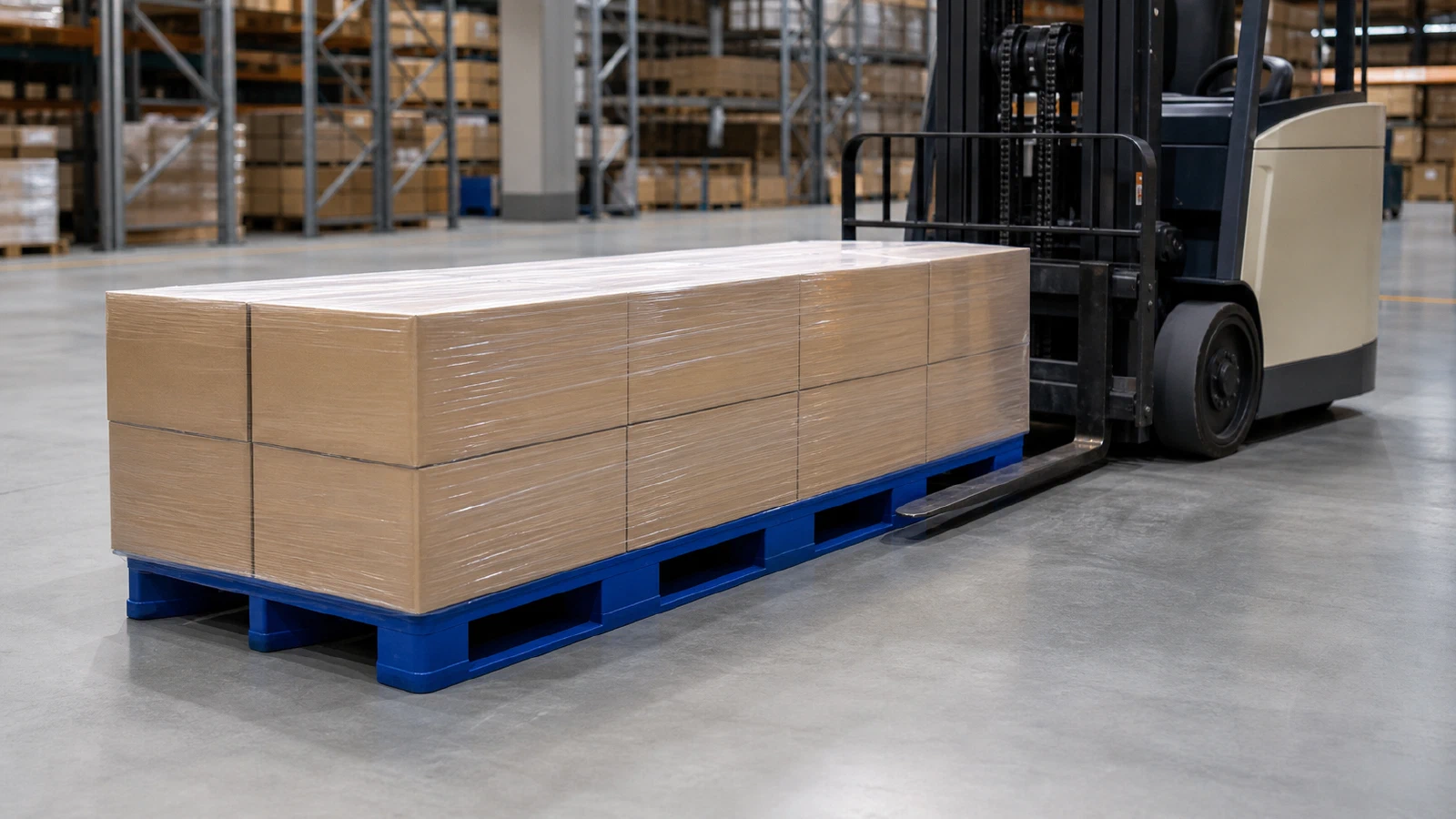
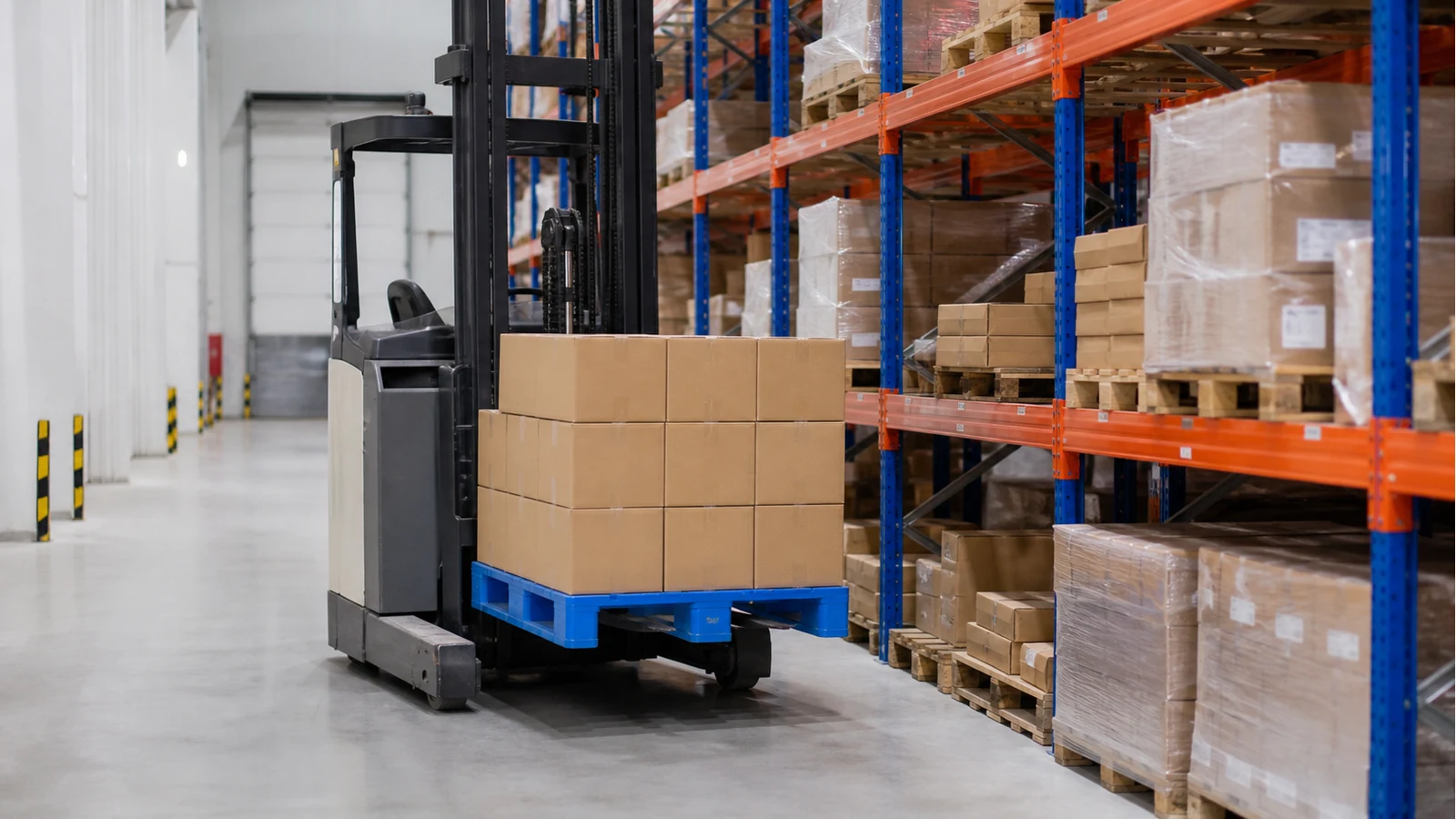
A plastic pallet can fit the forks and still change the condition behind the forklift’s capacity plate. The common mistake is to compare the pallet’s total weight with the truck’s headline capacity, then treat the job as approved. That capacity is tied to a stated load centre. A longer unit load, a different pallet orientation, an uneven carton pattern, a protruding product, or a changed attachment can move the real centre of gravity farther from the fork face.
For the buyer, the useful action is not to calculate a universal capacity from a pallet drawing. It is to make the actual loaded pallet geometry part of the release record, then have the truck owner confirm that the stated nameplate and instructions cover it. A supplier can describe the pallet model and its declared load conditions. The equipment owner and site decide whether this truck can handle this unit load in this orientation.
Start with the load centre, not the pallet’s outside size
OSHA’s powered-industrial-truck material explains that the stated capacity applies only at the load centre shown on the data plate. It also notes that load size, position, and weight distribution affect truck capacity and stability. This is U.S. safety guidance for industrial trucks; it does not certify a plastic pallet or set a universal rule for every truck or jurisdiction.
The practical distinction is easy to miss. A 1200 mm pallet may be carried with its long side parallel to the forks on one route and perpendicular on another. The same goods may be centred in one pattern but pushed outward by a carton overhang, an edge protector, a slip sheet, or a mixed load on the next shift. The pallet itself has not necessarily changed. The distance and distribution that the truck sees may have changed.
Do not turn this into a catalog argument about which pallet is “forklift compatible.” Record the completed unit load that will actually be picked up.
Make a short nameplate-condition record
Before releasing a new pallet size, a revised carton pattern, or a new loaded orientation, record these facts with the warehouse and equipment owner:
| Record | What to capture | Why it matters |
|---|---|---|
| Truck | Truck model, current data plate, mast and any attachment | Capacity information belongs to the actual configured truck |
| Pallet and load | Exact pallet model, loaded length, width, height, gross mass, overhang and load pattern | Nominal pallet size does not describe the finished unit load |
| Pick-up orientation | Which pallet side faces the fork tips and which dimension runs away from the fork face | Orientation can change the real load-centre distance |
| Weight distribution | Heavy SKU location, mixed-SKU pattern, liquid or unstable product, and any offset | Equal total mass does not mean equal balance |
| Route | Lift height, ramps, turns, docks, racks and receiving handoff | A lift can be acceptable at one point and unsuitable on a changed route |
| Release owner | Warehouse/EHS owner and truck manufacturer, dealer or attachment owner where needed | A pallet supplier cannot approve the complete truck-and-load condition |
The record should use measured or reliably stated loaded dimensions, not only a pallet catalogue drawing. If the load is regularly rebuilt, include the heaviest normal SKU and the most forward normal distribution. If the site receives more than one pallet model, identify the model rather than assuming that all blue pallets behave alike.
Keep three approvals separate
Pallet approval asks whether the selected pallet supports the stated product, support condition, and handling interface. Use the load footprint approval checks to verify that cartons, bags, drums, or crates are actually supported by the deck.
Truck nameplate-condition approval asks whether the actual load centre, mass, distribution and truck configuration are within the equipment owner’s stated limits. OSHA advises operators to consult the forklift manufacturer’s instructions for large or unusually configured loads. Do not use a generic calculation or a supplier’s pallet rating as a substitute for those instructions.
Route release asks how the completed unit load will be moved through the real site. A load can be within the truck’s verified configuration and still need a separate route control if it changes visibility, clearance, pedestrian interaction, ramps, or docking. See forklift load visibility route release for that site-owned decision.
Combining the three into one informal phrase such as “forklift ready” hides the boundary that matters. A pallet drawing can inform all three decisions, but it cannot make them by itself.
Change triggers that deserve a new check
Repeat the review when a normal condition changes, including:
- a pallet is turned 90 degrees for a new rack, trailer, wrapper, or receiving method;
- cartons become longer, heavier, taller, or offset by a new layer pattern;
- a slip sheet, edge protector, top cap, label pack, or attachment changes the load position;
- a different truck, mast, fork set, clamp, side shifter, or capacity plate is used;
- a new route introduces a ramp, different lift height, dock plate, turn, or obstructed view.
This is not a requirement to stop routine work for cosmetic differences. It is a reasoned control for changes that can alter the load centre, distribution, equipment configuration, or handling conditions. The site should define its own change threshold and approval method.
A useful supplier conversation
Ask the pallet supplier for the model facts that help the review: drawing or revision, pallet dimensions and mass, declared load conditions, fork-entry directions, underside configuration, and any product-specific limits. Then give the truck owner the information the supplier cannot decide: the loaded dimensions, gross mass, load distribution, pick-up orientation, attachment, and operating route.
If the supplier’s sample worked on forks, that is useful input. It does not prove that every completed load will remain inside the forklift’s nameplate condition. Likewise, a truck that handled a short carton pattern last month is not automatically cleared for a longer or more forward-loaded pattern this month.
Practical release rule
Pause a new pallet-and-load orientation when the real load centre or distribution is unknown, when the load differs from the data-plate condition, or when the responsible equipment owner has not confirmed the applicable limits. Obtain the current truck instructions or manufacturer/dealer guidance, then test the normal load and route under the site’s approval process.
The decision is deliberately narrow: approve the exact pallet, completed unit load, pick-up orientation, truck configuration and route condition that were reviewed. Recheck when one of those facts changes. That small boundary keeps a pallet purchase from becoming an unsupported forklift-capacity claim.