Industry Insights
Plastic Pallet Load Footprint Approval Checks
A practical sample approval check for matching plastic pallet deck support to cartons, bags, drums, racks, wrapping, and transport before bulk purchase.
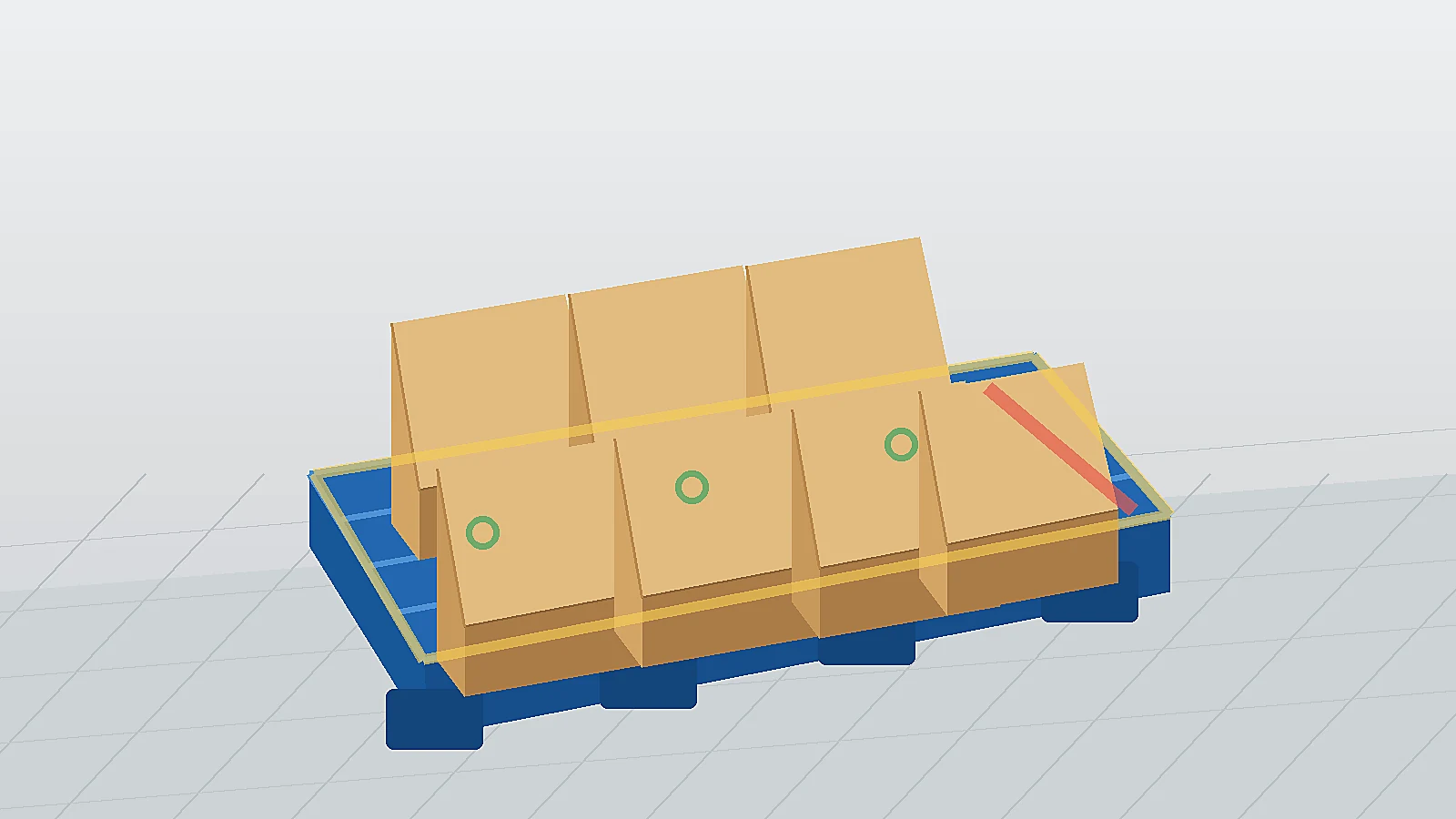
A plastic pallet can match the required outside size and still fail the load. The problem is often the load footprint: cartons overhang the deck, bag corners sit between ribs, pails concentrate weight on weak zones, or a wrapped load pulls against an unsupported edge.
For procurement, packaging, warehouse, and quality teams, the useful approval question is:
Does the real product footprint sit on the pallet sample in a way that remains stable, supported, and workable through storage, handling, wrapping, and transport?
This guide is a sample-approval aid, not a universal engineering rule. Final approval depends on the actual product, load weight, pallet model, rack or floor support, handling equipment, wrapping method, transport route, and local safety requirements. Confirm supplier data and site trials before bulk purchase.
Why nominal pallet size is not enough
A 1200 x 1000 mm pallet and a 1200 x 1000 mm unit load do not automatically fit well together. The load may have rounded bags, flexible sacks, mixed carton layers, narrow pail bases, or a carton pattern that leaves pressure on deck openings.
Official safety language supports a stability-first view. OSHA 29 CFR 1910.176 addresses secure storage of materials and clear aisles and passageways. HSE pallet safety guidance treats safe pallet use as a matter of buying, use, inspection, handling, and training. ISO 8611-1:2025 provides flat-pallet test methods, but the real unit load still needs application-specific checks.
For a plastic pallet buyer, translate those principles into a simple rule: approve the pallet with the real load pattern, not only with catalog dimensions.
Build a load footprint record before the sample trial
Before the supplier quotes or ships samples, record the load footprint in practical terms:
| Input | What to record |
|---|---|
| Product type | Cartons, bags, sacks, trays, drums, pails, crates, bottles, or mixed SKUs |
| Footprint | Length, width, layer pattern, edge alignment, and expected overhang or setback |
| Contact points | Continuous carton base, bag pressure zones, pail rings, crate feet, or point loads |
| Gross load | Normal, maximum, and uneven load cases |
| Support method | Floor stack, rack beams, pallet jack, conveyor, trailer, container, or wrapper |
| Handling route | Lift direction, turning points, dock plates, wrapping, staging, and customer receiving |
This record prevents a common purchasing mistake: asking for a pallet size while leaving the supplier to guess how the goods actually touch the deck.
If the load is bagged, connect this step with the plastic pallet deck support guide for bagged goods . If the load may shift in transit, pair the footprint check with plastic pallet load shift prevention .
Check for four footprint failures
1. Overhang beyond the deck
Overhang can expose cartons or bags to fork impact, rack contact, stretch-wrap tension, container wall pressure, and dock handling damage. It may also make a stable-looking floor stack weaker after transport vibration.
Some transport guidance treats overhang as a load-securing issue. HSE loading and unloading guidance notes that overhang should be kept to a minimum and marked where necessary for road travel. That does not create a pallet-specific approval number, but it supports the practical point: uncontrolled overhang should not be ignored.
During the sample trial, photograph the load from all four sides. Mark whether any product edge extends beyond the pallet edge, and whether that edge is exposed to fork entry, wrapping pressure, aisle contact, or customer receiving damage.
2. Under-support inside the deck
Under-support happens when the product sits within the pallet outline but its pressure lands over openings, weak ribs, unsupported deck boards, or a transition between deck and edge. This is common with bags, pails, crates with small feet, and mixed carton patterns.
Do not approve the sample only because the load does not overhang. Check whether the deck actually supports the pressure points. A bag that droops into an opening, a pail ring that sits between ribs, or a crate foot that misses a support rib can create damage even when the pallet is the right outside size.
3. Edge collapse under wrapping
Stretch wrapping can change the footprint. A load that sits cleanly before wrapping may pull inward, lean, or crush edge cartons after film tension is applied. Anti-slip features or edge lips can help in some routes, but they do not fix a weak carton pattern or unsupported load edge.
Run the sample through the actual wrapper when possible. If that is not possible, document the wrapping method, film tension, top-sheet or corner-board use, and whether the pallet edge is used as a wrap anchor.
4. Support mismatch in racks or conveyors
A pallet-load footprint that works on the floor may fail on beams or conveyors. Rack beams support specific pallet zones. Conveyors require predictable bottom contact and transfer behavior. If the load pushes the pallet deck into unsupported zones, deflection or sensor trouble can appear after the pallet is already approved.
For rack use, combine footprint approval with the rack deflection acceptance guide . For conveyor routes, check bottom contact separately before treating deck footprint as the only issue.
Run the sample with the real load, not a generic weight
Generic test weights are useful for controlled comparison, but they may hide the problem that matters most. A uniform weight block does not behave like sacks, pails, cartons with weak edges, or mixed cases.
A practical sample trial should include:
- Place the real product or a faithful substitute on the pallet in the normal layer pattern.
- Record whether the load is flush, overhanging, or set back on each side.
- Check contact points: carton bases, bag pressure zones, pail rings, crate feet, or mixed-SKU gaps.
- Lift from every required fork direction.
- Wrap the load using the actual method.
- Move the load through the tightest normal route.
- Place it on the planned support: floor, rack beams, conveyor, trailer, or container.
- Inspect product edges, pallet deck, bottom support, and load lean after the trial.
If the sample fails, identify the failure mechanism before changing pallet size. The answer may be a different deck style, a stronger edge, a revised carton pattern, corner boards, a different pallet category, lower stack height, or a separate transport control.
Write footprint assumptions into the RFQ
Vague RFQ wording such as “suitable for 1200 x 1000 mm loads” leaves too much room for mismatch. Better wording explains how the load sits on the pallet.
Use fields such as:
| RFQ field | Example wording |
|---|---|
| Product footprint | Carton layer is 1180 x 980 mm with no planned overhang; mixed SKU layer may leave 80 mm unsupported gaps. |
| Contact condition | Cartons must be supported under edges; pails have circular base rings that must not sit between major deck openings. |
| Support route | Loaded pallets go to floor staging, stretch wrapper, forklift transfer, and customer pallet jack receiving. |
| Trial condition | Supplier sample must be approved with buyer’s product pattern, wrapping method, gross load, and handling route. |
| Approval boundary | Supplier data is input only; final route approval belongs to buyer operations, packaging, EHS, and quality. |
If the load requires racking and heavy forklift use, a product such as the 1210 open deck 3-runner plastic pallet illustrates the type of runner structure buyers often compare. The exact model still needs supplier confirmation and site testing.
Stop rules before bulk approval
Do not approve the sample for bulk purchase when:
- product overhang exposes cartons, bags, or pails to predictable impact or squeezing;
- product pressure lands on weak deck openings or unsupported ribs;
- wrapping pulls the load edge off the supported area;
- the loaded pallet rocks, leans, or traps handling equipment;
- rack or conveyor support conditions were not tested;
- the customer receiving route uses different equipment or load-securing rules;
- supplier load ratings do not state the support condition, load distribution, temperature, and dwell time.
These stop rules are not meant to reject every imperfect load. They are meant to prevent the buyer from approving a pallet based on dimensions while the real product is only partly supported.
Practical decision rule
Approve the pallet when the pallet size, deck structure, load footprint, support method, wrapping method, and handling route all match the same tested condition.
Choose a larger or more supportive deck when the product edges need full support.
Choose a different load pattern when the goods fit the pallet outline but pressure points miss the support ribs.
Choose stronger racking or runner structures when beam support and dwell time matter more than empty return space.
Do not let nominal pallet size replace a footprint trial. A short sample check with the real load can prevent carton damage, load lean, rack deflection disputes, customer receiving complaints, and bulk orders that look correct only on paper.