Industry Insights
Plastic Pallet Rack Deflection: How to Set Acceptance Criteria Before Bulk Orders
A practical guide for procurement and warehouse teams to define plastic pallet rack deflection limits, test conditions, and approval rules before buying rackable pallets.
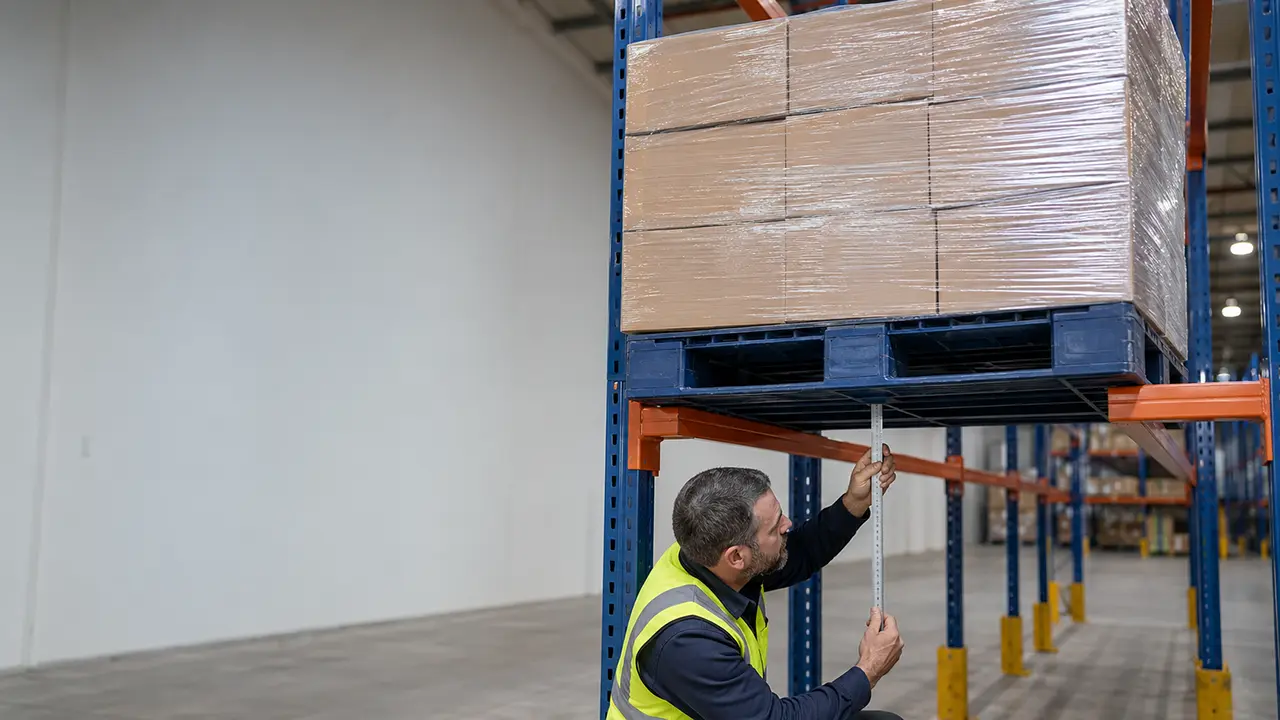
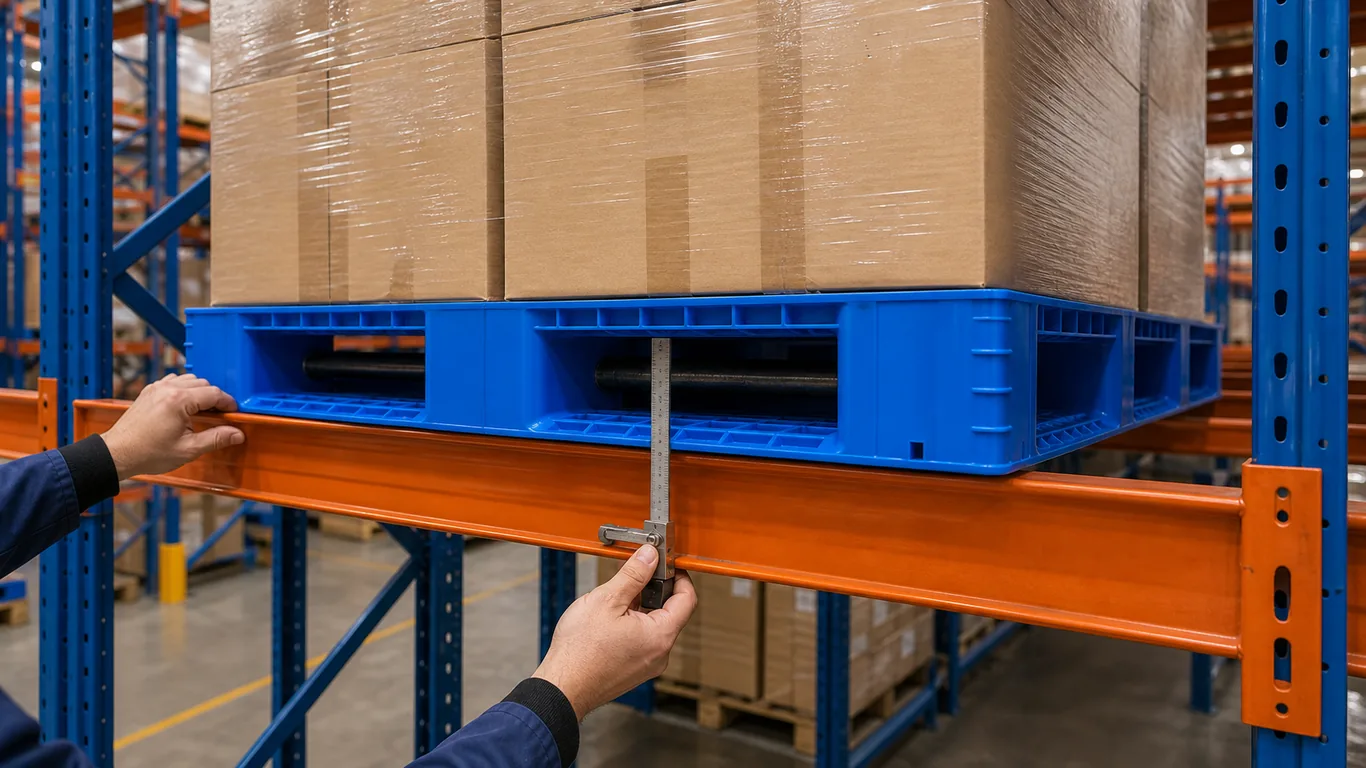
Rackable plastic pallets are often approved with one headline number: racking load. That number is important, but it is not enough to protect a warehouse from poor field performance. In real racking operations, the more useful question is how much the pallet bends under the actual load, beam span, dwell time, and temperature conditions.
Plastic pallet rack deflection affects more than appearance. Excessive bending can reduce fork entry clearance, make pallets harder to retrieve, push cartons out of level, create unstable unit loads, and shorten pallet life through repeated stress. A pallet may not crack during a short test, yet still bend enough to become unsuitable for daily rack storage.
For procurement teams, the safest approach is to define deflection acceptance criteria before placing a bulk order. This turns “rackable” from a general claim into a measurable approval rule that procurement, warehouse, safety, and suppliers can all verify.
Why racking load alone does not define rack performance
A racking load rating usually describes the maximum weight a pallet can support under specified conditions. The problem is that those conditions are not always the same as the buyer’s warehouse.
Important variables include:
- beam clear span and beam contact width;
- two-beam support or additional center support;
- load distribution across the pallet deck;
- pallet orientation on the rack;
- storage dwell time;
- ambient, cold-room, or freezer temperature;
- whether the pallet uses steel reinforcement;
- forklift placement accuracy and impact risk.
A pallet that performs well on a short span may bend too much on a longer span. A uniformly loaded carton pallet may behave differently from a pallet loaded with drums, pails, bagged resin, or machinery parts. A short laboratory load check may also miss long-term creep, especially when pallets remain on beams for days or weeks.
This is why rack approval should include both load capacity and deformation behavior. The warehouse needs a pallet that carries the load and remains operationally usable.
Define the actual rack support condition first
Before asking a supplier to confirm rack performance, document the rack geometry. Without this information, any deflection discussion is incomplete.
At minimum, record:
| Rack input | What to confirm |
|---|---|
| Beam span | Clear distance between the support points that carry the pallet |
| Beam contact surface | Width and profile of the area touching the pallet base |
| Pallet orientation | Whether the pallet enters 1200 mm or 1000 mm first |
| Support pattern | Two beams only, wire deck, timber board, or center support |
| Rack level | Low-level picking rack or high-bay storage |
| Load duration | Hours, days, weeks, or seasonal storage |
Beam span is especially important. A small increase in unsupported distance can create a large change in bending behavior. If the same pallet will be used across several rack types, approve it against the most demanding common condition, not the easiest location.
For projects where steel reinforcement is being considered, the support condition should be reviewed together with the reinforcement layout. The article on racking pallet steel reinforcement checks explains why the steel tube position must match the actual beam direction.
Separate immediate deflection from long-term creep
Plastic pallets can show two kinds of deformation in rack storage.
Immediate deflection is the bending visible shortly after the load is placed on the rack. It indicates whether the pallet structure is stiff enough for the load and span.
Creep deformation is gradual bending over time while the pallet remains under load. This matters because many warehouses do not store pallets on racks for only a few minutes. Finished goods, raw materials, and spare parts may stay in the same location for multiple days or longer.
A supplier sample that looks acceptable after 10 minutes may still be risky if it continues to sag during a longer dwell period. For this reason, acceptance criteria should include a time condition, such as:
- deflection after initial loading;
- deflection after 24 hours under load;
- deflection after the longest normal storage period;
- recovery after unloading, if repeated cycles are expected.
The exact time should match the warehouse operation. A fast cross-dock lane, a food cold store, and a spare-parts warehouse do not need identical test durations.
Set a measurable deflection limit
Avoid acceptance wording such as “no obvious bending” or “suitable for racking.” These phrases are too subjective for procurement approval.
A better specification defines:
- the test load;
- the pallet orientation;
- the rack span;
- the support method;
- the maximum allowed deflection;
- the observation time;
- the pass/fail condition after unloading.
For example:
Under a uniformly distributed 1,000 kg load on a 1,000 mm clear beam span, the pallet shall remain within the agreed maximum mid-span deflection after 24 hours, without cracking, permanent base distortion, or loss of safe fork entry clearance.
The actual deflection limit should be agreed according to the load, pallet size, rack design, and safety requirements. Some buyers define a millimeter limit. Others use a ratio of span to deflection. Either method is better than leaving the decision to visual judgment.
When an internal engineering or safety team is available, involve them before the RFQ is released. It is easier to quote the correct pallet structure at the beginning than to dispute deflection after production.
Use standards as a framework, not as a substitute for site conditions
Pallet test standards help create consistent language between buyers and suppliers. ISO 8611-1:2025 for flat pallet test methods is a useful reference point for pallet test methods and performance discussion.
However, a standard test does not automatically reproduce every warehouse condition. The buyer still needs to define the real beam span, load type, storage temperature, and dwell time. Standards can support the conversation, but site-specific acceptance criteria make the result operational.
In practical sourcing documents, combine both:
- reference an applicable pallet test method where relevant;
- attach the warehouse’s rack geometry and load profile;
- define the maximum allowed deflection and inspection timing;
- require sample approval before mass production.
This keeps the RFQ technical without making it detached from daily warehouse reality.
Match pallet structure to deflection risk
Different plastic pallet structures resist rack deflection in different ways.
Three-runner pallets
Three-runner pallets are commonly used for racking because the runners can align with support beams and forklift entry patterns. A model such as the 1210 open deck 3-runner plastic pallet illustrates the type of structure buyers often evaluate for rack storage, especially when steel reinforcement is available.
The key point is alignment. If the runners or steel tubes do not sit in the right direction relative to the beam span, the pallet may not deliver the expected stiffness.
Perimeter-base pallets
Perimeter-base pallets can offer stable bottom contact and good load distribution in some storage and handling flows. They may be useful where pallets move between floor stacking, forklift transfer, and rack storage. The rack support pattern still needs to match the base layout.
Double-faced pallets
Double-faced pallets can be strong in floor stacking and heavy-duty handling, but not every double-faced design is ideal for every racking system. Buyers should confirm forklift access, pallet-jack compatibility, rack beam contact, and deflection under the actual span before standardizing.
The right pallet is not the strongest-looking pallet. It is the structure whose load path matches the rack, product, and handling method.
Test with the real unit load, not only dead weight
A rack deflection test using uniform test blocks is useful, but it may not reveal problems caused by the buyer’s actual goods.
Real unit loads introduce variables such as:
- cartons that transfer weight through corner columns;
- bags that settle and shift;
- drums or pails that create point loads;
- partial pallet coverage;
- overhang or uneven wrapping tension;
- liquid movement during handling.
If the warehouse uses several load types, do not approve the pallet based on the easiest SKU. Select the heaviest common load, the most concentrated load, and any product family known to create handling problems.
A practical sample test should include:
- Place the real unit load on the pallet using normal operators and equipment.
- Put the pallet on the target rack span in the correct orientation.
- Measure initial mid-span deflection.
- Keep the load in place for the agreed dwell period.
- Measure deflection again before unloading.
- Inspect the pallet base, deck, weld lines, runner areas, and fork openings.
- Repeat cycles if the pallet will be used in a returnable loop.
This process can be part of a broader plastic pallet load test before bulk order when the purchase volume or operational risk justifies a more formal trial.
Include fork entry clearance in the approval rule
Deflection is not only a structural measurement. It also affects forklift handling.
If a pallet bends downward between rack beams, fork pockets may become harder to enter. Operators may respond by tilting forks, pushing the pallet, striking the runners, or approaching at a poor angle. Over time, these small corrections create more damage than the original load test suggests.
For this reason, acceptance criteria should include a handling check:
- Can the forklift retrieve the loaded pallet without scraping or lifting the beam?
- Is fork entry clearance still adequate after the dwell period?
- Does the pallet remain level enough for safe travel after removal?
- Are runners or base edges showing stress marks after repeated retrieval?
A pallet that passes a weight test but creates daily handling friction is not a good rack pallet.
Write deflection requirements into the RFQ
Deflection criteria should be written into the RFQ, not added after the first samples fail.
A concise RFQ clause may include:
| Requirement | Example wording |
|---|---|
| Use case | Selective rack storage for finished goods cartons |
| Load | 900 kg typical, 1,050 kg maximum per pallet |
| Rack span | 1,000 mm clear span on two beams |
| Orientation | 1200 mm side facing aisle, runners perpendicular to beams |
| Dwell time | Up to 14 days under load |
| Environment | Ambient warehouse, 5–35°C |
| Acceptance | Agreed maximum deflection, no cracks, no permanent base deformation, safe fork entry maintained |
| Evidence | Sample test photos, measurements, and batch confirmation before shipment |
This level of detail helps suppliers quote the correct structure and reduces the risk of comparing products that are not technically equivalent.
Final decision rule for buyers
A rackable plastic pallet should be approved only when three conditions are satisfied:
- The load rating matches the real unit load. Weight, distribution, and peak load are defined.
- The deflection limit matches the rack condition. Beam span, orientation, dwell time, and temperature are included.
- The pallet remains usable after storage. Fork entry, base shape, and repeated handling remain acceptable.
When these criteria are defined before sourcing, pallet selection becomes more objective. Procurement can compare quotations more fairly, warehouse teams can test samples with clear pass/fail rules, and suppliers can recommend the right structure instead of guessing what “rackable” means in the buyer’s facility.