Industry Insights
Forklift Attachment Changes: Recheck Your Plastic Pallet Route Before Restarting
A practical review for warehouse and procurement teams when a forklift changes from forks to a clamp, push-pull, or other front-end attachment.
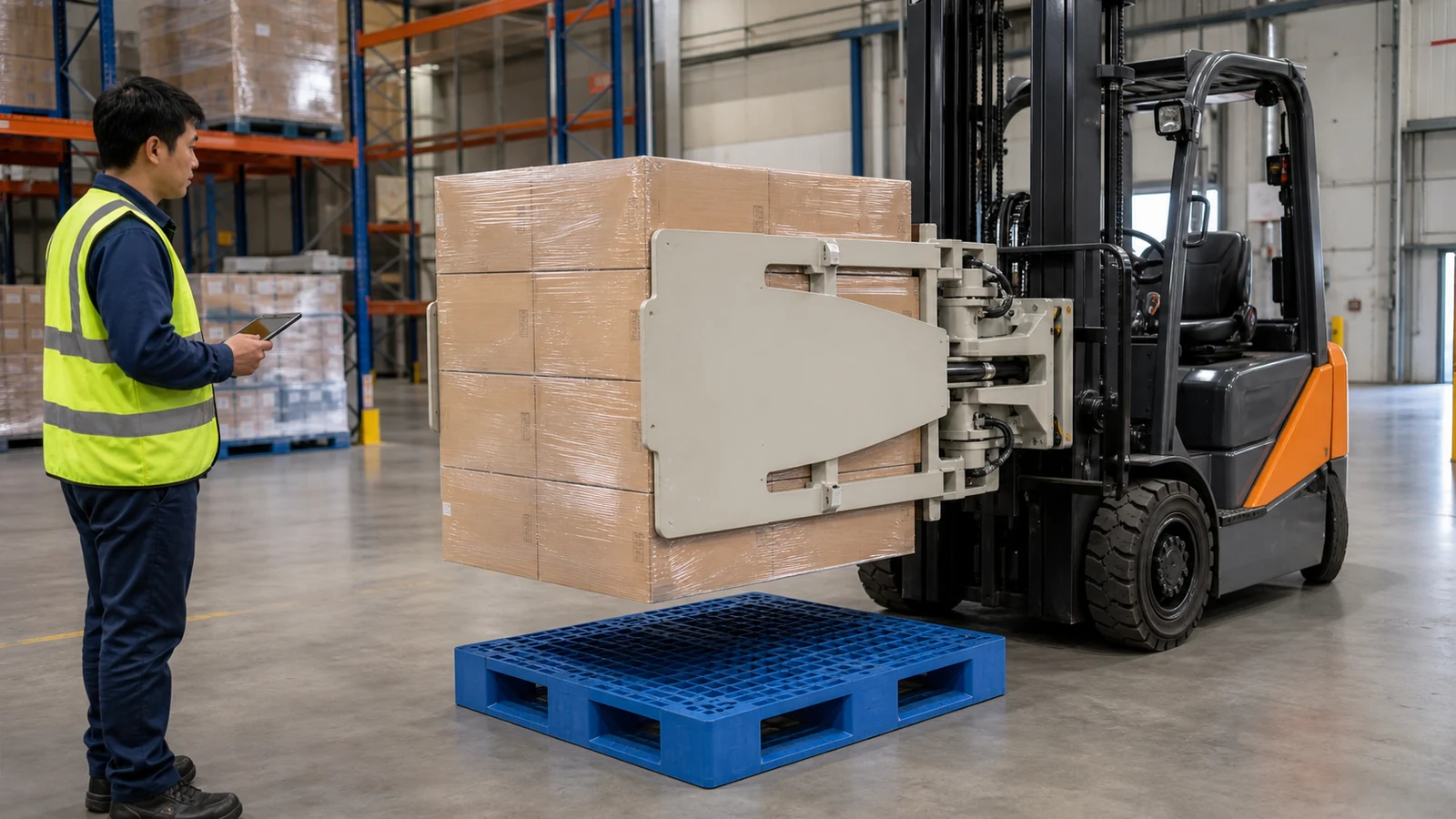
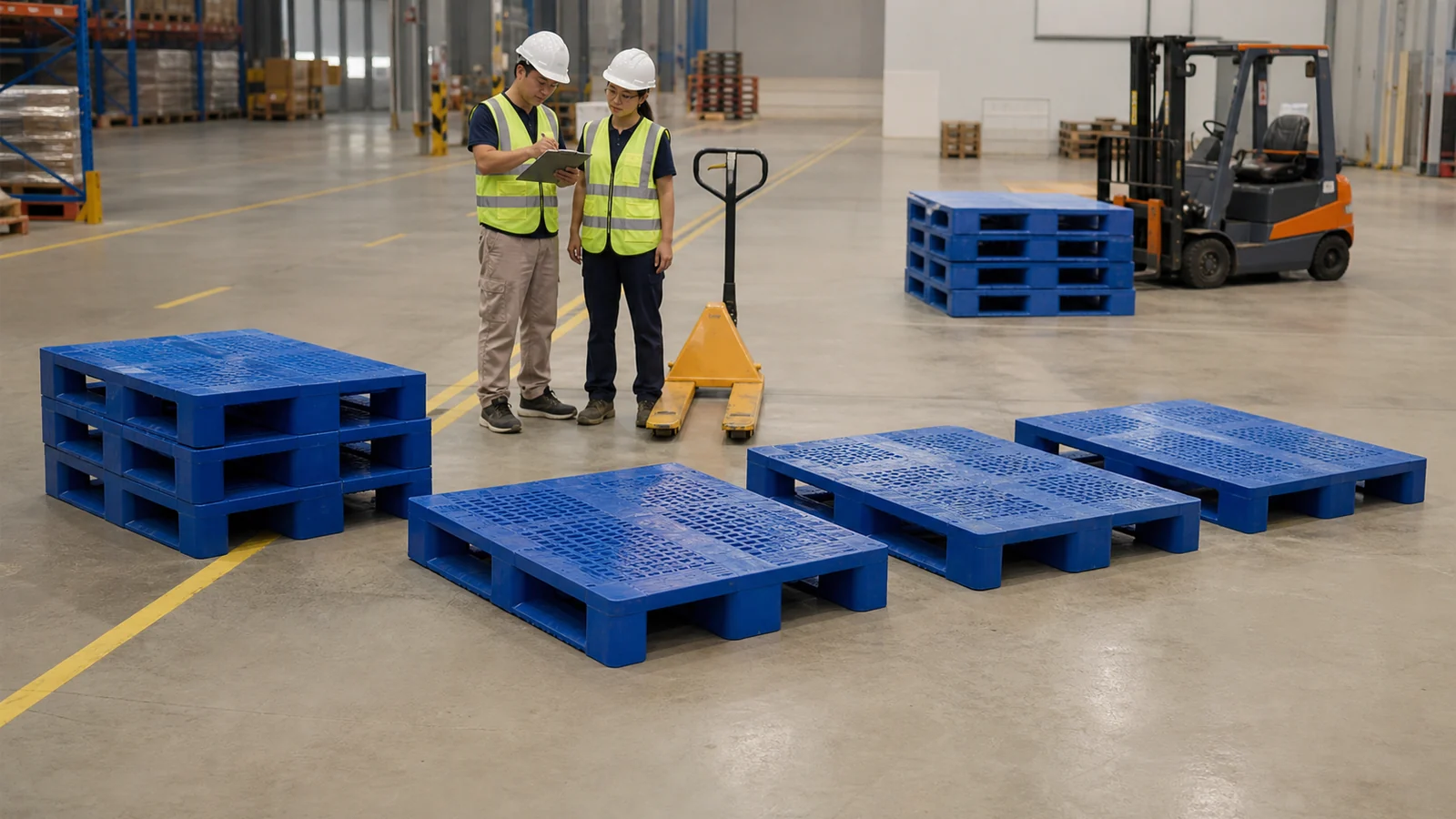
A plastic pallet that works with ordinary forks is not automatically approved when the truck receives a clamp, push-pull, side-shift arrangement, or another front-end attachment. The pallet may remain part of the route, but the handling system has changed.
That distinction matters when a warehouse changes equipment to reduce damage, handle slip sheets, move cartons without forks, or serve a new customer. A team may continue using the old pallet approval because the pallet model, cartons, and forklift are familiar. The missed question is whether the new attachment changes the truck’s capacity, load center, visibility, load restraint, or the points where force enters the unit load.
For a quick decision: pause the old approval, identify exactly what the attachment touches, and run a documented trial with the real truck, attachment, pallet, load, and route before restarting normal use. Do not treat a successful fork trial as evidence for a clamp or push-pull trial.
Start with the attachment, not the pallet catalogue
The first question is simple: does the attachment engage the pallet, the load, a slip sheet, or all three?
- A carton clamp normally acts on the sides of the load rather than lifting the pallet from below.
- A push-pull attachment commonly works with a slip sheet, changing how the load is supported and transferred.
- A side shifter or fork-positioner may still use forks, but it can change load position, visibility, and the way an operator approaches a pallet.
This is not a claim that every attachment makes a plastic pallet unsuitable. It is a reasoned operating rule: approval must describe the actual contact and movement, rather than the pallet name alone.
For U.S. workplaces, OSHA notes that front-end attachments can affect a truck’s stability, capacity, and visibility. It also notes that the attachment’s weight can reduce lifting capacity and can move the load center. See OSHA’s guidance on forklift attachments and load composition . Other jurisdictions can use the same questions, but must apply their own legal and equipment rules.
Replace the old approval with a route review
Write one short review before the first production shift. It should name:
| Review item | What to record |
|---|---|
| Truck and attachment | truck model, attachment model, attachment weight, current capacity plate, and operating manual |
| Unit load | gross mass, dimensions, centre of gravity if known, carton or container condition, wrapping, and any slip sheet |
| Pallet role | whether the pallet is lifted, only supports storage, travels with the load, or is removed before movement |
| Contact points | clamp-pad location, fork position, slip-sheet pull point, base support, and any likely interference |
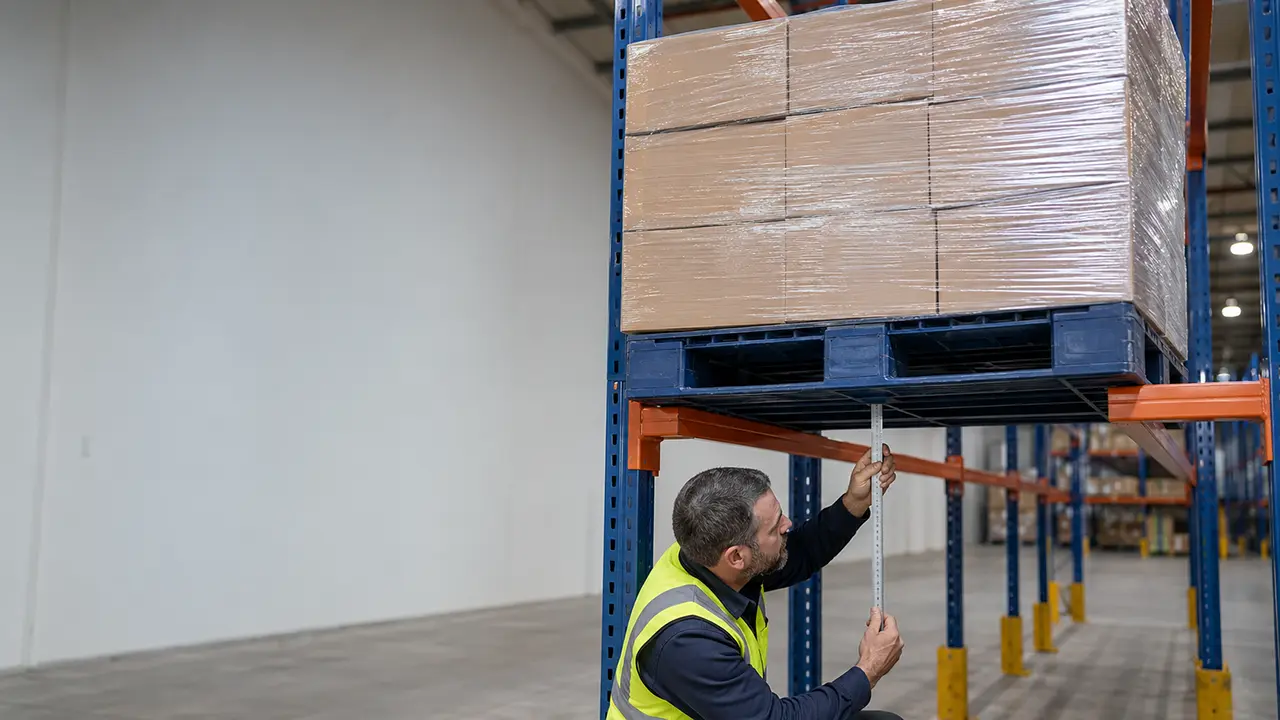
| Route | pick-up, lift, turning, dock plate, trailer, rack or floor placement, and receiving method |
| Release owner | operations, EHS, truck owner, pallet supplier, and customer or 3PL where relevant |
The useful output is not a generic statement that the pallet is “attachment compatible.” It is a narrow statement such as: “This load may be moved with this carton clamp from floor staging to trailer only, within the attached truck and load limits, after the documented trial.”
Check the truck before asking the pallet supplier for an answer
An attachment review starts with the lift truck because the truck-and-attachment combination has its own limits. OSHA’s U.S. guidance says not to exceed the rated capacity of the forklift/attachment combination and calls for operator training on attachment adaptation, operation, and use limits. For a modification or addition that affects capacity or safe operation, OSHA describes written manufacturer approval and corresponding capacity or instruction marking requirements in its attachment guidance .
That does not mean a pallet supplier can approve the truck. Ask the truck manufacturer, dealer, or attachment provider to confirm the applicable capacity information, configuration, and operating instructions. Ask the pallet supplier a different question: whether the quoted pallet model is intended to remain under this load and route, and what product-specific limits or trials they require.
If the attachment replaces forks and leaves the pallet behind, test the load as a load—not as a palletized unit. If the pallet continues into storage or delivery, include the handoff: a load can survive a clamp move but then fail at pallet-jack entry, rack placement, or receiving. The existing pallet-jack compatibility guide helps review that next step.
Run one controlled trial that can actually reject the route
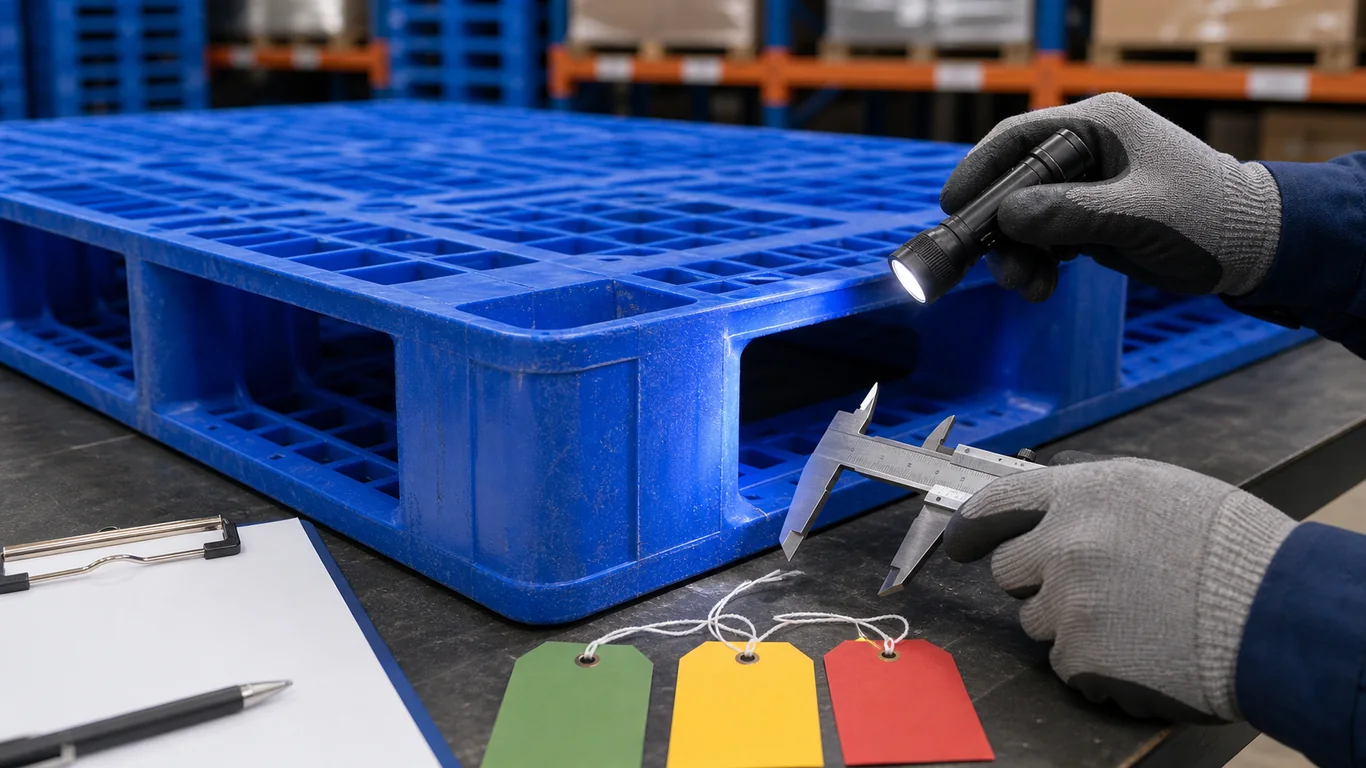
Use representative samples, not an empty pallet or a light demonstration load. The trial should include the heaviest normal load, the most difficult stable load pattern, and the full route that will be approved. Stop for visible carton crush, slipping, torn wrap, load lean, unexpected pallet contact, unstable release, or any truck/attachment issue identified by the equipment owner.
Record the attachment setting or operating method used, but do not publish a universal clamp-force number. The appropriate setting depends on the attachment, the load, packaging strength, friction, truck configuration, and supplier instructions. It needs confirmation from the attachment and load owners.
Also test the failure boundary. For example, a clamp route may be accepted for uniform, wrapped cartons but rejected for open-top containers, damaged boxes, high centre-of-gravity loads, wet packaging, or mixed-SKU layers. This is where a narrow approval is safer than a broad “works with plastic pallets” statement.
Keep the pallet decision tied to the rest of the system
An attachment change can expose a pallet decision that was previously hidden. A pallet with a raised edge lip may help one unit load but interfere with a transfer method. A pallet that is appropriate for a forklift-and-rack route may not be the right base for a slip-sheet process or a customer dock that relies on pallet jacks. Revisit the original purchase conditions with the plastic pallet RFQ checklist rather than trying to solve a new route with an old quotation.
If the route still needs a plastic pallet, share the trial record with the pallet supplier. Ask for current model data, the declared load and support conditions, and any limitation related to the attachment, temperature, cleaning, racking, or handling direction. If the supplier cannot support the route, the responsible answer may be a different load carrier, different packaging, forks for that leg, or a revised process.
The practical gain is not more paperwork. It is preventing a quiet equipment change from becoming a dropped-load, product-damage, capacity, or receiving problem.