Industry Insights
Damaged Plastic Pallet Inspection: Quarantine, Assess, Replace
Use a practical record to isolate a damaged plastic pallet, document the real load and handling conditions, and define a model-specific assessment or replacement specification.
When a plastic pallet is cracked, distorted, contaminated, or behaves differently in handling, the first decision is not whether it can be moved to a lighter job. The first decision is to identify it, isolate it, and stop uncertain use until the specific pallet and application have been assessed.
That boundary matters because a label such as “floor use only” does not prove that a damaged runner, deck, foot, weld, or reinforcement remains capable of carrying any load. A general article cannot set a safe residual capacity or authorize repair for an unknown model.
The UK Health and Safety Executive’s Pallet safety guidance, PM15 (fourth edition) covers general-purpose flat pallets made from different materials. It says damaged pallets should be marked, isolated, and withdrawn for repair or disposal, and that pallets should be inspected whenever they are used. Treat this as useful UK guidance—not as a global legal rule or a model-specific load approval.
Use three states, not an assumed downgrade
For a field screening process, three clear states are easier to control:
- In service: the pallet meets the site’s approved criteria for its identified model and assigned use. Cosmetic wear alone does not determine this result.
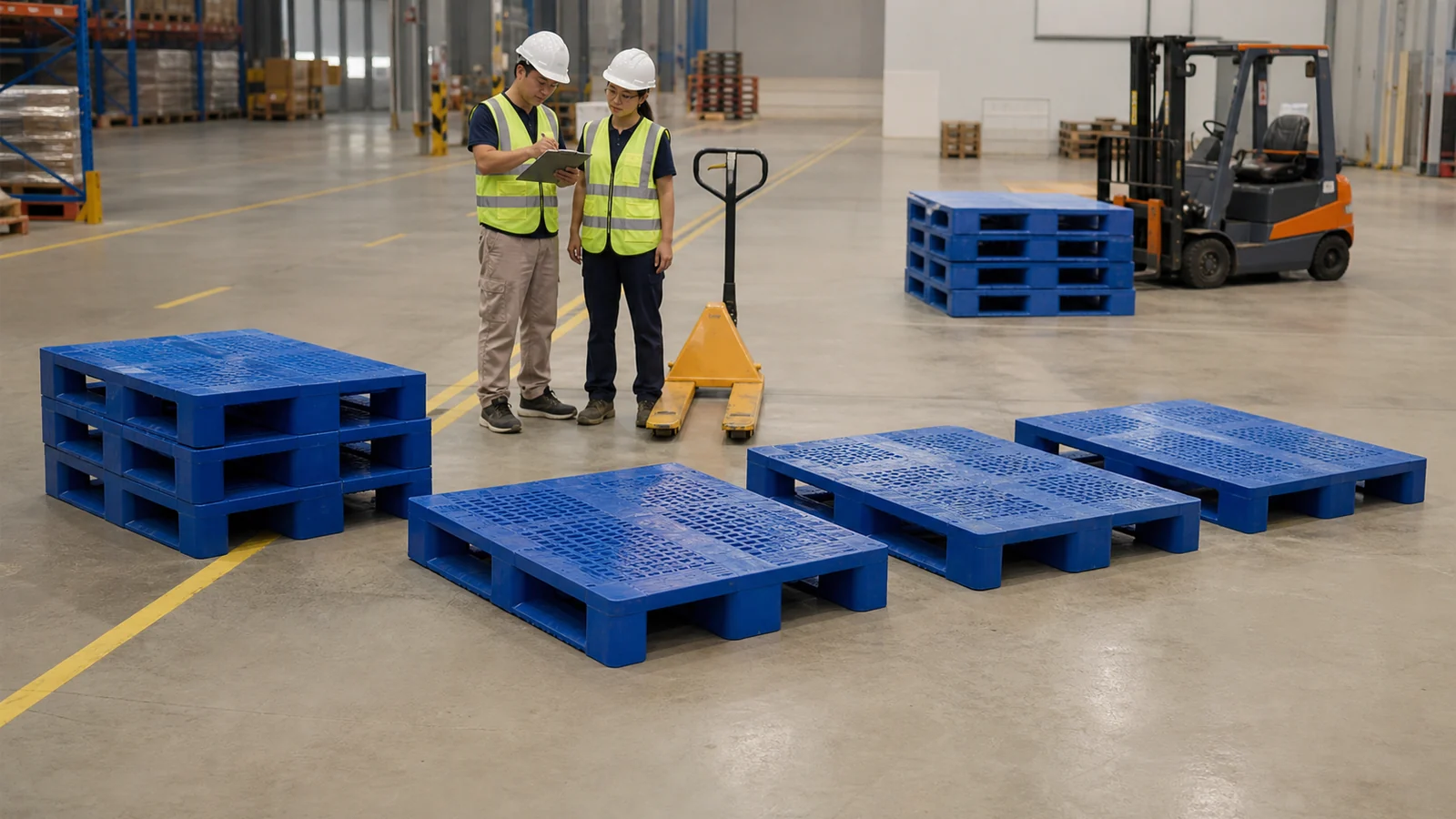
- Quarantined: damage, exposure, missing identity, changed behavior, or uncertain evidence requires a competent assessment. Keep the pallet unloaded and physically separated from serviceable stock.
- Withdrawn: the pallet is sent through the owner’s or site’s authorized repair, return, recycling, or disposal process. Do not improvise a repair or put it into another duty because it “looks strong enough.”
Moving a pallet to another use should be treated as a new suitability decision. Confirm the exact model, its condition, the load, support, equipment, environment, and the responsible approver before it returns to service.
A field inspection record buyers can use
Create one record for each pallet, lot, or repeat defect pattern. The record is useful even when the final assessment belongs to a supplier, pallet-pool owner, rack specialist, equipment provider, or another competent person.
| Record | What to capture |
|---|---|
| Identity | pallet model, drawing or specification revision, owner mark, purchase lot or batch, molded date code, unique ID if available |
| Observation | exact defect, location, length or area measured by the site, and whether the pallet sits flat when unloaded |
| Event or exposure | fork impact, fall, rack contact, overload concern, heat, cold, UV, chemical spill, unknown contamination, or no known event |
| Unit load | goods and packaging, actual and maximum mass, footprint, distribution, overhang, and restraint method |
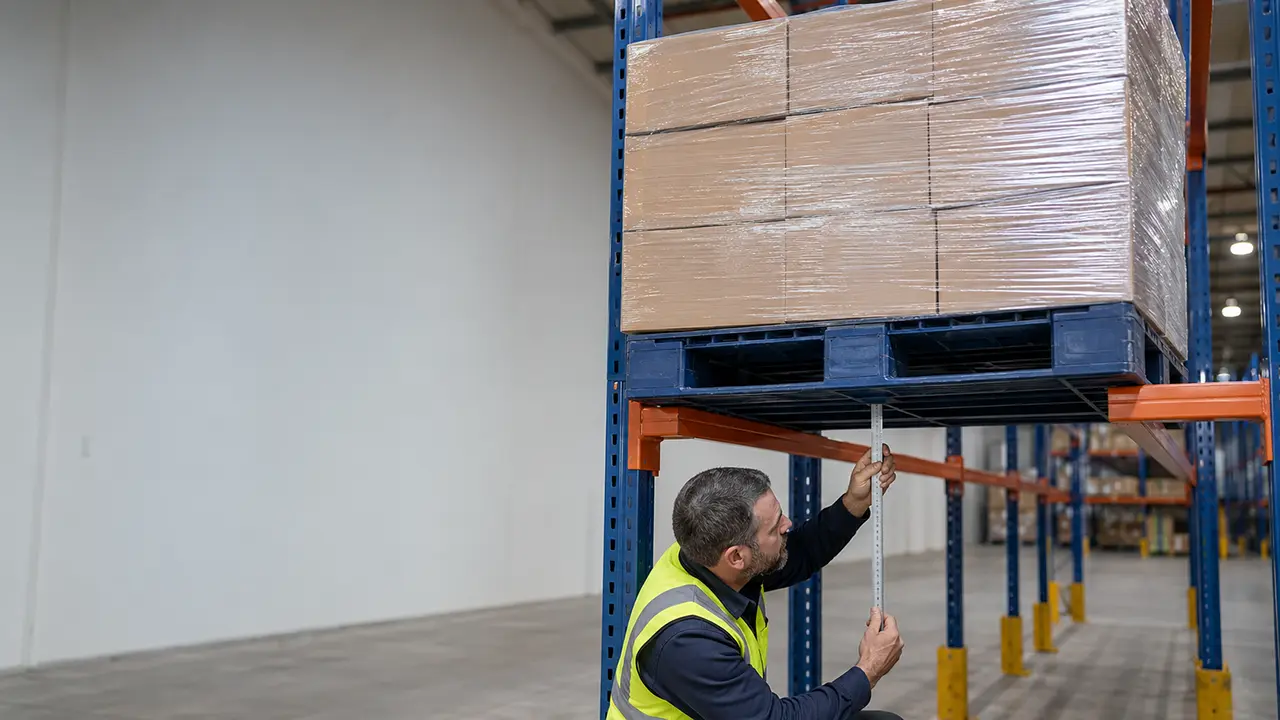
| Support and storage | floor, block stack, rack, beam span and direction, support bars, dwell time, and stacking arrangement |
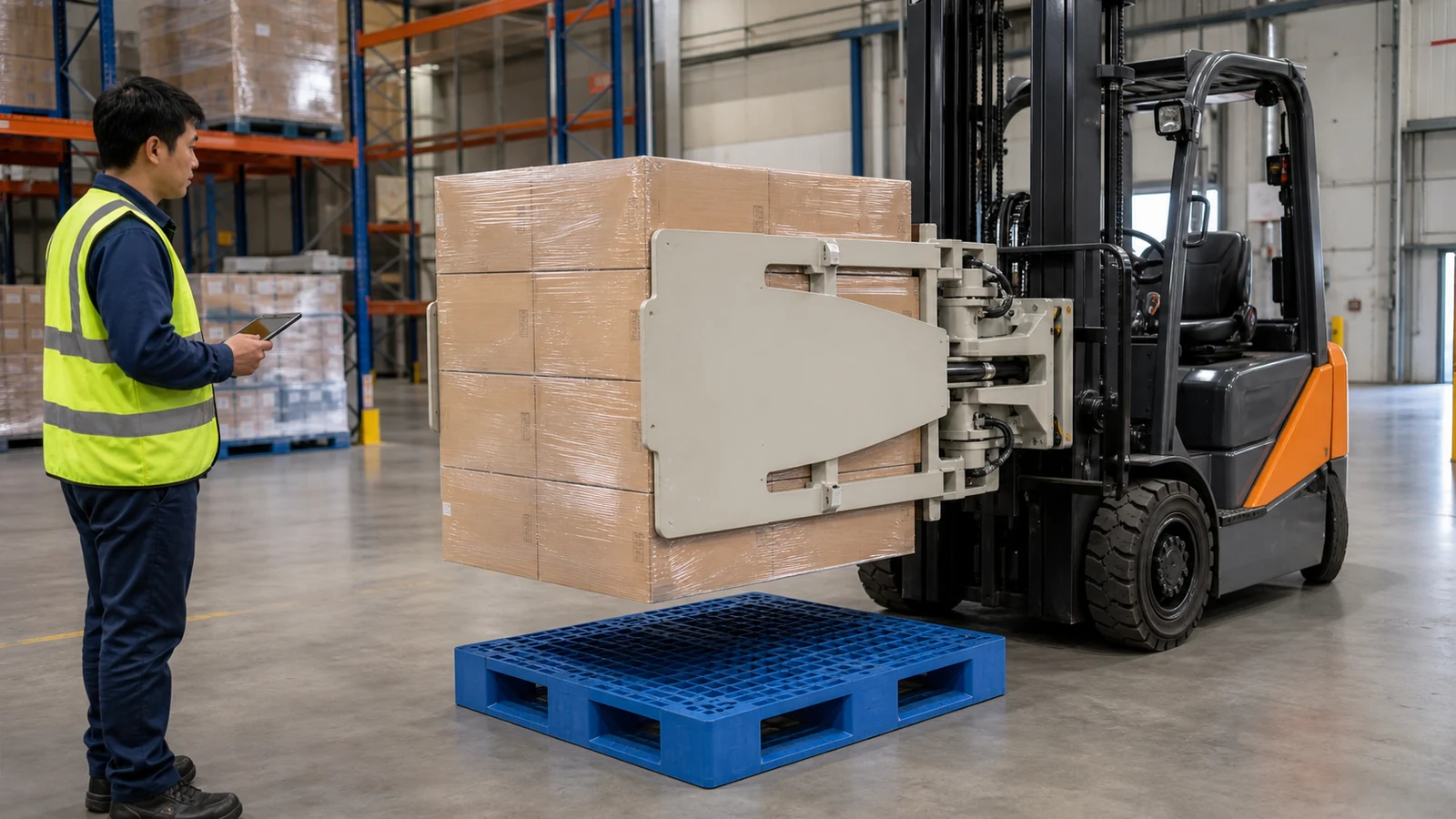
| Handling interfaces | forklift or pallet jack, fork geometry and entry direction, conveyor, AS/RS, wrapper, dock plate, or other contact point |
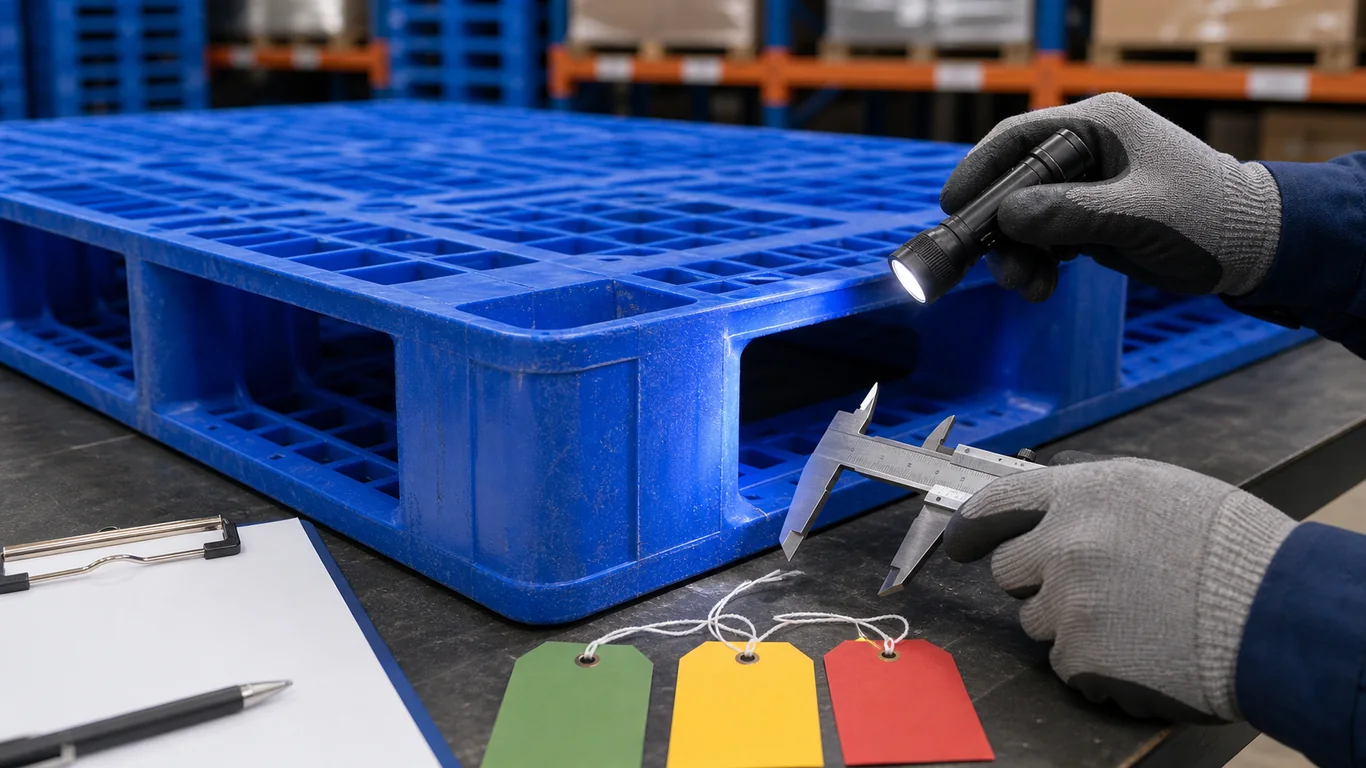
| Current control | identification tag, quarantine location, date and time, person responsible, and whether the pallet was unloaded |
| Evidence | clear photos of the whole pallet, defect, model marks, underside, and support points; keep any relevant incident record |
Do not enter customer contact details or unrelated personal information in this operational record. The purpose is to preserve the technical context needed for a decision.
What to inspect before recording the state
The PM15 inspection examples for plastic pallets include cracks or other mechanical damage, heat/cold or chemical damage, defective decks or bases, worn or permanently deformed supports, trapped debris, UV-related degradation, and permanent distortion. Apply those prompts to the actual design rather than turning them into universal pass/fail dimensions.
Deck and load path
Look for cracks, splits, punctures, sharp edges, local crushing, missing deck sections, permanent sag, or a surface change that affects the load. Record whether the defect crosses a rib, weld, joint, edge, or known support area. Do not infer remaining capacity from crack size alone.
Runners, feet, and base
Check for broken or distorted runners and feet, worn fork-entry edges, missing contact points, rocking on a flat surface, and damage where the base meets the deck. A change in support geometry can affect floor, stack, conveyor, and rack use differently.
Reinforcement and rack use
Record exposed or loose steel, cracks around reinforcement ends, rust staining, rattling, or unexpected deflection. A pallet must not be returned to a rack merely because it still works on the floor. Rack span, orientation, support, load distribution, temperature, dwell time, and the exact pallet specification all affect the decision.
Contamination and environment
Identify unknown liquids, chemical odor, embedded residue, damaged surfaces that trap debris, heat exposure, cold impact, sunlight exposure, or any cleaning process outside the confirmed model limits. Structural appearance alone does not resolve hygiene or chemical-compatibility questions.
Equipment contact
Check whether forks, pallet-jack wheels, conveyors, sensors, guides, or wrappers contact the damaged area. Repeated defects in the same place may point to an interface or handling problem, but that pattern does not prove the pallet is safe to keep using.
Questions for the model-specific assessment
Send the inspection record with a short set of decision questions:
- Can the pallet identity and original specification be confirmed?
- Does the damage affect a load-bearing, support, entry, reinforcement, or hygiene-critical area?
- What examination or test is required for this exact model and use?
- Is an authorized repair method available, and who is permitted to perform it?
- If another duty is proposed, what written evidence and acceptance criteria support that use?
- What mark and record will prevent the pallet from returning to an unapproved application?
- Should other pallets from the same lot, route, or incident be inspected?
If ownership marks show that a pallet belongs to a pool, follow the pool owner’s return and repair process. PM15 specifically directs pooled pallets needing repair back to the owner or its authorized representative in the first instance.
Turn findings into a better replacement specification
An inspection record should improve the next purchase, not just close a defect ticket. Summarize:
- the failed model or current specification;
- the real load and how it is distributed;
- fork, pallet-jack, conveyor, rack, and automation interfaces;
- temperature, cleaning, moisture, UV, and chemical exposure;
- the defect location and repeat frequency;
- the operating event associated with the damage;
- required identification, reinforcement, material route, and inspection controls;
- quantity, destination, and the evidence needed before acceptance.
These facts help distinguish a specification problem from impact, misuse, environmental exposure, or a one-off event. They also allow suppliers to compare options against the same operating conditions.
Baoheng can help shortlist a replacement plastic pallet when the product type, dimensions, quantity, use, load requirement, handling equipment, rack conditions, and destination are provided. Material, reinforcement, customization, price, and lead time must still be confirmed for the selected model and order. Current public information does not include a certification, third-party test report, or universal damaged-pallet repair approval.
Use the plastic pallet selection support page to organize those inputs, or send the completed technical summary through the inquiry form . The inspection record and general decision boundary above remain available without contacting us.
The decision boundary to keep
Inspection can identify a problem and preserve the facts needed for assessment. It cannot, by appearance alone, establish a safe load for a damaged pallet. When identity, damage significance, or application suitability is uncertain, quarantine first; return the pallet only after the responsible party has approved the exact condition and use.