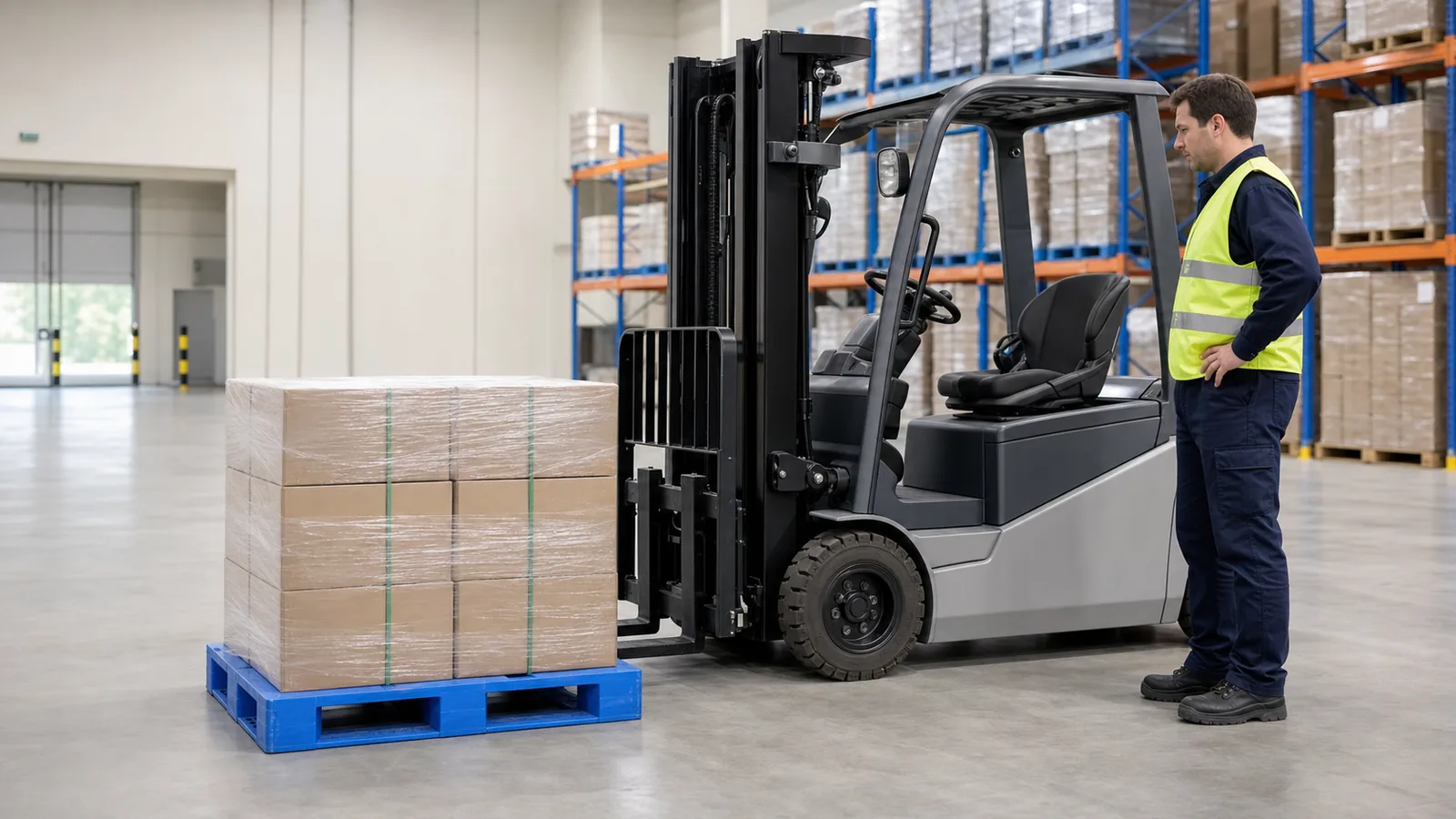
Industry Insights
Palletized Load Blocks the Forklift View? Release the Route, Not Just the Pallet
Use a short route-release brief when a palletized load changes what a forklift operator can see, so a pallet approval is not mistaken for a travel approval.
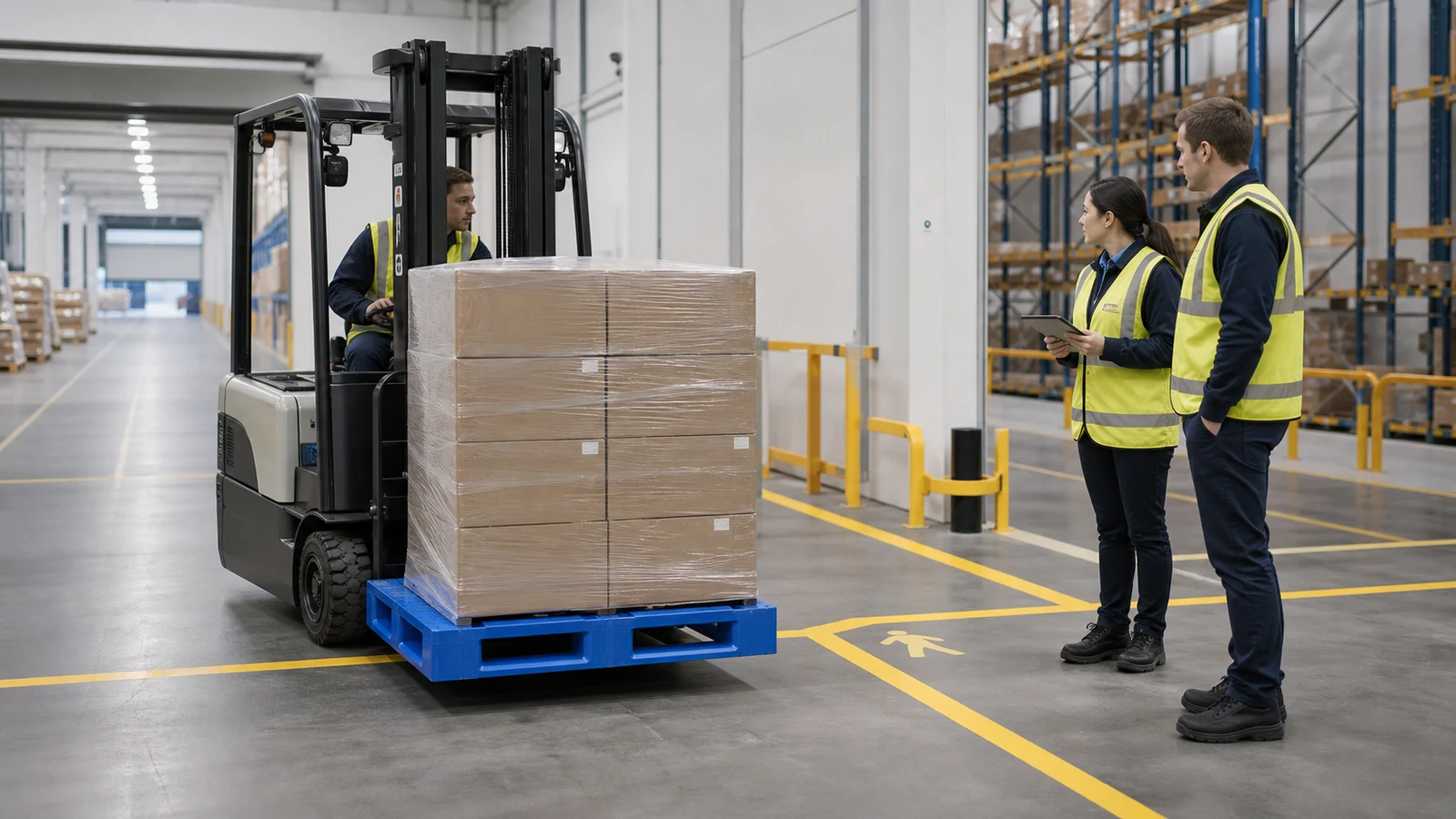
A pallet can enter the forks cleanly and still create a travel problem. A tall or wide unit load can block the operator’s forward view at a junction, ramp, doorway, dock plate, or pedestrian crossing. The practical action is to release the loaded travel route separately from the pallet sample. A pallet drawing or load report does not decide how a particular truck, load height, operator, and site route can be used together.
OSHA’s powered-industrial-truck material says to use a spotter if a load blocks the driver’s view on a ramp. That is useful U.S. safety context, not a universal route approval or a pallet specification. The site owner must set its own safe method, equipment limits, and supervision.
Start with the obstructed-view condition
Do not ask only whether the forklift can lift the pallet. Ask where the normal loaded unit stops the operator seeing the direction of travel, mirrors, intersections, doorways, people, or a change in level. The answer may differ after a carton pattern, slip sheet, stretch wrap, edge protector, pallet model, or load height changes.
The closest pallet compatibility checks already help verify fork entry, underside clearance, ramps, and pallet-jack movement. This page adds a different release question: what travel control applies once the real unit load changes the driver’s view?
Make a one-page route-release brief
Before a bulk order or a changed load goes live, have the warehouse or EHS owner record the following for the actual route:
| Check | What to record | Release boundary |
|---|---|---|
| Unit load | Loaded height, width, overhang, wrap, and any protruding label or strap | Do not use nominal carton dimensions alone |
| Truck and operator position | Truck model, mast arrangement, attachment, and normal travel direction | A different truck or attachment needs review |
| Route | Junctions, ramps, doors, dock plates, pedestrian crossings, and receiving areas | Inspect the route with the normal loaded unit |
| Control | Site-approved travel method, separation, communication, speed, or spotter arrangement where applicable | The site, not the pallet supplier, owns this control |
| Change trigger | New SKU, higher stack, different pallet, altered wrap, new route, or equipment change | Hold the prior release until reviewed |
The brief is not a substitute for operator training, a risk assessment, local legal duties, or the equipment manufacturer’s instructions. It makes the change visible before it becomes a routine workaround.
Keep the decisions separate
Pallet approval asks whether the specified pallet can support and be handled with the stated load and equipment conditions. Use the fork-entry clearance record for that evidence.
Unit-load approval asks whether cartons, wrapping, mass distribution, and stability are suitable for the proposed handling. A pallet rating does not prove the completed load is stable or within the truck’s actual capacity conditions.
Travel-route release asks how the site will manage the real operator view and route hazards. HSE’s workplace-transport guidance treats vehicle activity, site layout, people, and vehicle suitability as connected risk questions. It does not approve a pallet model.
When those three decisions are combined into one informal “forklift compatible” label, a safe pallet can be used in an unsafe travel arrangement.
Test the normal work, not a clear demonstration
Use a normal load, normal operator position, and the actual route. Include the point where the load is highest or widest, the usual turning pattern, the dock or ramp if it is routine, and the receiving condition if the same unit is handled there. Record an exception instead of asking an operator to improvise around it.
Do not publish a universal instruction to travel in one direction, use a spotter everywhere, or use a fixed speed. Those choices depend on local rules, equipment instructions, layout, traffic separation, and the actual load. The responsible site owner should define and train the method.
If the route also uses pallet jacks, confirm their separate wheel-path and entry limits with the pallet-jack compatibility guide . If a forklift attachment changes, use the attachment change review before relying on a prior sample trial.
A practical hold rule
Pause the release when the completed unit load blocks a critical view and there is no documented, site-approved way to manage the route. Ask the warehouse or EHS owner to confirm the travel method, pedestrian separation, equipment limits, and any required supervisor or operator review. Ask the pallet supplier only for the pallet model’s current data and stated handling limits.
That separation is useful because it prevents a buyer from treating a pallet quotation as a safety authorization for the whole warehouse route. Approve the pallet, the unit load, and the travel route in their own scopes—then release the combination.