Industry Insights
Plastic Pallet Recycled-Content Claims: RFQ Evidence Checks
Check recycled-content plastic pallet claims before RFQ approval, customer files, food-area review, or sustainability reporting.
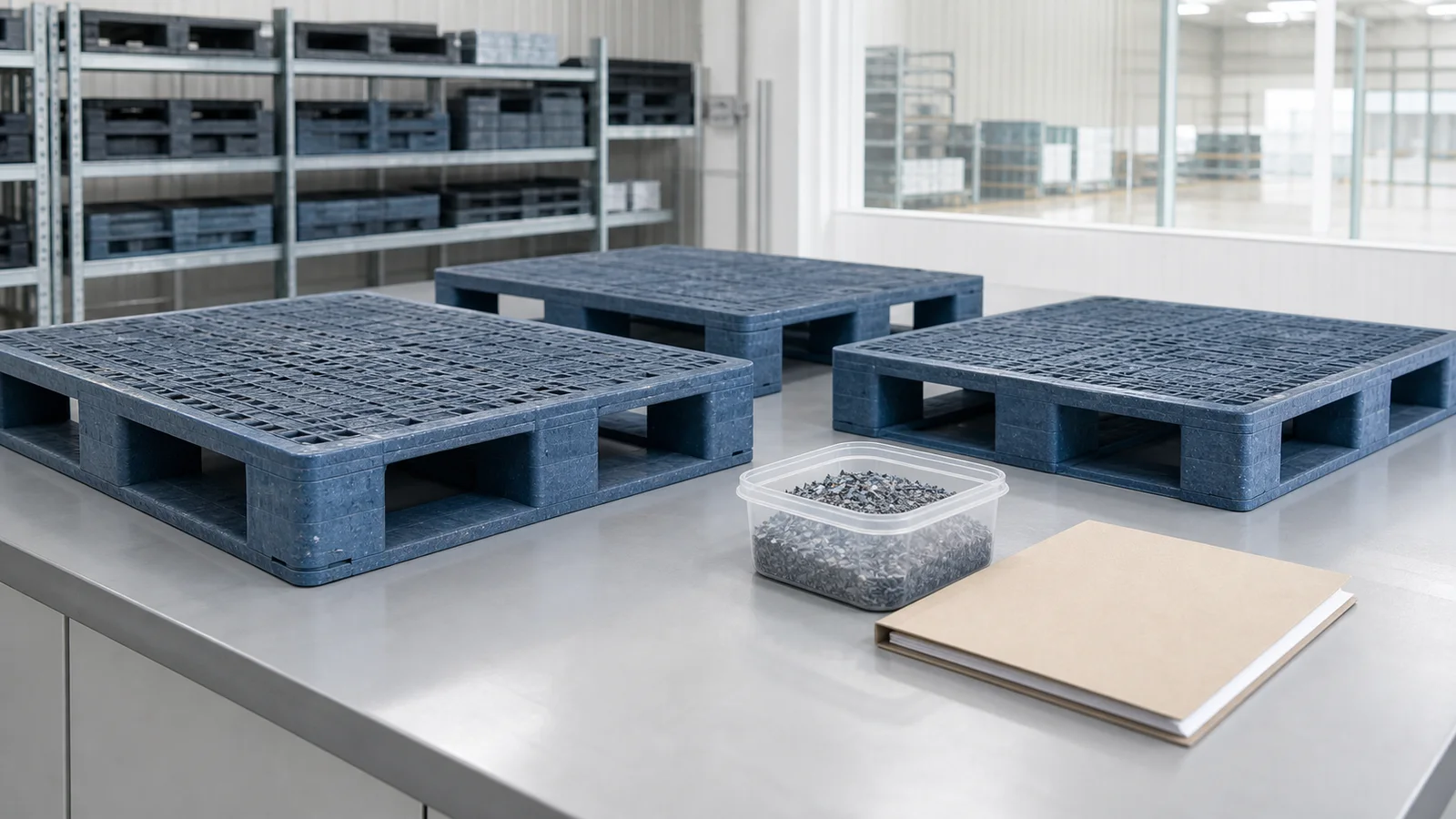
A recycled-content plastic pallet claim can be useful only when the buyer knows what the claim covers. It may describe the pallet body, a material blend, internal regrind, post-industrial scrap, post-consumer material, a color option, or a supplier program. Those are not the same procurement fact.
Use this check before repeating “recycled content” in an RFQ, customer file, audit response, or sustainability note. The goal is not to reject recycled material. The goal is to keep the claim tied to the exact pallet model, supplied lot, route limits, and documents that a buyer can actually defend.
This is a procurement evidence guide, not legal advice, certification, or food-contact approval. Marketing, packaging, food-area, and customer requirements vary by jurisdiction and contract. Confirm final claim wording with the responsible quality, EHS, legal, customer, or sustainability owner.
Start with the claim boundary
Do not ask only, “Is this pallet recycled?” Ask what is being claimed.
| Claim area | What the buyer should clarify |
|---|---|
| Product scope | Does the claim apply to the whole pallet, the molded body, a deck component, runners, inserts, plugs, labels, or color masterbatch? |
| Material source | Is it internal regrind, post-industrial material, post-consumer material, or a controlled blend? |
| Percentage basis | Is the percentage by weight, by resin batch, by product line, or by another method? |
| Lot control | Can the supplier tie the statement to the quoted model, color, production lot, and shipment? |
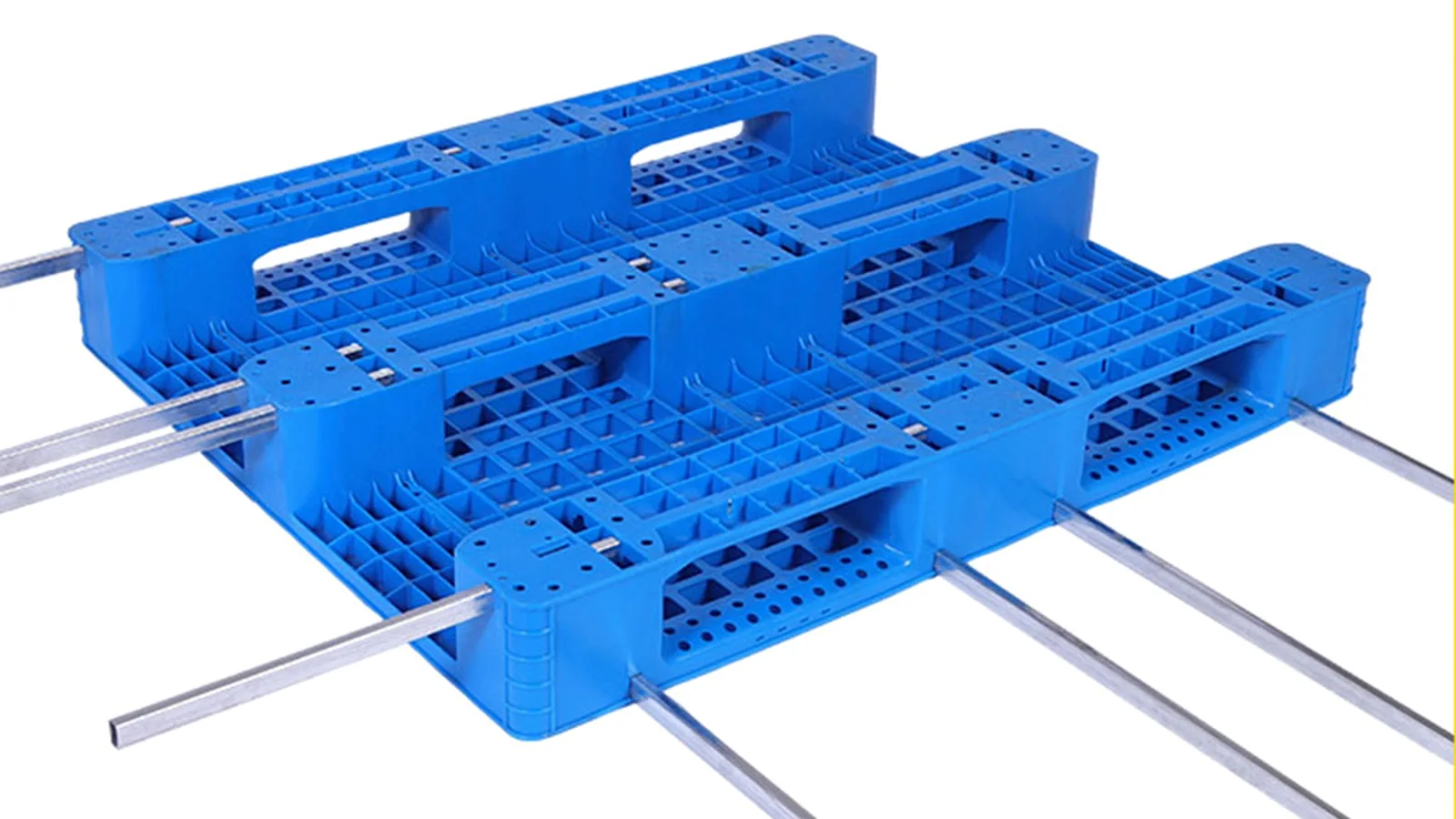
| Exclusions | Are steel tubes, anti-slip inserts, labels, RFID tags, colorant, or additives outside the claim? |
| Use limits | Are food-area, freezer, chemical, ESD, racking, automation, or customer-audited routes excluded? |
For U.S. environmental marketing context, 16 CFR 260.13 addresses recycled-content claims and qualification when the item is not entirely recycled content, except for minor incidental components. That rule does not approve any pallet. It supports the practical point that broad recycled-content wording needs a clear boundary.
Separate material evidence from performance evidence
A recycled-content statement does not prove load rating, impact behavior, cleanliness, odor control, food-area suitability, chemical resistance, or customer acceptance. It is one part of the material route.
Keep two approval tracks separate:
- Claim evidence: what the supplier can document about recycled-content source, percentage, scope, lot, and exclusions.
- Route performance: whether the pallet still passes the buyer’s load, handling, cleaning, temperature, racking, and inspection route.
The HDPE vs PP plastic pallet RFQ guide helps define resin family and material route. This page goes one step narrower: it asks whether the recycled-content claim itself is traceable enough to use in purchasing or customer communication.
A practical RFQ evidence table
Use this table when recycled content is part of the buying decision.
| RFQ item | Useful supplier answer | Stop or escalate when |
|---|---|---|
| Exact model | Model, size, color, deck and base structure, and revision if controlled | Statement applies only to a catalog family or mixed model group |
| Recycled-content scope | Component or whole-pallet scope, with exclusions named | “Recycled pallet” is stated without component boundary |
| Percentage wording | Stated percentage or range and how it is calculated | Percentage is implied by sales wording only |
| Source route | Internal regrind, post-industrial, post-consumer, or controlled blend where disclosed | Source is unknown for an audited or customer-facing claim |
| Lot evidence | Declaration, batch statement, purchase specification, or other document tied to shipment | Supplier cannot connect the claim to the supplied lot |
| Change control | Notice before source, percentage range, additive, color, or resin route changes | Claim may change after sample approval without buyer notice |
| Use limitations | Written exclusions for food-area, direct contact, odor-sensitive, EHS, cold, rack, or automation routes | Supplier claim is treated as route approval |
For low-risk internal dry-goods handling, a supplier statement and sample approval may be enough. For customer reporting, retailer files, regulated claims, food-contact discussions, or EU packaging planning, the claim usually needs a stronger document trail.
Food and hygiene routes need a separate review
Recycled content can be suitable in some pallet routes and unsuitable in others. Do not treat recycled material as automatically unsafe, and do not treat it as automatically acceptable.
If a pallet may contact food, primary packaging, clean-zone equipment, or a customer-controlled food route, keep the recycled-content claim out of the approval box until QA confirms the exposure. FDA’s recycled plastics in food packaging guidance discusses concerns such as contaminants, non-food-contact material entering the stream, and adjuvants. The European Commission also maintains information on plastic recycling for food-contact materials . These references do not approve a plastic pallet. They show why material source and intended contact condition need food-safety review.
For pallet-specific RFQ work, first classify the exposure with the food-contact plastic pallet document checklist . A pallet under sealed cartons in a finished-goods warehouse does not need the same file as a pallet that may touch unpacked food or primary packaging.
Watch the difference between recycled, reusable, and recyclable
These words are often mixed in buying conversations.
- Recycled content describes material that has been recovered or reprocessed into the product.
- Reusable describes whether the pallet is designed and managed for repeated use in a real route.
- Recyclable describes whether the pallet can enter an available recovery stream under local conditions.
One pallet may be reusable without recycled content. Another may contain recycled material but be used one way. A third may be technically recyclable, but only if the buyer has a local collection and material stream that accepts it.
If the route is being prepared for EU packaging planning, keep product facts separate from legal conclusions. Regulation (EU) 2025/40 is relevant to packaging and transport-packaging discussions, but legal scope, operator responsibility, reporting, and customer documentation must be confirmed by the responsible party. Use the EU PPWR reusable pallet records checklist for route records; use this page for recycled-content claim evidence.
When to avoid using the claim externally
Do not repeat a recycled-content claim in customer documents or public wording when:
- the claim is not tied to the exact pallet model, color, component, and supplied lot;
- the percentage basis is unclear;
- mixed components make the whole-pallet claim inaccurate;
- the supplier can change recycled-content source after sample approval without notice;
- the buyer has not confirmed whether the claim is acceptable in the destination market;
- the route involves food contact, pharmaceutical control, chemical exposure, ESD, fire-risk storage, or customer audit rules that need separate documents;
- the claim could be read as a performance, hygiene, compliance, or environmental guarantee that the evidence does not support.
In those cases, the buying file can still record the supplier’s material statement, but the external wording should wait.
Sample RFQ clause
Use wording like this when recycled content matters but final claim approval remains with the buyer:
Supplier shall identify the material route for the quoted pallet model and color, including whether recycled content is used. If recycled content is claimed, supplier shall state the claim scope, percentage or range where available, source category where disclosed, excluded components, lot or shipment evidence, and change-control rule. Recycled-content statements do not replace load, hygiene, food-area, chemical, temperature, automation, or customer-specific approval.
For large orders, connect this clause to the incoming inspection plan and the change-control log . The pallet that passes the first sample review should stay traceable to the material route that procurement approved.
Final decision rule
Approve the pallet by route, and approve the recycled-content claim by evidence.
The route decision asks whether the pallet can carry, store, move, wash, rack, return, and inspect safely. The claim decision asks whether the supplier statement is scoped, documented, current, and acceptable for the buyer’s market or customer file.
When both are clear, recycled-content plastic pallets can be evaluated responsibly. When either is missing, keep the claim internal, request better supplier documents, or specify virgin or controlled material until the buyer’s QA, customer, or legal owner confirms the path.