Industry Insights
Reusable Plastic Pallet Records for EU PPWR Planning
Build a practical checklist for reusable plastic pallet and pallet-box records before EU PPWR route planning, RFQs, and sample approval.
A reusable plastic pallet is not automatically a reusable packaging system. For EU packaging planning, the practical question is not only whether the pallet is strong enough to be used again. The buyer also needs records that show how the pallet or pallet box is identified, returned, inspected, cleaned or reconditioned, counted, and removed from circulation when it is no longer fit for use.
This article is a planning checklist, not legal advice. Regulation (EU) 2025/40 includes transport packaging such as pallets and foldable plastic boxes in re-use target language, and it also refers to re-use systems and reporting. Whether a specific exporter, importer, customer flow, or product category is in scope must be confirmed with the responsible EU customer, importer, or adviser.
Start with records, not a compliance claim
Do not ask a supplier only for a “PPWR-compliant pallet.” That wording is too broad. A pallet supplier can usually confirm product facts: model, material route, dimensions, deck and base structure, load conditions, color, label options, packing quantity, and available test or technical documents. The buyer or EU economic operator still needs to confirm legal scope, reporting responsibility, and customer-specific documentation.
A better starting point is:
We are preparing a reusable transport packaging route. Please confirm the pallet model data, expected use limits, identification options, and documents available for our route review. Final legal applicability and reporting responsibility will be confirmed with the EU customer or responsible operator.
That wording keeps the supplier conversation useful without turning a product quote into a legal guarantee.
Which pallet and pallet-box flows deserve review
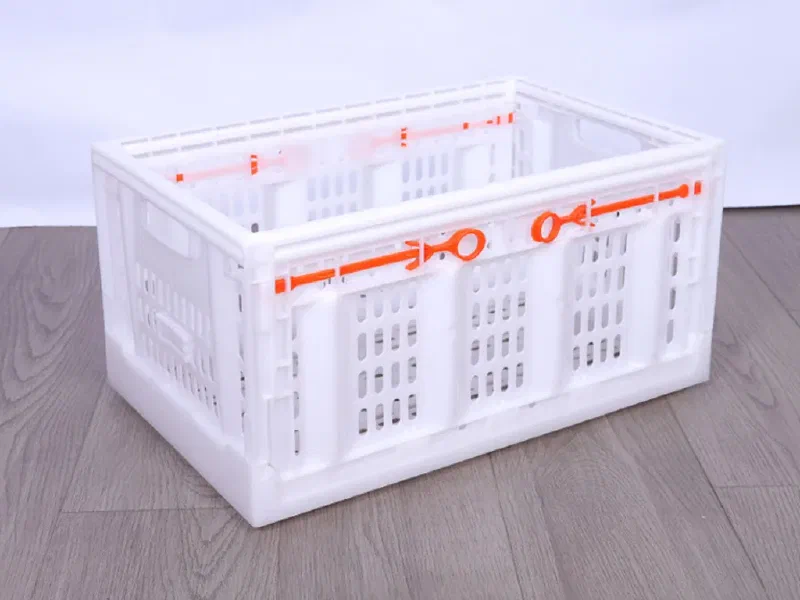
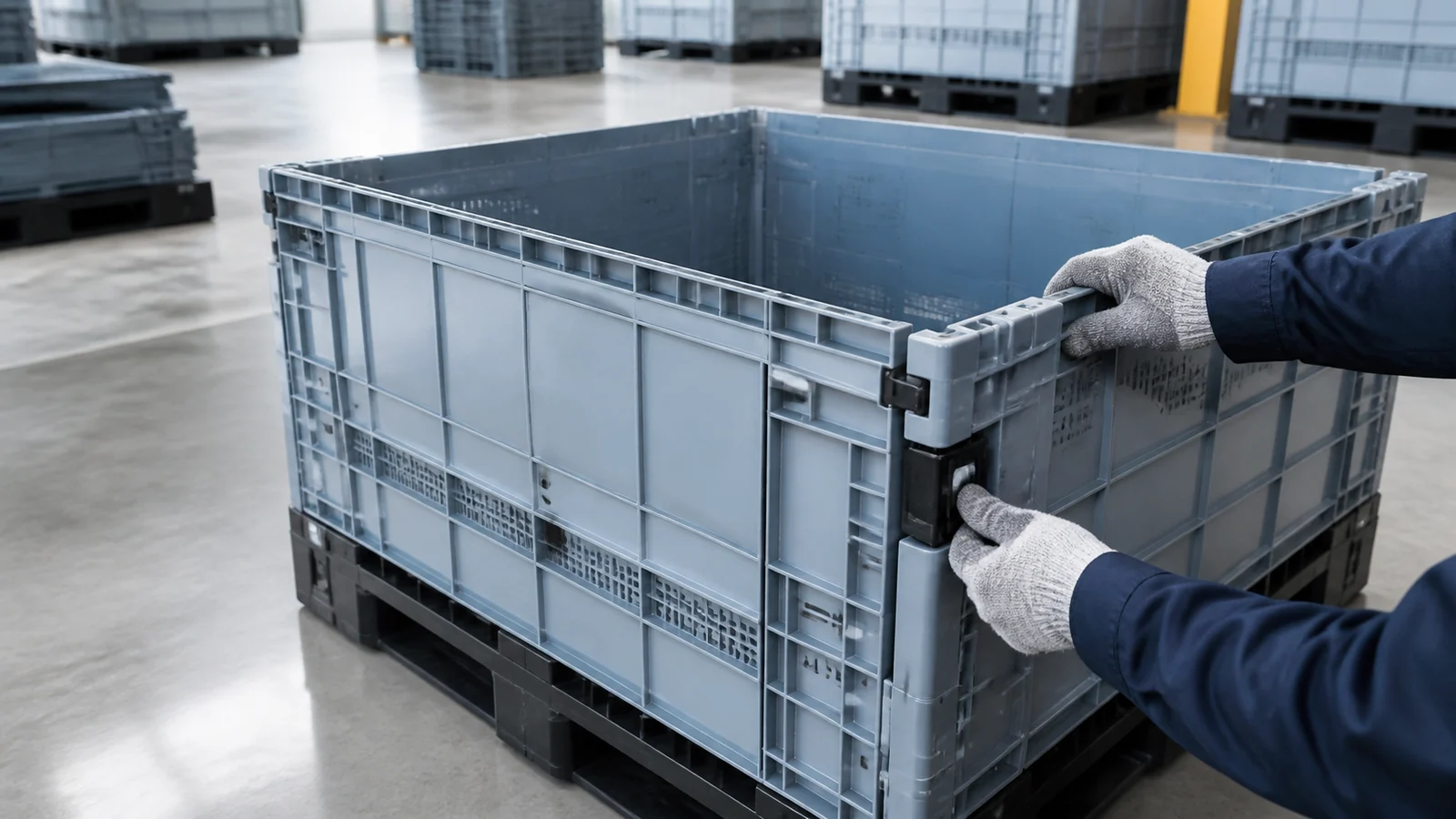
Review the routes where packaging is expected to come back and be used again: reusable plastic pallets, foldable pallet boxes, sleeve packs, crates, trays, and customer-owned returnable units. A single export shipment on a nestable pallet may still be a sensible choice, but it should not be described as part of a reusable system unless collection and return are actually planned.
For export teams, keep two questions separate. ISPM 15 mainly concerns wood packaging material in international trade, while PPWR planning concerns packaging obligations in the EU market. Plastic pallets often avoid wood-treatment marking issues, but destination rules, customer documents, and return-system records still need confirmation. Use the ISPM 15 export pallet framework for the wood-packaging side, and use this checklist for the reusable transport packaging record.
Reusable means a system, not only a stronger pallet
The useful test is simple: if the pallet leaves your site, can you explain how it comes back, how it is checked, and how the next use is recorded?
Reusable-system planning usually needs answers to these points:
- ownership: who owns the pallet, the customer, supplier, pool operator, or shipper;
- route: ship-from, ship-to, return-to, cleaning or reconditioning point;
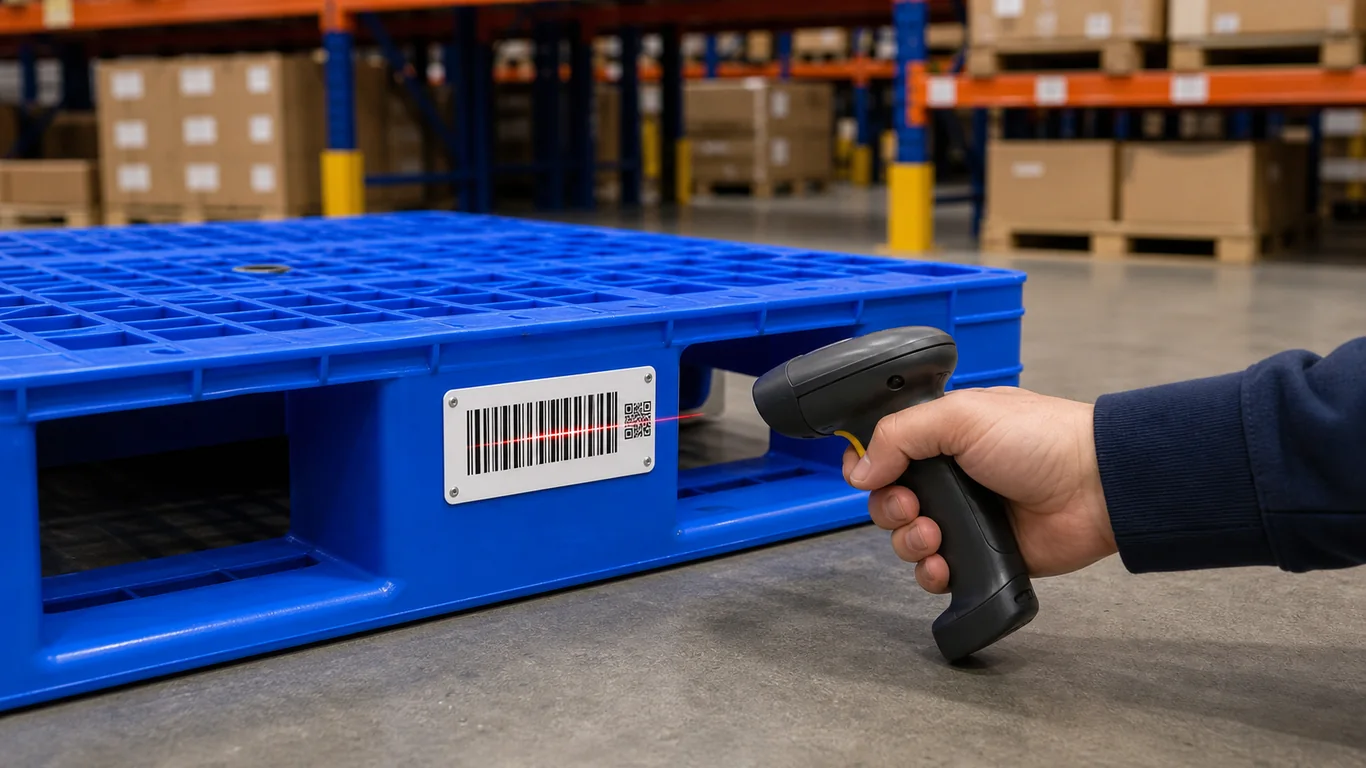
- identification: model code, serial ID, barcode, QR code, RFID, color, or customer mark;
- acceptance: what damage, contamination, deformation, missing label, or fork-entry wear triggers rejection;
- re-entry: who confirms the pallet can be used again and under which load or hygiene conditions;
- data: how rotations, losses, rejects, repairs, cleaning, and end-of-life units are recorded.
A durable plastic pallet can support this system, but it does not create the system by itself.
Practical records checklist before RFQ approval
Use this table before selecting the pallet model or approving samples.
| Record area | What to capture | Why it matters |
|---|---|---|
| Product identity | Exact model, size, material route, color, weight tolerance, deck/base structure, drawing or revision | Prevents later substitution or mixed-model confusion |
| Use condition | Static, dynamic, rack, floor, pallet jack, conveyor, cold room, wash route, outdoor staging | Keeps load and handling claims tied to the real support condition |
| Reuse route | Owner, ship-from, ship-to, return-to, pool boundary, return frequency | Shows whether a real return loop exists |
| Identification | Label, barcode, QR, RFID, molded mark, color code, customer ID | Supports rotation records and mixed-fleet control |
| Inspection | Crack, deformation, missing runner, worn fork entry, contamination, trapped liquid, missing label | Protects safety, hygiene, automation, and load stability |
| Reconditioning | Cleaning, drying, label replacement, segregation, repair limit, re-entry approval | Helps decide when a pallet can return to circulation |
| Data owner | Who records issue, return, rejection, loss, repair, cleaning, retirement | Avoids gaps between supplier, warehouse, customer, and pool operator |
| Supplier file | Technical sheet, test references, sample approval record, packing data, change-control rule | Keeps procurement and operations aligned after the first order |
For quantity planning, connect this table to the plastic pallet pool sizing method . For trip tracking, use the traceability and labeling guide before choosing labels or RFID.
Scenario A/B/C: how to judge the route
A. One-way export or trial shipments. A plastic pallet may still be useful for export, hygiene, clean appearance, or avoiding wood-treatment questions. Do not call the route reusable unless the pallet is collected and used again. Confirm destination documentation, pallet dimensions, packing quantity, and the customer’s receiving requirements.
B. Internal or customer-specific closed loop. This is usually the clearest reusable route. Define ownership, collection points, cleaning or inspection rules, accepted damage limits, and rotation records. If the pallet will be racked, washed, used in cold rooms, or handled by conveyors, approve samples under those actual conditions.
C. Shared or multi-customer pool. This needs stronger governance. Mixed pallet designs, unclear ownership, missing labels, dirty returns, and unrecorded losses can weaken the reuse case. Decide who reconditions units, who pays for lost pallets, and what data the customer, pool operator, or supplier must share.
When plastic pallets may not be the right answer
Plastic pallets are not the best answer for every PPWR planning discussion. Delay or avoid the choice when there is no realistic return route, when the customer requires a different pool format, or when the pallet will be used in dangerous goods, food-contact, pharmaceutical, fire-risk, static-sensitive, or chemical-exposure conditions without the right documents.
Also pause when the application involves beam racking, AS/RS, conveyor transfer, cold rooms, washing, or heavy point loads and no loaded sample test has been done. ISO 8611-1:2025 is useful for pallet testing language, but field approval still has to reflect the actual pallet design, load, support, temperature, duration, and handling route.
Supplier questions before approving samples
Ask the supplier and the EU customer these questions before volume approval:
- What exact pallet or pallet-box model, revision, material route, color, and identification options are being quoted?
- Which load conditions are supported, and under what support method, temperature, duration, and load distribution?
- What sample tests or customer trials are needed before the pallet enters racking, conveyors, washing, cold rooms, or food-area use?
- What documents are available now, and which legal or customer documents are outside the supplier’s scope?
- How should damaged, contaminated, deformed, unlabeled, or lost units be recorded?
- Can labels, colors, or RFID options support rotation tracking without creating cleaning or durability problems?
- What change-control rule applies if the material route, mold, color, label, weight, or base design changes after approval?
Use the plastic pallet RFQ checklist to keep those answers comparable across suppliers. If empty returns are part of the plan, review the empty return logistics playbook before locking the pallet structure.
Final planning rule
Approve the reusable route first, then approve the pallet. The route record should explain where the pallet goes, how it returns, who checks it, how many times it has circulated, what happens when it fails inspection, and which documents still require customer or legal confirmation.
If you are preparing a reusable pallet or pallet-box route, share the load, dimensions, handling equipment, return plan, cleaning needs, and customer documentation requests. A supplier can then help check which pallet structure and documents fit the actual route, while the responsible EU party confirms the legal scope.