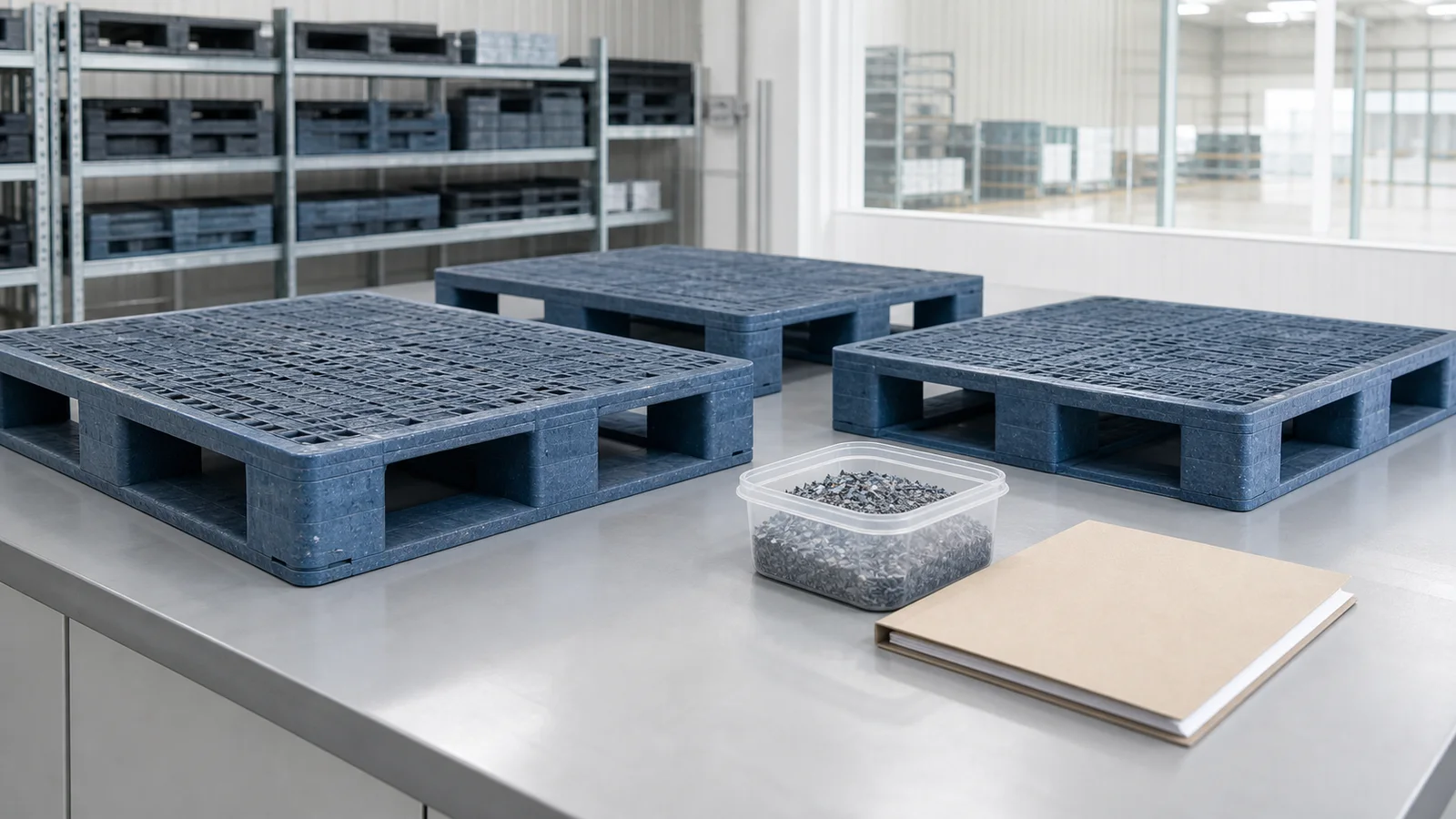
Industry Insights
EU Closed-Loop Pallet Records: When a Heavy-Metal Derogation May Apply
Use the conditions in EU Decision 2009/292/EC to separate a controlled legacy pallet loop from a general recycled-plastic pallet claim.
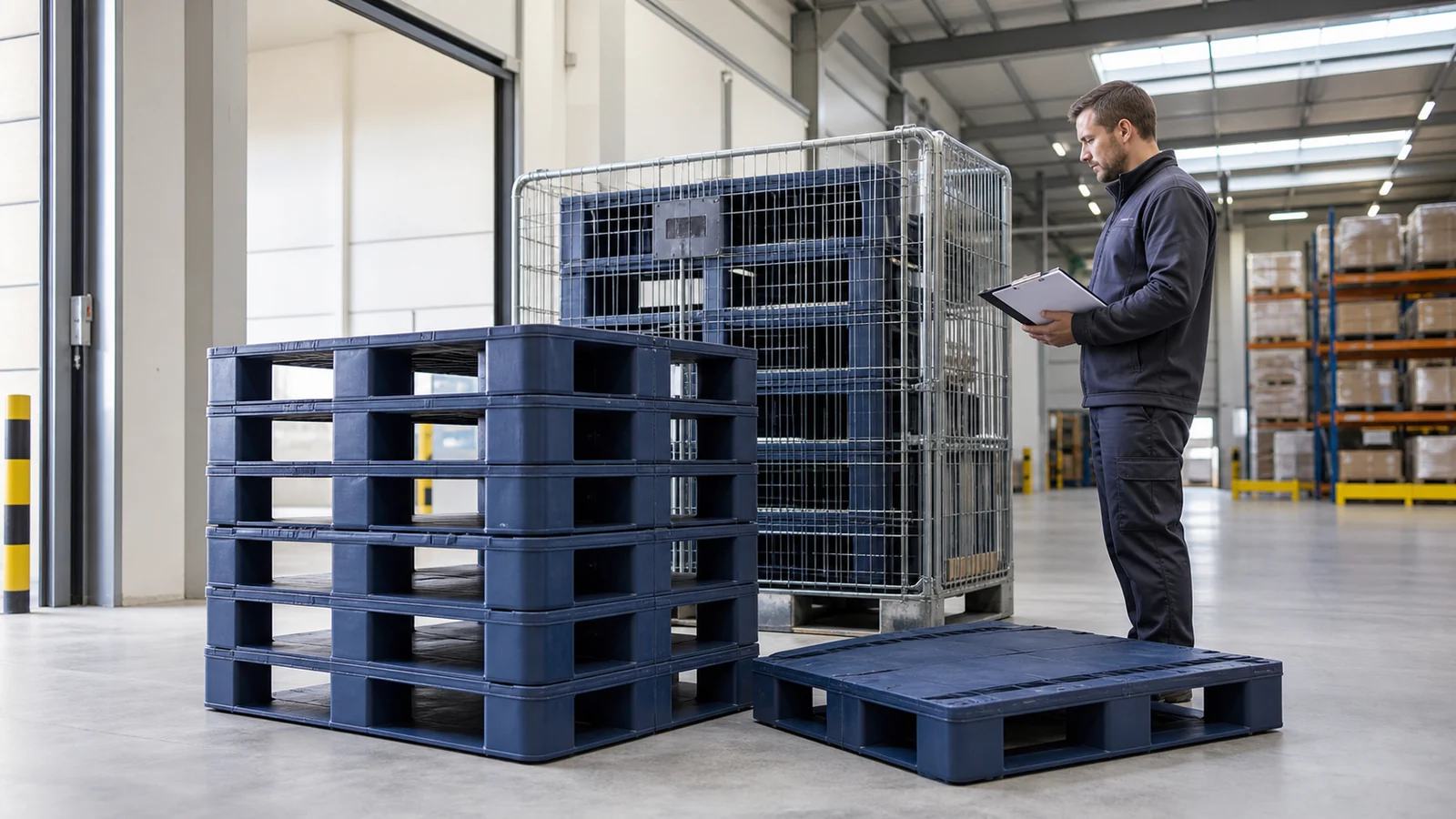
A recycled-plastic pallet can be a sound circular choice. It is not, however, safe to assume that every pallet with recycled content can rely on the EU’s legacy heavy-metal derogation for plastic pallets.
Commission Decision 2009/292/EC is listed as in force and concerns plastic crates and pallets whose combined heavy-metal concentration exceeds the limit then set by the Packaging Directive. Its scope is narrow: the units must be introduced and kept in a closed and controlled product loop, and the decision attaches conditions for controlled recycling, identification, return, records, and accountability. It is not a general product certificate or a shortcut for a new open-distribution pallet program.
The practical buyer action is to separate two questions before an EU claim is made: does the quoted pallet fit the actual return loop, and does the responsible EU operator have evidence for the conditions of this specific derogation? The legal position after the Packaging and Packaging Waste Regulation begins generally applying on 12 August 2026 also needs confirmation for the route and Member State.
Start with the route, not a material percentage
A laboratory value, recycled-content statement, or supplier declaration can be useful procurement evidence. None of those facts alone proves that a pallet is in a closed and controlled chain.
For the narrow derogation, Decision 2009/292/EC says that plastic crates and pallets exceeding the applicable heavy-metal limit may do so only when they are introduced and kept in a closed and controlled chain. It also says the material for the controlled recycling process must come only from other plastic crates or pallets; other material is limited to what is technically necessary and, in any event, 20% by weight. The decision does not tell a buyer that every recycled pallet is eligible.
Before using the derogation as part of a sourcing or compliance discussion, map the real route:
- who owns the pallet and who controls each dispatch, return, repair, and retirement step;
- whether the units stay in an identifiable fleet rather than entering an uncontrolled exchange or disposal stream;
- where damaged units go, and whether the stated recycling process is actually the one used;
- which EU economic operator holds the technical file and accountability records.
This is a route-evidence exercise, not a claim about the safety or quality of a pallet model. A buyer that cannot describe the return path should not describe the pallet as covered by this narrow legacy pathway.
The records are part of the condition
The decision requires permanent, visible identification for covered crates and pallets. It also requires Member States to ensure that at least 90% of dispatched covered units are returned to the manufacturer, packer, filler, or authorised representative during their life cycle. Its inventory and record-keeping provisions require a system that documents compliance and accounts for the covered units put into and removed from service.
Turn those legal conditions into a short evidence request. Ask the responsible operator—not only the pallet supplier—for a record that identifies:
| Question | Evidence to request |
|---|---|
| Which units are in the controlled loop? | Permanent ID rule, model/revision, owner, and loop boundary |
| How are returns measured? | Dispatch, receipt, loss, repair, and retirement records with a defined period |
| How are out-of-service units handled? | Approved disposal or controlled-recycling route and the owner of that decision |
| Who holds the compliance evidence? | EU operator or authorised representative, document location, and escalation contact |
| Which material route is being claimed? | Supplier statement limited to the actual pallet and recycling route, not a blanket assertion |
The supplier may be able to provide the model, material route, and marking options. The party placing or operating the packaging system must confirm whether those facts meet the legal and operational conditions. Keep that handoff visible in the RFQ and approval record.
Do not merge this decision with PPWR planning
The EU PPWR planning record guide addresses reusable transport-packaging route planning more broadly. This page is different: it asks whether a specific legacy heavy-metal derogation has its own controlled-loop evidence.
The Commission states that Regulation (EU) 2025/40 generally applies from 12 August 2026. Decision 2009/292/EC is still shown as in force on EUR-Lex at publication, but it was made under the earlier Packaging Directive. Do not assume its practical availability, transition, or national implementation after that date. Ask the responsible EU legal or compliance owner to confirm the current rule for the product, destination, and Member State before making a compliance representation or releasing volume.
A release question that exposes the gap
Before approving a pallet for this purpose, ask:
Can we show the specific pallet fleet, its closed return path, its identification and records, its controlled end-of-life path, and the responsible EU confirmation for this route?
If the answer is no, treat the heavy-metal question as unresolved. Continue normal technical approval of the pallet—load, racking, hygiene, automation, and handling still need their own evidence—but do not use the derogation as a marketing or procurement conclusion. For a wider reusable fleet, use the pallet traceability guide to design the operational ID and return records, then obtain legal confirmation before deployment.