Industry Insights
Plastic Pallet Anti-Slip Design: How to Specify Edge Lips and Deck Grip for Stable Unit Loads
A practical guide for procurement and warehouse teams on when plastic pallet edge lips, anti-slip surfaces, and rubber inserts improve unit load stability without creating handling or cleaning problems.
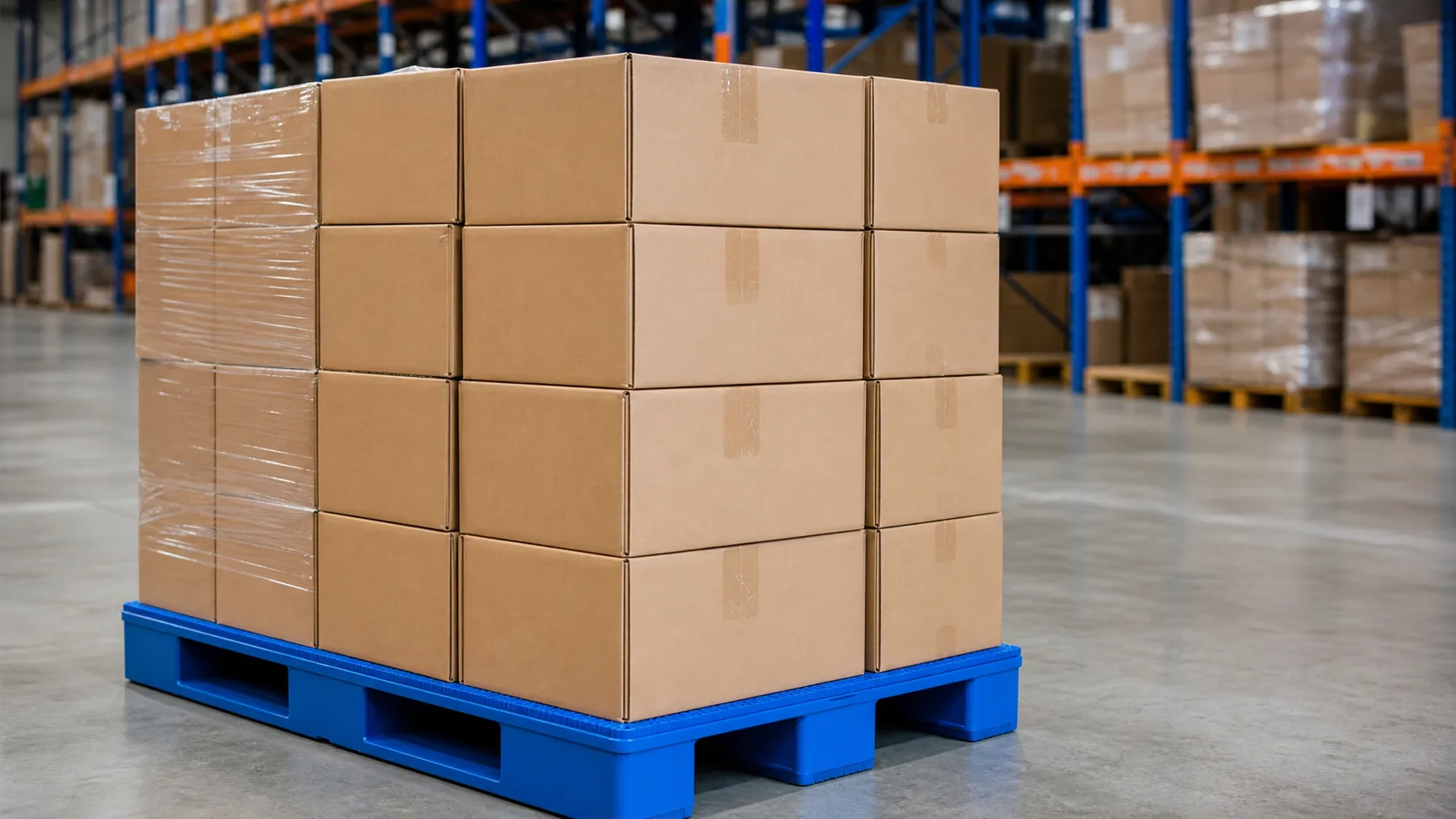
Unit load stability is often discussed after something has already gone wrong: cartons shift during forklift turns, bags creep toward the pallet edge, stretch wrap loosens in transit, or an operator adds extra film because the load does not feel secure. In many of these cases, the pallet is not the only cause. Packaging strength, stacking pattern, wrapping tension, driving speed, floor condition, and handling equipment all matter.
Still, the plastic pallet surface can either support or undermine the stability of the complete load. Edge lips, deck texture, anti-slip plugs, and rubber inserts are small design details, but they affect how cartons, sacks, trays, and plastic totes behave during daily movement.
The question for procurement teams is not whether every pallet needs the most aggressive anti-slip design. The better question is: which load movement risk needs to be controlled, and which pallet feature solves it without creating a new problem?
What anti-slip pallet design is meant to control
Plastic pallet anti-slip design usually addresses three different types of movement.
Sliding on the top deck happens when cartons, trays, plastic crates, or bags move across the pallet surface during forklift acceleration, braking, turns, or truck vibration.
Edge migration happens when goods slowly move toward the perimeter of the pallet. This can be caused by uneven stacking, loose wrapping, partial pallet coverage, bag settling, or repeated handling.
Pallet-to-pallet or pallet-to-floor movement happens when stacked empty pallets, floor-stacked loaded pallets, or pallets on smooth truck floors shift during storage or transport.
These are not the same problem. A raised pallet edge lip may reduce carton migration at the deck perimeter, but it may not improve grip under the load. Rubber inserts may improve friction, but they may add cleaning or replacement requirements. A textured deck may support general handling, but it may not stop poorly stacked cartons from leaning outside the footprint.
Before specifying a feature, define the movement pattern first.
When a raised edge lip is worth specifying
A pallet edge lip is a molded raised rim around part or all of the pallet deck. It is useful when the main risk is product movement beyond the pallet footprint.
Edge lips are most valuable in operations with:
- cartons that sit close to the pallet perimeter;
- loose or lightly wrapped unit loads;
- returnable totes or trays with smooth plastic bases;
- frequent forklift turns in narrow aisles;
- truck loading where pallets may experience vibration;
- small cartons that do not interlock strongly across layers;
- mixed-SKU pallets where the outer edge is less uniform.
The benefit is simple: the lip creates a physical boundary. It can help keep the first layer aligned during wrapping, reduce small shifts during handling, and give operators a clearer visual edge for stacking.
However, the edge lip should match the load. A very high lip can interfere with cartons that need to sit flush across the deck, create pressure points under bagged goods, or make it harder to slide products onto the pallet during manual loading. A low continuous lip may work better for boxed goods, while segmented or corner lip designs may be easier for some loading processes.
For buyers comparing pallet structures, the feature should be reviewed together with load type, deck style, and handling route. A rackable model such as the 1210 open deck 3-runner plastic pallet may be evaluated for load capacity and rack fit first, but top-deck details should still be checked if carton movement has been a recurring issue.
When deck texture or rubber inserts matter more
Edge lips control movement at the perimeter. Deck grip controls movement across the contact surface.
Deck texture, molded ribs, anti-slip pads, and rubber inserts are more relevant when the load slides before it reaches the edge. This is common with:
- smooth-bottom plastic crates;
- shrink-wrapped cartons with glossy film contact;
- trays or bins with small contact feet;
- cold-room pallets with condensation;
- beverage or chemical cartons handled at higher speed;
- stacked empty pallets that slide during transport.
Rubber inserts can improve friction, especially between pallet and load or between stacked pallets. But they should not be specified casually. Inserts may wear, loosen, collect residue, or require replacement. In food, pharmaceutical, or clean warehouse areas, the cleaning team should confirm whether inserts create unacceptable retention points.
Molded texture is more durable because it is part of the pallet body, but the texture must be balanced. Too little grip may not solve the problem. Too much texture can scuff packaging, hold dust, slow cleaning, or make manual sliding harder.
For hygiene-sensitive lanes, deck grip decisions should be considered together with surface cleanability. The article on closed-deck plastic pallet selection explains why the pallet surface is not only a load-support feature, but also a cleaning and inspection control point.
Do not use pallet grip to compensate for poor unitization
Anti-slip pallet features are helpful, but they cannot replace correct unit load design.
If cartons overhang the pallet, if stretch wrap is applied too low or too loose, if bags are stacked in a pattern that encourages outward pressure, or if the center of gravity is too high, the pallet surface can only reduce part of the risk. It cannot make an unstable load safe.
Before changing the pallet specification, review:
| Stability input | What to check |
|---|---|
| Pallet footprint | Goods should stay within the usable deck area unless the lane is designed for overhang |
| First layer | Cartons or bags should sit flat and distribute weight evenly |
| Stack pattern | Interlocking may improve stability, while column stacking may protect carton strength |
| Wrap program | Film type, pre-stretch, containment force, and wrap height should match the load |
| Handling route | Turns, ramps, dock plates, truck floors, and lift heights affect movement |
| Operator practice | Fork speed, tilt angle, and braking often decide whether marginal loads shift |
If the load is already unstable, specify the pallet feature as one part of a broader correction. If the load is basically sound but shifts slightly during normal handling, an edge lip or deck grip feature may be enough to improve daily performance.
Check equipment compatibility before approving an edge lip
A pallet edge lip changes more than the top surface. It can affect loading, unloading, automation, and cleaning.
Confirm these points before approval:
- Can cartons, sacks, or totes be placed without catching on the lip?
- Does the lip interfere with slip sheets, dividers, or display-ready packaging?
- Can automated depalletizers, palletizers, or conveyors tolerate the raised edge?
- Will the pallet still stack or nest correctly when empty?
- Can workers clean and inspect the area where the lip meets the deck?
- Does the lip reduce usable deck area for large cartons?
- Is the lip exposed to forklift impact at common contact points?
In automated or conveyor-heavy warehouses, small dimensional features can create large reliability problems. A pallet that improves load grip but jams a transfer point is not a successful specification. For higher-throughput systems, anti-slip design should be reviewed together with the broader automation-ready plastic pallet specification .
Match the anti-slip feature to the packaging type
Different packaging forms need different control methods.
Cartons usually benefit from a stable first layer, correct pallet footprint, and moderate edge control. If cartons are light and smooth, deck texture may help. If cartons are strong but tend to migrate outward, a low edge lip may be more useful.
Bags need careful review because they settle, deform, and create outward pressure. A raised lip can sometimes help, but it may also create local stress at the bag edge. Test the actual filled bag, not an empty sample or a rigid substitute.
Drums and pails create concentrated contact points. The main issue may be deck strength and point-load support rather than friction. Anti-slip pads can help in movement, but the pallet must first carry the load correctly.
Plastic crates and totes often have smooth bottoms or feet. Rubber inserts, textured zones, or deck geometry may reduce sliding, but the contact points must line up with the pallet surface.
Shrink-wrapped mixed loads need both pallet support and wrap discipline. An edge lip can help the first layer stay in place while wrapping, but it should not hide problems with load pattern or containment force.
The safest sample test uses the exact product family that has caused movement problems. Average loads rarely reveal the issue.
Include anti-slip checks in sample validation
Anti-slip performance should be tested before the bulk order, especially if the pallet will be used with smooth packaging, cold-chain routes, export shipping, or automated handling.
A practical validation process can be simple:
- Load the pallet with the real product and normal stack pattern.
- Apply the standard stretch-wrap program.
- Move the pallet through the normal forklift route, including turns and dock transitions.
- Stop and brake at normal operating speed, not at an artificially slow pace.
- Check whether the first layer moved, whether the outer cartons pressed against the lip, and whether packaging was scuffed.
- Store the pallet for the normal dwell time and inspect again.
- If the lane includes truck transport, run a short route trial or vibration exposure when practical.
Record photos and measurements. If a raised lip is part of the design, measure whether the load remains inside the deck perimeter after handling. If rubber inserts are used, inspect whether they stay seated and cleanable after repeated cycles.
This can be added to a broader plastic pallet load testing plan before bulk orders , so the buyer validates stability, load capacity, rack fit, and handling performance in one approval process.
Write the requirement into the RFQ clearly
Vague wording such as “anti-slip pallet” is not enough. Suppliers need to know what movement problem the pallet must solve.
A useful RFQ clause may include:
- product type and packaging base material;
- pallet size and usable deck area;
- whether a raised edge lip is required, optional, or prohibited;
- required lip height or acceptable range, if known;
- whether anti-slip rubber inserts are acceptable;
- cleaning, washdown, or residue-control requirements;
- stretch-wrap method and containment target;
- forklift, conveyor, rack, or truck transport conditions;
- sample test and pass/fail rules.
For example:
Pallet must support 1200 x 1000 mm carton unit loads with no carton overhang. A low molded edge lip is preferred to reduce first-layer migration during forklift handling and truck loading. Lip design must not damage cartons, reduce required deck fit, interfere with stretch wrapping, or create cleaning retention points. Supplier must provide samples for handling and load-stability validation before bulk production.
This wording helps suppliers recommend a specific structure instead of treating “anti-slip” as a generic claim.
Practical decision rule
Specify a plastic pallet anti-slip feature only after identifying the movement risk.
Choose an edge lip when the load is basically stable but tends to migrate toward or beyond the pallet perimeter.
Choose deck texture or anti-slip inserts when the load slides across the pallet surface before reaching the edge.
Improve unit load design first when cartons overhang, bags lean outward, wrapping is weak, or the center of gravity is too high.
Reject or modify the feature when it interferes with conveyors, cleaning, loading, nesting, carton protection, or inspection.
The best plastic pallet anti-slip design is not the most aggressive one. It is the smallest feature that controls the real movement risk while keeping the pallet easy to handle, clean, inspect, and repeat across bulk orders.