Industry Insights
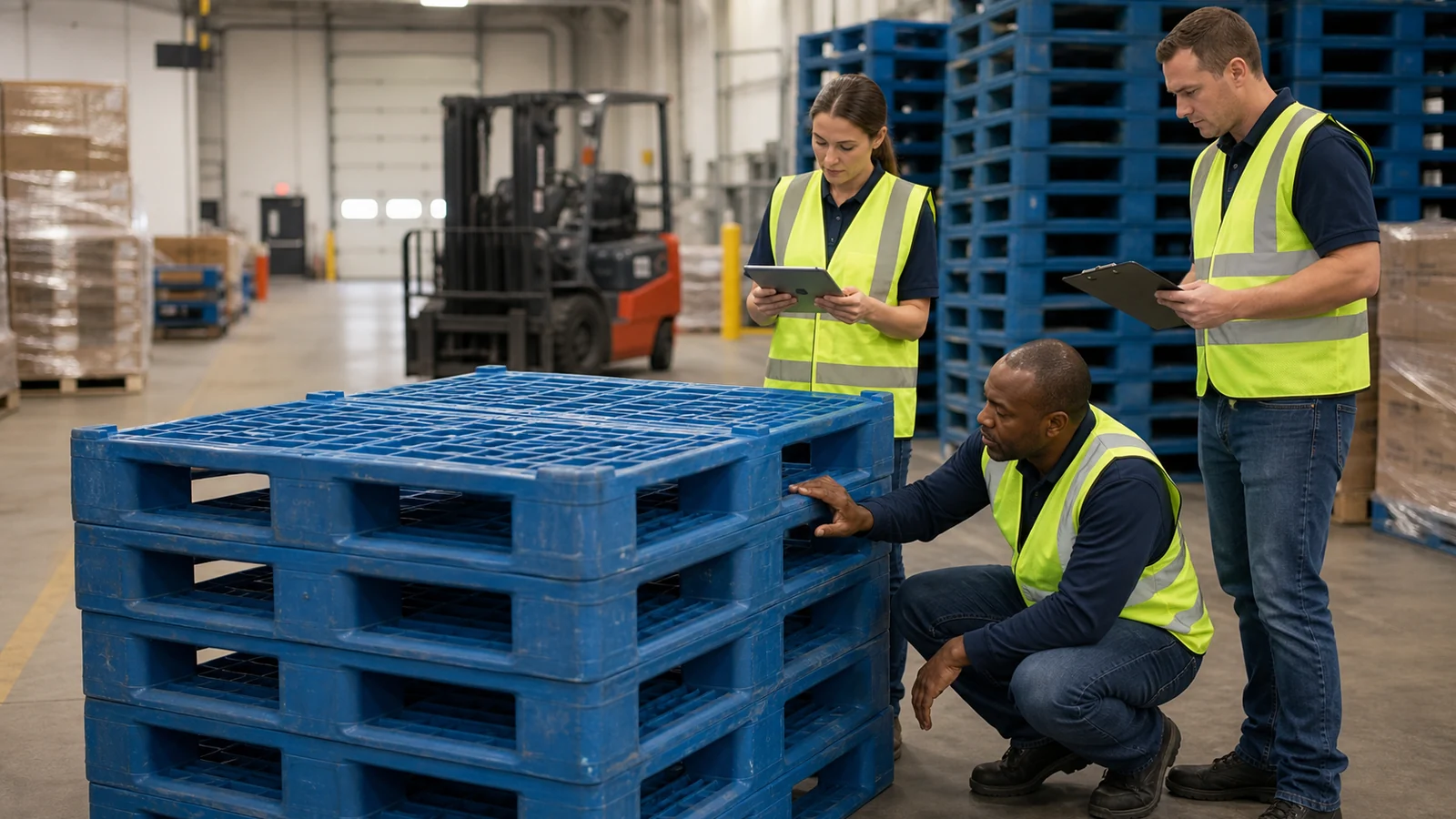
Mixed Plastic Pallet Model Stacking Checks
Use same-model stacking, identification, and hold rules to prevent unstable empty or loaded plastic pallet stacks when similar pallets get mixed.
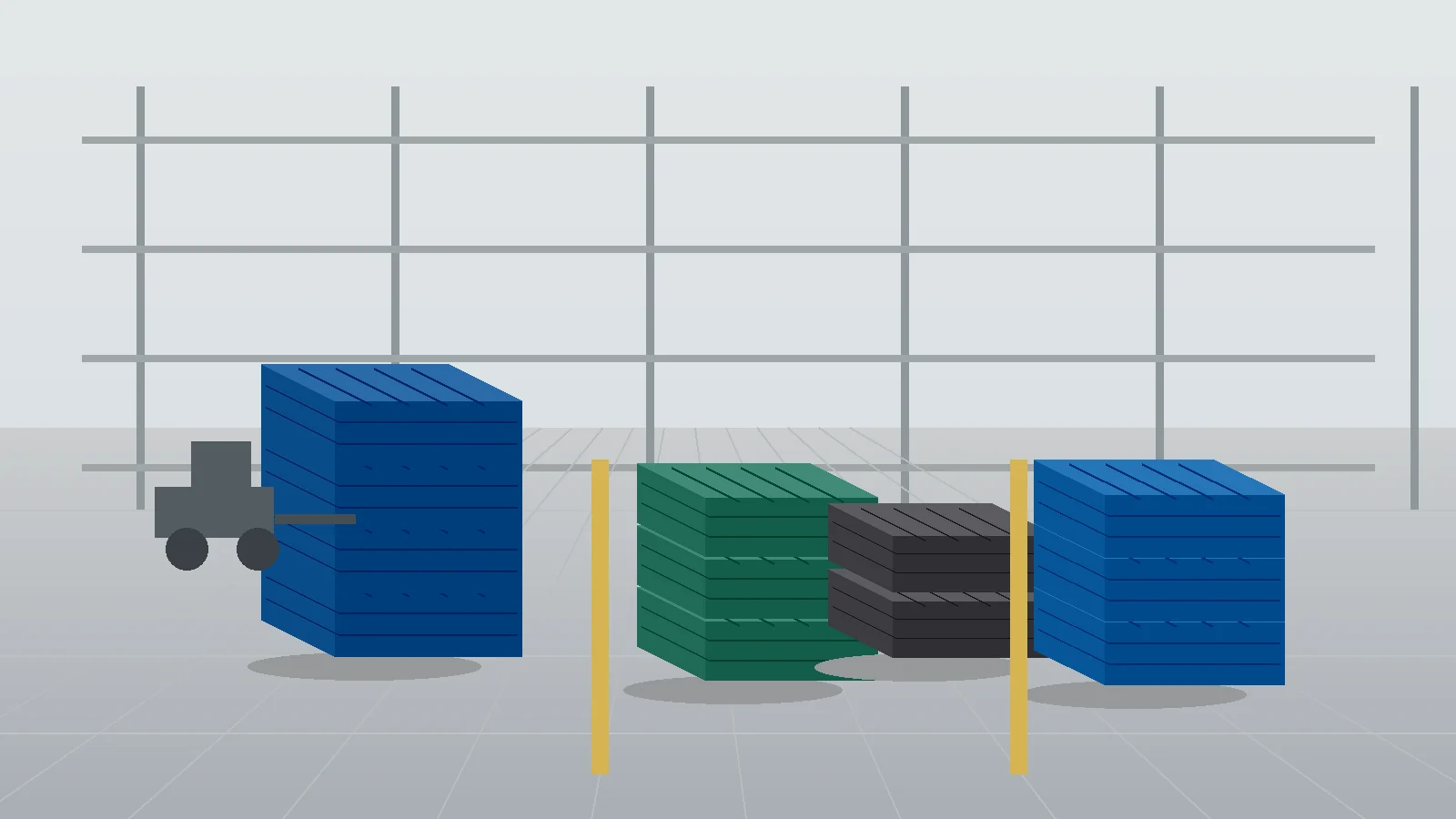
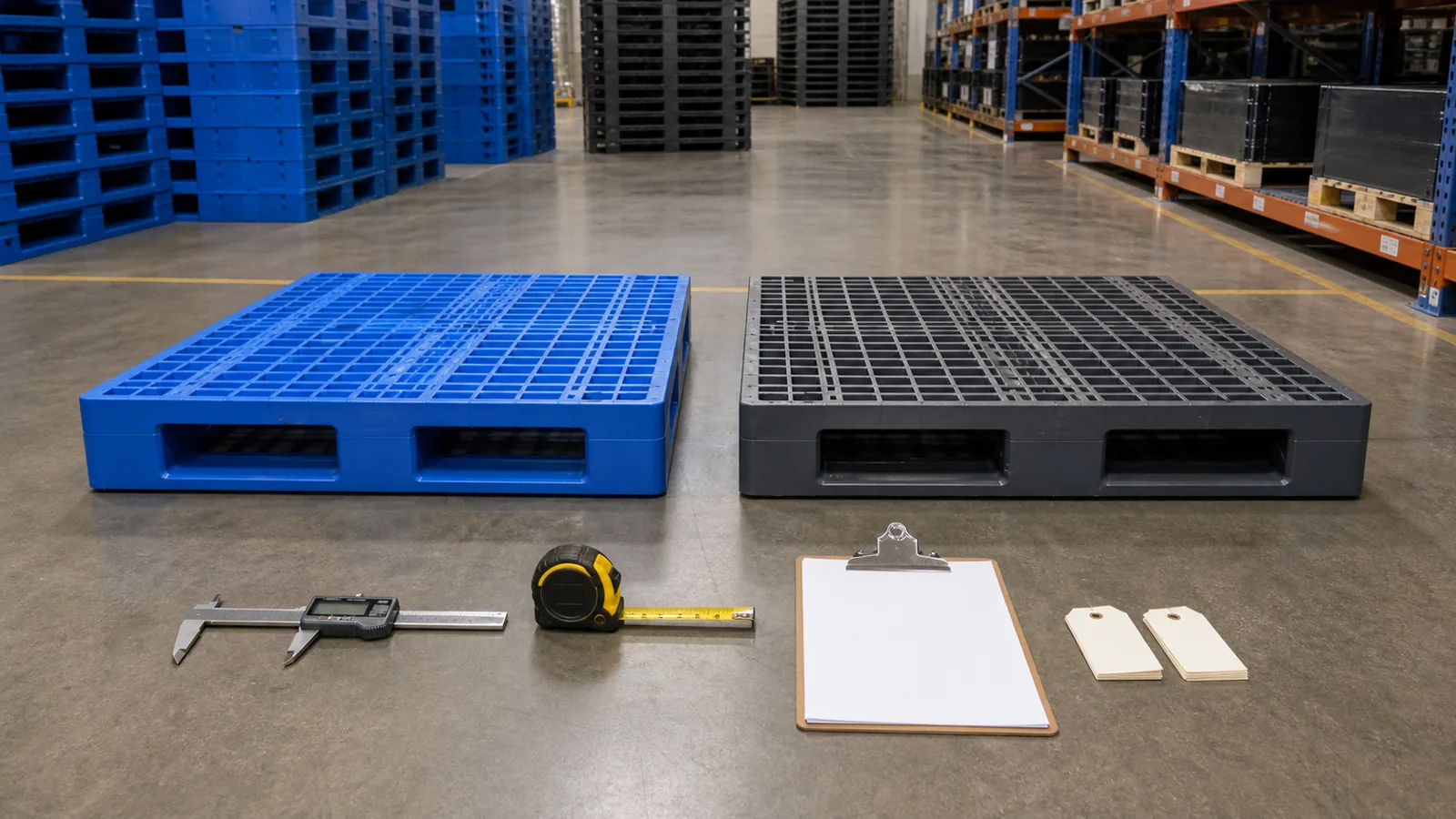
When two plastic pallet models look similar, warehouse teams may stack them together during receiving, washing, return sorting, or trailer unloading. That shortcut can create a real operating risk. Different deck heights, foot shapes, runner contact zones, nesting geometry, damaged corners, and load ratings can turn a neat-looking stack into a leaning, jammed, or unstable one.
Use this check when a site handles more than one plastic pallet model, color, supplier version, customer loop, or returned pallet family. The practical rule is simple: stack only pallets that are confirmed to be the same compatible model and condition. Hold mixed or uncertain stacks until the model, route, and stack limit are confirmed.
This is a warehouse control guide, not a pallet-model approval or legal rule. Final limits still depend on the actual pallet design, condition, load, handling equipment, storage area, supplier data, and local safety requirements.
Why mixed-model stacking deserves its own rule
A stack-height guide tells you how high a known pallet and load can be stored. An incoming inspection plan tells you whether a lot can be released. A color-coding system helps keep zones apart. Mixed-model stacking sits between those controls: it asks whether pallets that have already entered the building can be stacked together at all.
Official safety rules support a stability-first approach. OSHA 29 CFR 1910.176 addresses secure storage of materials and clear aisles and passageways. OSHA’s powered industrial truck load-handling guidance tells operators to handle stable or safely arranged loads. The HSE pallet safety guidance treats pallet safety as a matter of purchase, use, inspection, handling, and training.
Those sources do not approve any plastic pallet model. They do support the operating boundary: if a mixed stack is not known to be stable, compatible, and inspectable, do not treat it as normal storage.
Start with a same-model definition
“Blue pallet” or “1200 x 1000 mm pallet” is not enough. A same-model rule should use features that affect stack contact and handling.
| Check item | Why it matters |
|---|---|
| Model and supplier identity | Similar dimensions can hide different deck, foot, or runner geometry. |
| Mold or revision | A design update may change nesting, bottom contact, rib height, or reinforcement. |
| Size and height | Small height differences can concentrate pressure and make empty stacks lean. |
| Base type | Nine-leg, three-runner, perimeter-base, double-faced, and nestable pallets stack differently. |
| Condition | Broken corners, bent runners, worn feet, or warped decks can make an otherwise compatible pallet unsafe to stack. |
| Route status | Food-zone, quarantine, customer-dedicated, export, or returned pallets may have different release rules even when the model matches. |
If one of these items is unknown, mark the stack as mixed or uncertain. That does not mean every pallet must be scrapped. It means the stack should be held, sorted, or downgraded before normal use.
For broader receiving controls, connect this rule to the incoming inspection plan . For zone identity, align it with the plastic pallet color-coding guide .
Four places where mixed stacks fail
1. Empty pallets jam or lean
Empty-pallet stacks are often built quickly. A nestable pallet can catch on the wrong foot shape. A perimeter-base pallet can sit on a raised deck feature instead of a designed contact point. A slightly taller pallet in the middle can tilt everything above it.
Treat empty stacks as controlled storage, not harmless housekeeping. Define the maximum empty stack height by model, and require operators to stop when a pallet does not sit flat, separates poorly, or creates a visible lean.
2. Loaded pallets transfer force through the wrong contact points
Loaded floor stacking is riskier because the bottom pallet carries the vertical force of the stack. If an upper pallet has different feet or runners, the pressure can land on weak deck zones of the pallet below. The lower pallet may deform even if both pallets are individually acceptable.
Use the plastic pallet stack-height planning guide for known models and known loads. Use this page when the stack contains mixed or uncertain pallet identities.
3. Forklift handling becomes unpredictable
Mixed stacks can shift when lifted because fork pockets, base contact, and stack alignment are not consistent. Operators may also compensate by entering at an angle or lifting a stack that is already leaning. OSHA powered industrial truck guidance supports handling only stable or safely arranged loads; it is not a substitute for a site-specific pallet stack rule.
Before releasing a mixed stack, confirm that the stack stays flat during lifting, turning, lowering, and travel over the normal floor route. If the stack rocks, catches, or spreads, sort it by model instead.
4. Status control is lost
Mixed stacks can defeat hygiene, customer, or quarantine controls. A cleaned food-zone pallet can be stacked with an unverified return. A customer-dedicated loop pallet can disappear into general circulation. A rejected pallet can be hidden in the middle of an approved stack.
When model identity and status disagree, stop the movement and sort the stack. Do not use a matching color as proof of matching status.
A practical hold-sort-release table
Use a short decision table that receiving, sanitation, warehouse, and forklift teams can apply without a long investigation.
| Stack finding | Status | Next action |
|---|---|---|
| Same model, same revision if controlled, same route status, no visible damage | Release for the defined empty or loaded stack limit | Record model and stack limit where the operation requires it. |
| Same model but mixed damage condition | Hold or sort | Remove damaged, warped, cracked, contaminated, or unstable pallets before release. |
| Same size and color but model, base, or revision differs | Sort by model | Do not use as a normal stack until supplier or site owner confirms compatibility. |
| Unknown returned pallets mixed with released pallets | Quarantine or return-sort | Confirm prior use, cleaning status, damage, and customer loop before release. |
| Loaded mixed stack or visible lean | Stop movement except controlled unloading | Break down under supervisor control and inspect the bottom pallets and load condition. |
| Pallet sticks, jams, or separates poorly | Hold for compatibility review | Treat as a stack-design issue, not only an operator issue. |
The goal is not to slow every movement. It is to make the exception visible before a mixed stack becomes a storage, forklift, hygiene, or customer problem.
What to ask the supplier
For repeat purchases or multi-site programs, ask the supplier to make stacking compatibility explicit:
- exact model name, size, base type, and drawing or revision;
- whether current production stacks with earlier supplied versions;
- maximum empty stack height and nesting direction, if relevant;
- whether loaded pallets may be stacked on top of the same model only;
- areas that should not receive point pressure from a different pallet base;
- inspection points for worn feet, cracked runners, warped decks, or damaged nesting features;
- change-control notice before mold, base, material, or height changes that affect stacking.
A practical RFQ clause is:
Supplier shall identify the quoted pallet model, base structure, stack or nest behavior, compatible earlier versions if any, and limits for empty and loaded stacking. Mixed-model stacking is not approved unless supplier data and site testing confirm stable contact under the buyer’s route.
If the pallet choice itself is still open, compare the operational route with nestable vs rackable plastic pallet selection before forcing one model into every stack.
Site test before normal release
Run a short test before allowing a new pallet model to mix with existing circulation.
- Build a same-model empty stack to the planned height.
- Build the most likely accidental mixed stack using the old and new models.
- Check whether each pallet sits on designed contact points.
- Lift, turn, travel a short route, lower, and separate the stacks.
- Repeat after washing or cold exposure if those conditions exist.
- Inspect for rocking, tilt, jamming, foot damage, deck pressure marks, and unsafe separation.
- Record the release rule in plain language: same model only, compatible with named model, empty stack only, loaded stack prohibited, or hold pending supplier confirmation.
For loaded stacks, add real load weight, product footprint, dwell time, and floor condition. Do not approve loaded mixed stacks only because empty stacks looked acceptable.
Decision rule for buyers and warehouse teams
Release a plastic pallet stack only when model identity, stack contact, condition, route status, and stack height are all known.
Sort the stack when pallets share color or size but not model, base type, revision, or route status.
Hold the stack when a pallet sticks, leans, rocks, shows damage, has unknown prior use, or hides a quarantine or customer-dedicated status.
Confirm with the supplier and site owner before allowing mixed-model loaded stacking, automated handling, food-zone return, customer loop reuse, or high empty-stack storage.
A clear same-model stacking rule is a small control. It can prevent unstable empty stacks, hidden damaged pallets, lost customer loops, and disputes caused by assuming that similar-looking plastic pallets behave the same.