Industry Insights
Plastic Pallet Outdoor Storage: How to Control UV, Heat, Rain, and Yard Handling Risk
A practical guide for procurement, warehouse, and logistics teams on storing plastic pallets outdoors without creating avoidable weathering, drainage, stack, or handling problems.
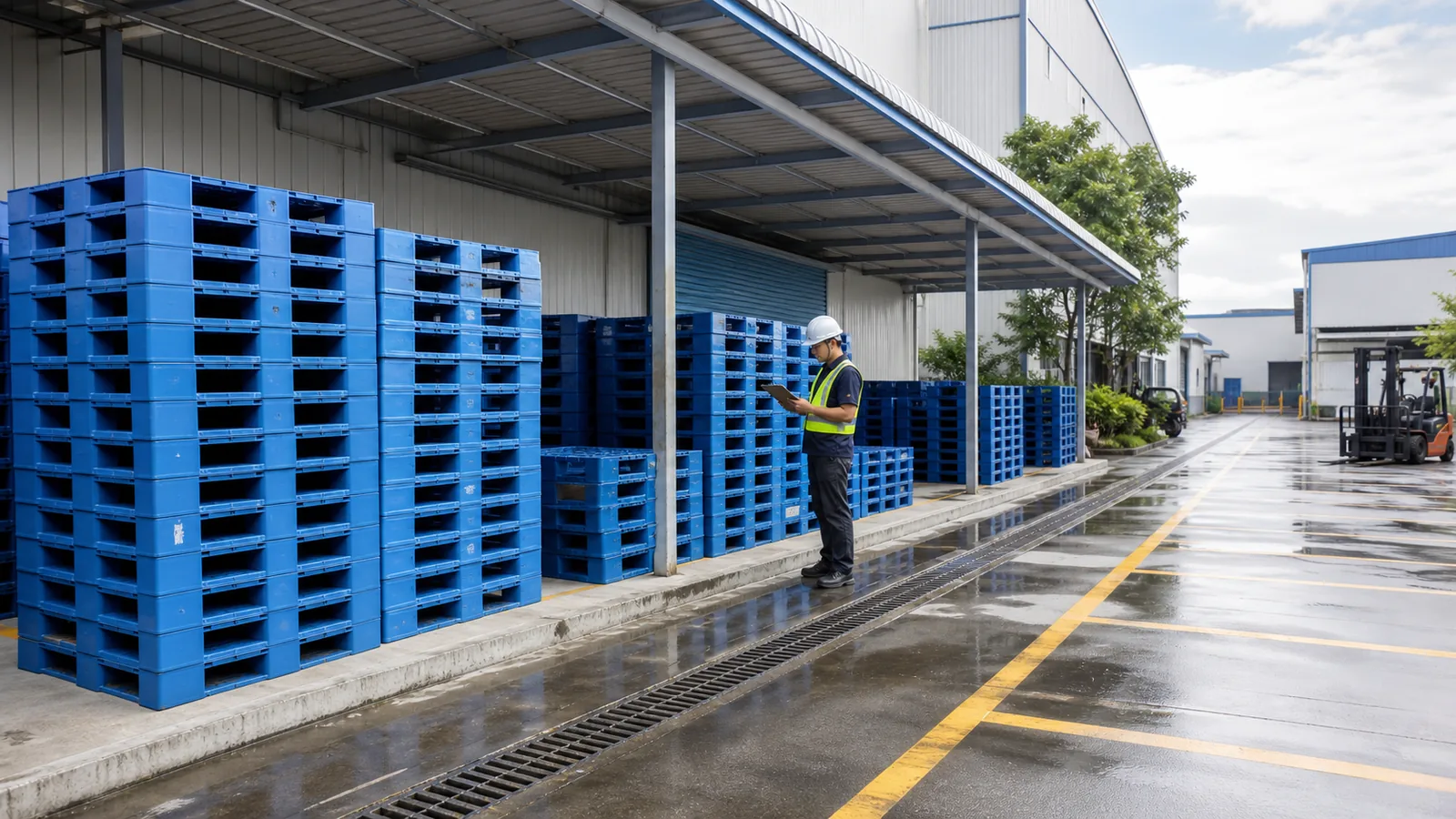
Outdoor storage is often treated as a temporary space problem, not as a pallet specification issue. A warehouse runs out of indoor space, export pallets wait near the dock, empty returns are staged in a yard, or washed pallets are moved outside to clear the production area. The pallets may look unchanged after a few days, so the practice becomes routine.
For plastic pallets, that assumption can be risky. Sunlight, heat, rainwater, dust, freezing conditions, wind, forklift traffic, uneven pavement, and uncontrolled stack height can all change how pallets perform when they return to use. The issue is not whether every plastic pallet can ever be placed outdoors. The useful question is how long it will be there, under what exposure, in what stack condition, and what checks are needed before the pallet carries product again.
The practical purchasing and warehouse question is:
How should buyers control outdoor plastic pallet storage so weather exposure does not create hidden damage, unsafe stacks, hygiene problems, or receiving complaints?
Treat outdoor exposure as an operating condition
Outdoor storage should be written into the pallet program when it is expected, even if the pallet is mainly used indoors. A few hours of dock staging is different from weeks of yard storage, seasonal overflow, or repeated outdoor return loops.
Record the real exposure pattern:
- average and maximum outdoor dwell time;
- direct sunlight or covered shade;
- summer heat, cold-room transition, freezing, or wet-season conditions;
- whether pallets are empty, loaded, washed, wrapped, or contaminated;
- stack height and whether pallets are nested or stacked face to face;
- forklift, pallet jack, trailer, or yard-tractor movement;
- pavement slope, drainage, and surface condition;
- whether the pallets later enter food, pharmaceutical, clean manufacturing, or export use.
This information helps procurement avoid a vague request such as “weather resistant plastic pallet.” The supplier needs to know whether outdoor exposure is occasional staging, a normal part of the closed-loop route, or long-term storage.
Separate short-term staging from long-term yard storage
Short-term outdoor staging is usually a flow-control problem. Long-term outdoor storage is a material, safety, and inspection problem.
For short-term staging, focus on:
- keeping pallets off vehicle routes and emergency access paths;
- preventing rainwater pooling on decks or inside molded cavities;
- keeping empty stacks low enough for safe forklift handling;
- moving pallets back indoors before they collect dirt, insects, or standing water;
- ensuring loaded pallets are not exposed beyond the packaging limit.
For long-term yard storage, add:
- shaded or covered storage where practical;
- defined maximum dwell time before reinspection;
- stack restraints or layout controls for wind exposure;
- rotation rules so the same pallets are not always exposed;
- cleaning or quarantine before pallets return to production;
- documented acceptance criteria for fading, cracking, deformation, and contamination.
If outdoor storage is mainly caused by excess empty-pallet inventory, the root fix may be pool sizing, return frequency, or stack planning rather than a different pallet material. The plastic pallet stack height planning guide is a useful companion when teams need to define safe empty-pallet storage limits before overflow reaches the yard.
Review UV exposure without relying on color alone
Sunlight can affect plastic pallets over time. The visible sign may be color fading, chalking, or surface dullness, but appearance alone does not prove whether the pallet is still mechanically suitable. Impact resistance, brittleness, weld-line behavior, and local cracking depend on resin type, pigment, UV stabilizer package, wall thickness, molding quality, exposure time, and handling abuse.
Buyers should avoid two weak assumptions:
- a dark or black pallet is automatically suitable for long outdoor exposure;
- a faded pallet is automatically unsafe.
The correct approach is to ask for the supplier’s current material recommendation and define the expected exposure. Important RFQ inputs include:
- whether pallets will be stored under direct sunlight;
- expected outdoor dwell time per cycle and per year;
- local temperature range and seasonal intensity;
- required color, logo, or traceability marking;
- whether recycled material is proposed;
- inspection criteria after outdoor storage;
- whether the pallet will later be used in racking, food handling, cold storage, or export receiving.
Color can support identification and heat management, but it is not a substitute for material confirmation. If long outdoor storage is planned, ask whether UV-stabilized material, a different color system, covered storage, or a shorter rotation cycle is more appropriate.
Control heat before evaluating load performance
Plastic pallet stiffness can change with temperature. A pallet that performs acceptably in a shaded warehouse may show more deflection, deck movement, or base distortion when stored hot, loaded, or exposed to direct sunlight. The risk is higher when loads are concentrated, pallets sit on uneven pavement, or loaded pallets remain outdoors for longer than planned.
Review heat exposure when pallets will be:
- staged in direct sun while loaded;
- stored on asphalt, dark concrete, or metal trailer floors;
- stacked tightly with poor airflow;
- used with drums, pails, machinery parts, or small-footprint loads;
- moved from outdoor heat into cold rooms or chilled loading areas;
- evaluated for racking after an outdoor dwell period.
Do not approve a pallet for outdoor loaded storage only because it passed an indoor static load check. If hot-weather staging is part of the real route, test the pallet after exposure under the heaviest normal load and inspect fork-entry clearance, deck levelness, runner shape, and any permanent deformation.
For pallets that will move between outdoor staging and rack storage, link the yard review with racking approval. The rack deflection acceptance guide explains why load, support span, dwell time, and temperature should be considered together before bulk purchase.
Keep rainwater from becoming a hygiene and handling issue
Rain is not only a wet surface problem. Water can carry dust, organic matter, insects, packaging debris, and yard contamination into the pallet structure. Standing water can also create slip risk, add weight, freeze in cavities, or delay reuse in dry production areas.
Check how the pallet drains in the position where it will actually be stored:
- Does the deck hold water after rainfall?
- Do underside ribs, leg pockets, or runner channels trap water?
- Are nested pallets creating hidden wet surfaces between pallets?
- Can water drain away from the stack base, or does the lowest pallet sit in a puddle?
- Are clean pallets separated from dirty returns?
- Is there a defined drying or cleaning step before production use?
Closed-deck pallets, anti-slip surfaces, rubber inserts, and deep rib structures should be reviewed carefully. They may be useful for hygiene, load control, or strength, but each feature can change how water, dust, or residue is retained.
If pallets are washed and then placed outdoors to dry, avoid mixing that process with uncontrolled yard storage. The plastic pallet drainage and drying guide provides a more detailed framework for preventing wet pallets from re-entering use too early.
Manage wind, stack height, and yard traffic together
Empty plastic pallets can be lighter than many loaded unit loads and may be stacked high because they appear stable when nested or aligned. Outdoor wind, uneven pavement, and forklift impact can change that quickly.
A safe yard plan should define:
- maximum stack height for each pallet type;
- whether nestable stacks require banding, barriers, or sheltered placement;
- minimum distance from vehicle lanes, doors, fences, and pedestrian paths;
- forklift approach direction and turning space;
- whether stacks can be stored near dock edges, slopes, or drainage channels;
- how damaged or unstable stacks are isolated;
- who is authorized to release extra outdoor storage during peak season.
Do not use the same empty-stack rule for every pallet structure. Nestable pallets can build dense, compact stacks. Runner-base pallets may occupy more space but present different wind and handling behavior. Double-faced pallets may stack differently again. Yard rules should match the actual base structure and the equipment used to move it.
Outdoor storage also intersects with fire and site-safety control. Empty-pallet quantity, separation from ignition sources, access routes, and housekeeping should be reviewed before outdoor overflow becomes normal practice. The plastic pallet fire safety guide covers these storage-control questions in more detail.
Prevent outdoor damage from becoming indoor failure
The most expensive outdoor-storage problems are often discovered later, after pallets return to the normal workflow.
Common delayed symptoms include:
- fork-entry corners cracked from yard impact;
- underside runners worn by rough pavement;
- trapped stones or debris scratching floors or conveyors;
- faded pallets that are difficult to sort by color program;
- warped decks causing unstable carton layers;
- dirty pallets entering clean zones;
- frozen water cracking ribs or creating slip hazards;
- labels, barcodes, or RFID tags damaged by sunlight and moisture.
Add an inspection step before outdoor-stored pallets re-enter critical use. The check does not need to be complicated, but it should be visible and repeatable.
Inspect:
- deck flatness and obvious deformation;
- fork-entry zones, legs, runners, and weld lines;
- cracks, whitening, brittle edges, or missing pieces;
- embedded dirt, stones, glass, metal, or organic residue;
- water retention, odor, staining, or contamination;
- label, logo, barcode, or RFID readability;
- whether the pallet still fits the required handling equipment.
For larger pallet pools, include outdoor-return checks in the normal receiving or recirculation process. The incoming inspection plan for plastic pallets can be extended with outdoor-exposure criteria so warehouse teams do not rely on memory or visual judgment alone.
Match pallet structure to the outdoor route
No pallet structure is best for every outdoor condition. The selection should follow the route.
Nestable pallets can reduce empty return volume and yard footprint. They are useful when outdoor exposure is short and pallets need to be moved in compact stacks. The controls are stack height, cleanliness between nested surfaces, wind exposure, and clear rotation.
Runner-base pallets can provide defined forklift support and may be better where yard handling is frequent or where loaded pallets move between indoor storage and outdoor staging. The controls are runner wear, pavement condition, and whether bottom contact remains stable after exposure.
Closed-deck pallets can help where hygiene or spill control matters, but rainwater retention and drying time must be checked before pallets re-enter use.
Pallets with anti-slip inserts or special deck surfaces may improve load control, but outdoor dirt, water, and cleaning chemicals can change the surface behavior. Inspect inserts and textured areas after repeated outdoor cycles.
The right pallet is the one whose material, structure, storage rule, and inspection process fit the complete route. A stronger pallet without yard controls can still fail through avoidable exposure and handling damage.
Write outdoor storage conditions into the RFQ
If outdoor storage is likely, include it in the RFQ instead of handling it after the sample arrives.
Useful RFQ details include:
- indoor and outdoor use ratio;
- maximum outdoor dwell time per cycle;
- loaded or empty outdoor storage condition;
- expected sunlight, heat, rain, freezing, or dust exposure;
- pavement type and yard handling equipment;
- maximum empty stack height and whether stacks are nested;
- cleanliness requirement before pallets re-enter use;
- label, barcode, logo, or color durability expectations;
- sample test conditions after outdoor exposure;
- requirement for supplier material recommendation and storage limitations.
A practical clause may read:
Pallets may be stored outdoors for short-term staging and empty return control. Supplier shall confirm material and design suitability for the stated outdoor exposure, provide any recommended storage limits, and identify whether UV stabilization, covered storage, rotation, or reinspection is required. Final approval will be based on sample performance after yard handling, weather exposure, cleaning, and re-entry inspection.
This wording keeps the supplier’s role clear. The supplier provides product and material guidance. The buyer confirms whether the pallet can be controlled under the actual site conditions.
Practical decision rule
Do not treat outdoor storage as free warehouse space.
Use outdoor staging only when dwell time, stack height, weather exposure, drainage, traffic separation, and re-entry inspection are controlled.
Choose covered or shaded storage when pallets will remain outdoors beyond brief staging.
Ask for material confirmation when direct sunlight, high heat, recycled content, color requirements, or repeated outdoor loops are part of the project.
Inspect pallets before they return to racking, clean production, food handling, export shipment, or automated handling.
A plastic pallet program is stronger when outdoor exposure is defined before purchase, not explained after damage appears. The goal is not to keep every pallet indoors at all times. The goal is to make sure the pallet, yard layout, storage rule, and inspection process all support the same real operating route.