Buying Guides
Plastic Pallets for Drive-In Racks: Approve the Rail Interface
Specify support rails, pallet orientation, placement tolerance, completed load and a witnessed lane trial before approving a plastic pallet for drive-in racking.
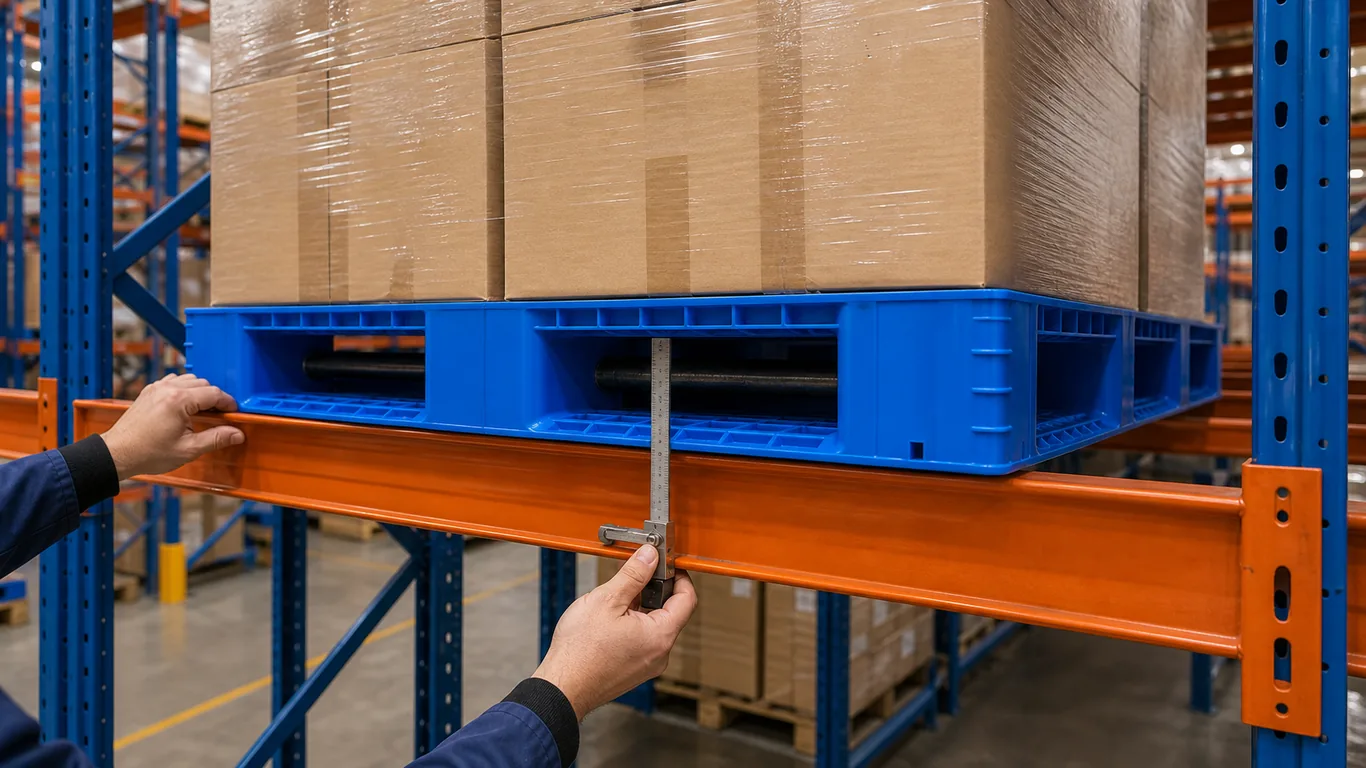
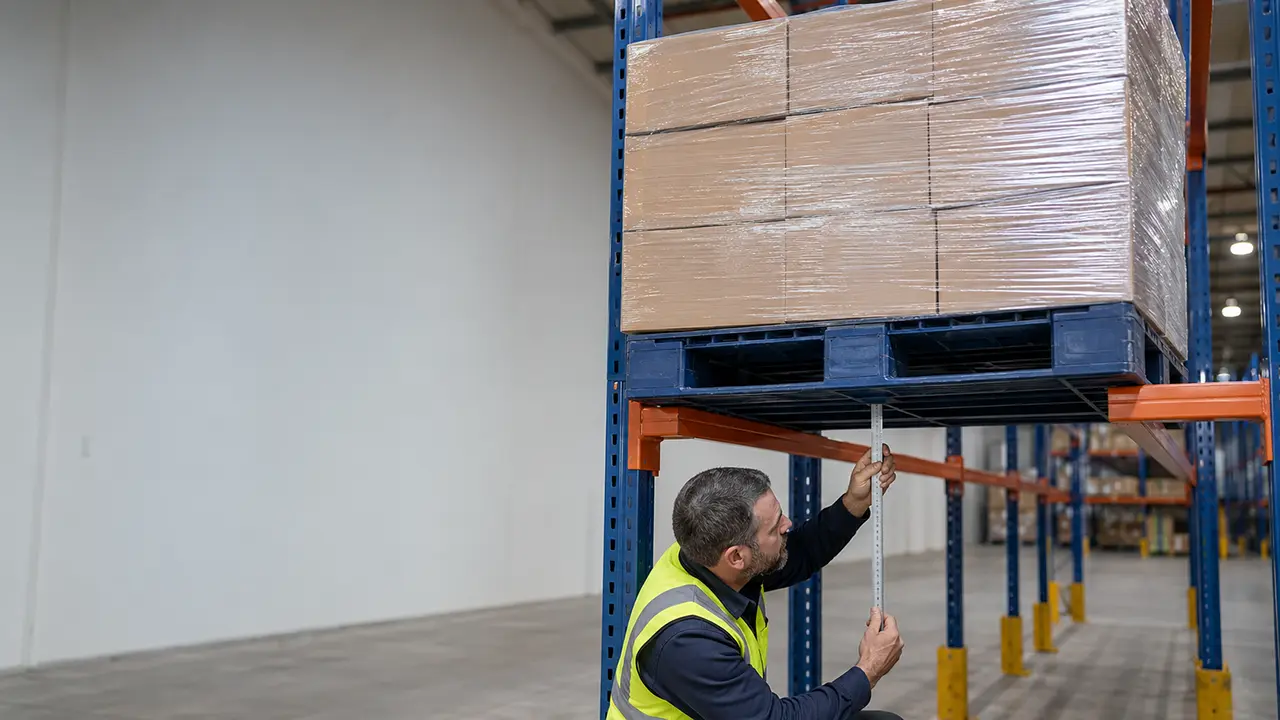
“Rackable” is not a complete answer for a drive-in or drive-through rack. In selective racking, a pallet normally rests on front and rear beams and is accessible from an aisle. In a drive-in lane, a forklift enters the rack structure and places the unit load on side support rails. That changes the support path, allowable placement error, approach and retrieval sequence.
Approve the interface in this order: freeze the rack lane, match one exact pallet configuration, then test the completed load in the real route. A general racking-load figure cannot replace those three decisions.
Begin with the rack designer’s current envelope
Ask the rack owner, original supplier or another competent designer for the drawing and operating limits that apply to the actual lane. Do not reconstruct them from a pallet catalogue or from a similar bay.
Record at least:
- rack make, system, lane, level and drawing revision;
- whether the system is drive-in or drive-through and the permitted loading sequence;
- clear distance between support rails, rail-top width and profile, and usable bearing length;
- required pallet outside dimensions, base contact areas and travel orientation;
- permitted side-to-side and front-to-back placement tolerance;
- unit-load mass, height, depth, centre of gravity and any overhang restriction;
- required clearances from uprights, rails, stops and neighbouring loads;
- approved forklift, fork dimensions, mast or carriage limits and operator approach;
- temperature, dwell time, inspection rules and lane safe working load.
HSE’s Pallet safety PM15 specifically distinguishes drive-in racking and advises using the shortest pallet dimension across the rack span. It also says the span must suit the pallet design and the supports must be wide enough for a pallet placed off-centre within the permitted opening. Treat that as applicable UK safety guidance, not as permission to choose an orientation without the actual rack drawing.
Keep three approvals separate
| Decision owner | What they should define | What they cannot prove alone |
|---|---|---|
| Rack owner, supplier or competent designer | Lane geometry, rail support, load limits, clearances, placement tolerance, permitted pallet and truck envelope | The delivered pallet matches the supplier’s drawing or performs with the buyer’s real load |
| Pallet supplier | Exact model and revision, dimensions and tolerances, underside contact pattern, material route, reinforcement, stated load evidence and use limits | That the buyer’s rack, forklift or operating method is safe |
| Buyer and site team | Completed unit load, handling route, sample trial, receiving checks, operator instructions and change control | A new rack or pallet configuration that the responsible designer has not approved |
WorkSafe Victoria’s pallet-racking guidance makes the same practical boundary visible: specialised rack types may need additional measures, the rack must be compatible with pallets and handling equipment, and changes should go back to the responsible supplier, designer or competent person.
Match the pallet underside to both rails
The catalogue footprint is only the outside rectangle. The drive-in interface is the part of the pallet base that actually lands on each rail.
Compare the lane drawing with an underside drawing of the exact pallet. Confirm:
- which runners, perimeter edges or structural zones bear on the rails;
- the bearing width remaining at the most unfavourable permitted offset;
- whether ribs, feet, openings, weld lines or reinforcement ends cross a rail edge;
- whether rotating the pallet changes the supported structure or fork entry;
- whether the completed load introduces point loads, overhang or an offset centre of gravity;
- whether deflection after the expected dwell time can reduce bearing or retrieval clearance.
Do not solve a weak interface by assuming that steel reinforcement makes every orientation acceptable. Reinforcement must follow the actual load path. Use the separate steel-reinforcement checklist for that evidence, and set measurable dwell-time limits with the rack-deflection guide .
Copy this interface brief into the RFQ
Use one controlled brief for each rack configuration and load family.
Rack identity: [site, system, lane/level, supplier, drawing and revision]
Support rails: [clear span, top width/profile, bearing length, stops and approved supports]
Placement envelope: [travel orientation, permitted lateral/longitudinal offset and clearances]
Pallet: [exact model/revision, outside dimensions/tolerances, underside drawing, runners/contact zones and reinforcement]
Completed load: [gross mass, footprint, distribution, height, centre of gravity, restraint and overhang]
Handling equipment: [forklift model, forks, entry direction, lift height and approach limits]
Environment: [temperature, dwell time, cleaning or chemical exposure and inspection interval]
Evidence requested: [supplier declaration, applicable test scope, drawing control and change notice]
Trial and approval: [lane, load cases, observers, measurements, stop conditions and signatories]
If a field is unknown, leave it visibly unresolved. A blank rail width is not permission to infer one from a photograph, and a quoted rack load is not a pallet approval.
Witness the loaded lane trial
The trial should be controlled by the site and the people responsible for the rack and lift truck. It is not an overload demonstration.
- Freeze identities. Record rack drawing, lane, pallet model and revision, unit load and forklift before movement starts.
- Inspect the empty interfaces. Check rails, stops, pallet base, fork openings and load condition. Stop for damage, unauthorised repairs or a mismatch with the controlled drawings.
- Approach and place. Use the permitted direction and observe clearance, visibility, mast movement and whether the pallet lands on both rails without striking or riding over them.
- Check permitted offset. Under the responsible designer’s method, verify that normal placement variation still leaves the required bearing and clearances. Do not improvise a worst-case position.
- Hold the real load. Use the agreed representative and most demanding normal load cases for the required dwell time and temperature. Measure deflection where the approval method requires it.
- Retrieve and inspect. Confirm fork entry, lift-off, withdrawal and travel without dragging, rocking, load movement or contact with the rack. Inspect the pallet and rack after the cycle.
- Sign the boundary. State the approved lane, orientation, pallet revision, load cases and exclusions. List changes that require reapproval.
The current ISO 8611-1:2025 provides test methods for flat-pallet load and durability questions, but its scope also preserves the value of field trials on specific pallet designs. Use supplier test evidence and the site trial together; do not substitute one for the other.
Control repeat orders and operating changes
Receiving staff should compare delivered pallets with the approved drawing, dimensions, underside contact zones, reinforcement and identification. Quarantine mixed models, damaged runners, unexpected distortion or unapproved revisions.
Repeat the interface decision after a change to the rack rails or stops, lane configuration, pallet model or material, reinforcement, load footprint or mass, forklift, entry direction, temperature or dwell time. Operator work instructions should identify the permitted pallet orientation and the stop condition for poor placement or damaged equipment.
For higher-risk or high-volume programmes, connect this interface check to a controlled plastic-pallet pilot before a full rollout.
To discuss a bounded product shortlist, send the rack drawing, rail dimensions, pallet orientation, completed unit load, handling equipment, quantity and destination through the product selection form . Baoheng can compare available pallet structures with the supplied conditions. Final rack acceptance remains with the rack owner, responsible designer and site trial.
The useful purchasing rule is simple: approve the rail contact and loaded route, not the word “rackable.”