Buying Guides
Reusable Totes in Automation: Direct Travel or Carrier Tray?
Qualify a reusable plastic tote for conveyors and small-load AS/RS by deciding whether it can travel directly or needs a carrier tray.
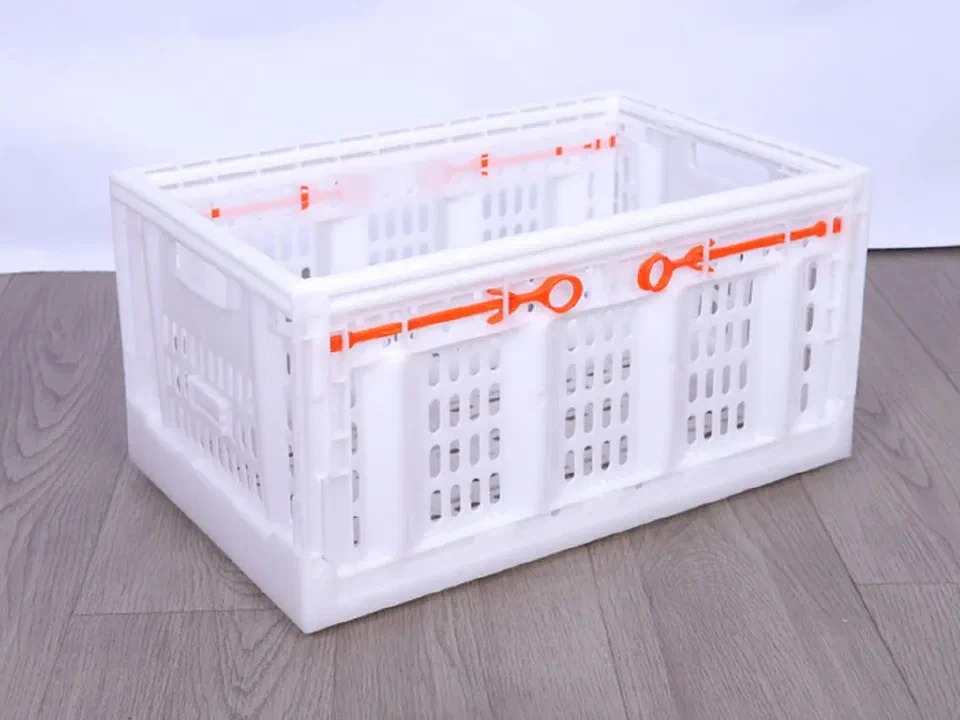
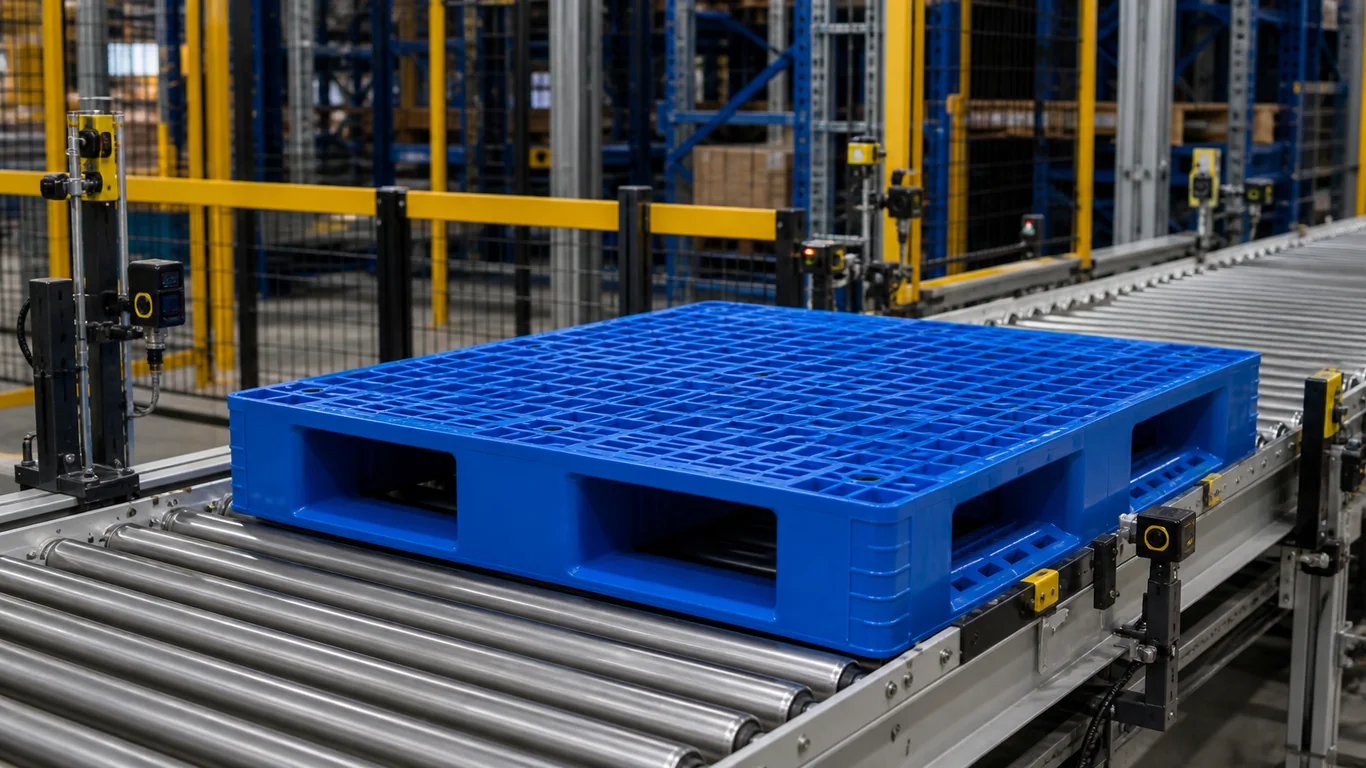
A reusable tote can fit the goods and still be the wrong load carrier for an automated route. Its feet may fall between rollers, a ribbed base may not transfer cleanly, a folded wall may enter the detection zone, or the loaded tote may exceed the equipment owner’s approved envelope. A catalogue footprint alone does not settle any of those interfaces.
Before a volume order, make one explicit decision: will the identified tote travel directly through every required conveyor, lift, shuttle and storage position, or will it sit on a carrier tray approved by the equipment owner? Do not leave that choice to commissioning.
This guide does not claim that a Baoheng tote is approved for a named automation system. Baoheng can confirm available information for a selected product and order. The system owner or integrator must define the machine envelope and approve the loaded route.
Start with the installed system, not a standard tote size
Ask the equipment owner for the current carrier specification and drawing revision. Record every interface from induction to discharge, including bypass and exception routes.
At minimum, obtain:
- permitted outside length, width and height, including lids, labels, bulging and any folded or nested state that may enter the line;
- minimum and maximum empty and loaded mass, load distribution and any centre-of-gravity restriction;
- conveyor type, roller pitch, belt or chain contact, transfer gaps, curves, merges, stops and accumulation method;
- lift, shuttle, miniload or storage support points and the permitted way the load is gripped, pulled or carried;
- orientation rules and whether rotation is allowed;
- sensor, scanner and code zones, together with required quiet zones around them;
- temperature, moisture, washdown and cleanliness conditions;
- the person authorised to approve a new tote, tray or revision.
Automation families do not share one universal envelope. Dematic’s official goods-to-person overview, for example, describes several storage subsystems handling different combinations of totes, cartons and trays. That is evidence to obtain the exact project specification, not a number to copy into an unrelated RFQ.
Decide between direct tote travel and a carrier tray
Direct travel can be investigated when the exact tote has a predictable lower interface, remains inside the equipment envelope in its real loaded condition and can be detected and transferred in every required orientation. The approval still belongs to the actual system.
A carrier tray may be the better starting point when the tote is smaller than the storage position, has discontinuous or flexible bottom contact, belongs to a mixed container population, or cannot present the surface required by a gripper, puller or shuttle. SSI SCHAEFER notes that trays with specific characteristics are often used in automated miniload and conveying systems to carry smaller load carriers, and lists run-under, gripper and pulling interfaces as examples.
The tray is not a universal adapter. It adds height, mass, another identity and another transfer interface. The system owner must approve the tote-and-tray combination, including retention, unloading, nesting or return handling and what happens when an empty tray reaches the wrong station.
Use a simple decision record:
| Decision | Evidence needed before approval |
|---|---|
| Direct tote | Exact tote drawing and revision; loaded envelope; bottom contact; mass range; orientation; detection; full-route trial |
| Tote on carrier tray | All direct-tote data plus tray identity, combined height and mass, retention, tote-to-tray contact, separation method and empty-tray route |
| Not yet defined | Hold the quotation comparison until the equipment owner supplies the missing interface or names an approved carrier |
Give the supplier the machine inputs it cannot guess
Send the same automation brief to every tote supplier. Ask each supplier to answer only for the exact model and production revision offered.
| RFQ area | Equipment owner or buyer provides | Tote supplier identifies |
|---|---|---|
| Geometry | Allowed envelope, orientation and measurement method | External and usable dimensions, base profile, ribs, feet, rim, lid and stated tolerances if available |
| Load | Empty and loaded mass range, load pattern and support points | Stated use limits and the evidence scope available for the quoted model |
| Transfers | Rollers, belts, chains, gaps, curves, stops, lifts and shuttle contact | Surfaces that will touch the equipment and features that may catch, flex or wear |
| Detection | Sensor type and location, barcode zone, read direction and quiet zone | Available label or print area, colour and surface information for the exact order |
| Environment | Temperature, moisture, washing, chemicals and dwell time | Model-specific material route and compatibility information that is actually available |
| Change control | Conditions that require reapproval | Which model, mould, material, colour, base, lid or component changes the supplier will identify |
Baoheng supports colour, logo, size, mould, printing and packaging customization subject to the specific product and order. RFID is not a confirmed customization capability. Do not write it into the RFQ as an available option unless it is separately confirmed.
Test the lowest-friction and highest-risk load cases
The tote may behave differently when empty, lightly loaded and fully loaded. Interroll’s rigid-tote slide information is a useful example: it asks for tote size, tote type and the lightest-to-heaviest weight range, and notes that travel changes with load and bottom friction. Those details belong to that equipment; the transferable lesson is to test the real operating range.
Freeze the trial sample identity, then run agreed cases through the full route:
- Measure the tote or tote-and-tray combination using the equipment owner’s method.
- Load it with representative goods, dividers, liner and lid. Include an agreed off-centre case if that can occur in normal work.
- Test every permitted orientation through induction, straight travel, curves, merges, gaps, stops, lifts, shuttles, storage and discharge.
- Check detection and code reading at normal line settings. Do not tune around one sample without recording the change.
- Observe rocking, skewing, impact, base sag, lid movement, label damage, failed release and any manual correction.
- Define stop criteria and the owner of exceptions. A jam cleared by hand is not an automatic pass.
- Repeat enough cycles and samples for the responsible system team to judge variation; do not invent a universal cycle count.
Approve the exact combination and its boundary: model, revision, load range, tray if used, orientation, equipment revision, environment and excluded cases.
Keep the approved interface stable after the first order
Receiving checks should confirm that production deliveries match the approved sample in dimensions, base, feet or ribs, lid, closures, label zone and visible identity. Hold cracked, warped, incomplete or mixed-revision units before they enter automation.
Revalidate after a change to the tote, tray, goods, dividers, lid, label, material route, colour where detection is affected, line speed, sensors, transfer module, software logic, temperature or cleaning process. A tote that ran on one line is not automatically approved for another.
For a broader quotation comparison, use the reusable plastic crate evidence guide . If you are still deciding between a pallet, pallet box or tote, start with the load-carrier selection guide .
Send a bounded tote request
When requesting a tote quotation, send the goods, quantity, exact equipment envelope, loaded mass range, bottom-contact drawing, orientation, lid and divider needs, label zone, environment, direct-versus-tray decision and trial plan. Contact Baoheng Plastic to review available crate and box options against that brief. Final automation approval remains with the buyer’s responsible system owner or integrator.