Buying Guides
Reusable Plastic Crate Test Evidence: An RFQ Comparison Guide
Compare stackable, foldable, nestable and stack-nest plastic crates by separating supplier declarations, test scope and buyer route acceptance.
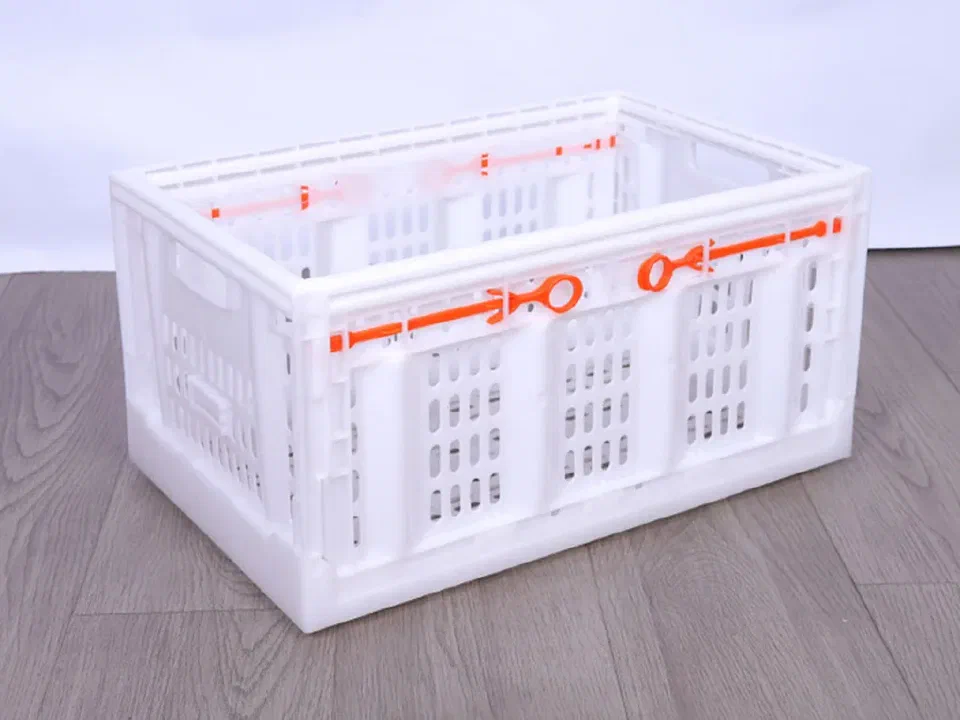
Two quotations can both say “reusable plastic crate” while describing different jobs. A rigid stackable box, a foldable box, a nestable box and a stack-nest box do not use the same geometry or operating sequence. A test result for one state or one model does not automatically cover another.
Use three separate evidence layers: the supplier’s declaration for the exact model, the scope and result of any test record, and the buyer’s acceptance trial on the real route. Compare quotations only after those layers identify the same crate, load and use condition.
This guide does not claim that a Baoheng crate conforms to ISO 18616 or any other standard. Baoheng currently has no public certification or third-party test report confirmed for use in content. Model material, dimensions, performance and available evidence must be checked for the selected product and order.
Name the crate type before comparing numbers
ISO 18616-1:2016 describes four main types of reusable rigid plastic distribution boxes for general-purpose returnable systems: stackable, foldable, nestable, and nestable-and-stackable. Its public scope also covers dimensions, safety, designation, marking and labelling, using specified modular areas. Automotive applications are directed to a different standards family.
That scope is a useful classification gate, not a shortcut to approval.
| Quoted type | First question to settle | Common comparison error |
|---|---|---|
| Stackable | Which rims, feet or supports carry the filled stack? | Treating external size as proof of loaded-stack capacity |
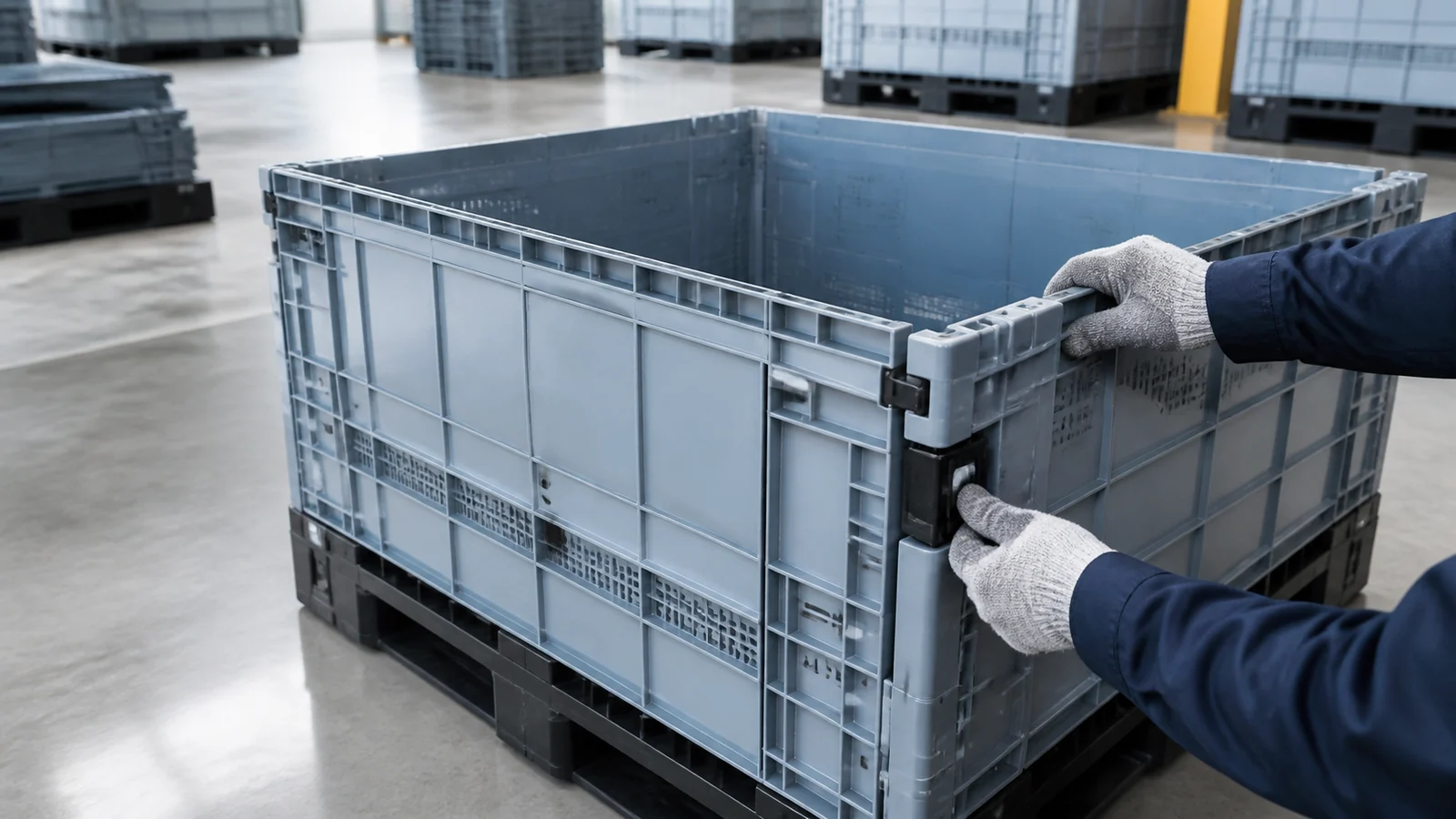
| Foldable | Which joints and locks create the erected state, and how is full engagement shown? | Testing the body but not repeated folding, locking or mixed panels |
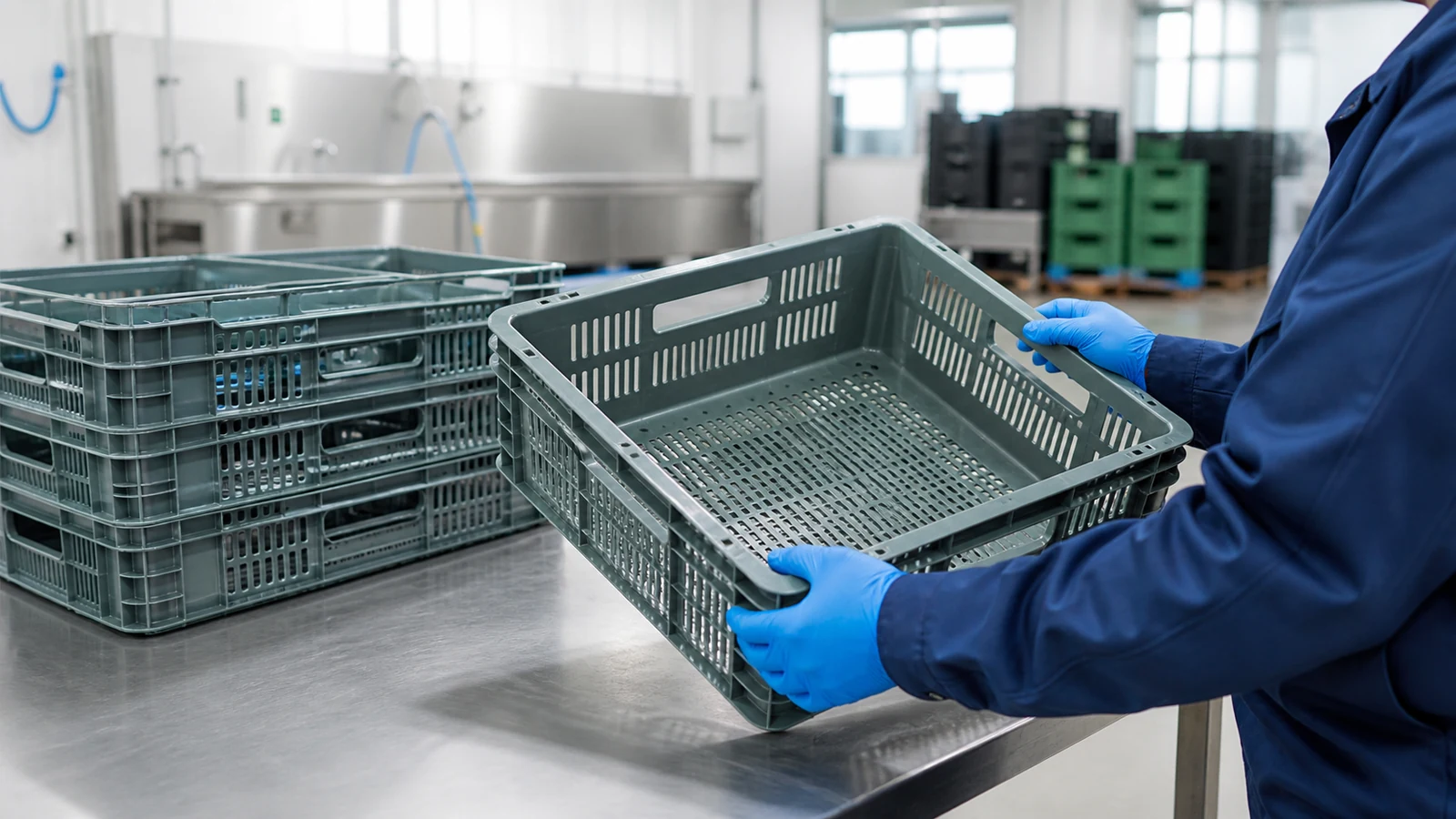
| Nestable | What is the empty nesting depth, separation method and stable return-stack limit? | Quoting a nesting ratio without the base pallet, restraint or damaged-unit behavior |
| Stack-nest | What orientation or mechanism changes the crate between loaded stacking and empty nesting? | Approving one position while operators use the other incorrectly |
If a catalog name does not match the mechanism, use the drawing and operating state as the controlling description. The existing stack-and-nest route guide goes deeper on orientation changes and handoffs for that specific format.
Keep three evidence layers separate
1. Supplier declaration
Ask for the exact model and revision, external and usable internal dimensions, empty mass, material declaration, intended stack/fold/nest state, marking options and stated use limits. A drawing or specification is a declaration of what is being offered; it is not a route result.
2. Test record
ISO 18616-2:2016 specifies test methods for handling and managing reusable rigid plastic distribution boxes within its stated general-purpose scope and modular areas. When a supplier cites that standard—or any test—ask for enough record detail to decide whether it covers the quoted item:
- test standard, edition, clause or method;
- laboratory or responsible test party and report date;
- exact crate model, mould or revision, material route and conditioning;
- erected, folded, nested or stacking configuration;
- applied load, support, duration, temperature and sample condition;
- measured result, acceptance criterion, deviations and failed samples;
- report pages or traceable reference supplied for buyer review.
A standard title, logo or pass statement without this scope cannot show that the report belongs to the production crate being purchased. Do not convert a supplier test into certification unless the relevant conformity evidence actually exists.
3. Buyer route acceptance
The buyer’s trial answers a different question: does the identified crate work with the real goods, people, equipment, environment and return loop? It should use a representative production sample and written stop conditions. A laboratory result may inform this trial, but it cannot reproduce every site interface.
Use one comparison matrix for every quotation
Send each supplier the same operating brief and ask for the same response fields.
| RFQ area | Buyer provides | Supplier identifies | Buyer verifies |
|---|---|---|---|
| Identity | Goods, route, quantity and destination | Exact model, revision, material route and change-control rule | Sample and bulk delivery match the approved identity |
| Geometry | Product size, fill pattern, shelf/pallet/conveyor envelope | External and usable internal dimensions, tolerances, clearances and state dimensions | Goods fit without harmful contact; equipment and storage clearances remain usable |
| Loaded state | Actual fill mass, stack pattern, support and dwell time | Intended support points and evidence tied to the stated condition | Representative stack remains engaged, square and protected through the route |
| Empty return | Vehicle or storage envelope, restraint and handling method | Folded or nested height, sequence, separation method and incompatible revisions | Practical return stack achieves the recorded dimensions without jamming or improvisation |
| Handling | Lift points, frequency, height, reach, line speed and PPE constraints | Handhold geometry, edges, closures and intended manual/mechanical method | Operators can perform the task under the site’s ergonomic and safety assessment |
| Environment | Temperature, washing, chemicals, moisture, UV or outdoor exposure | Model-specific compatibility evidence and care limits | Sample route shows no unassessed distortion, damage, residue or loss of function |
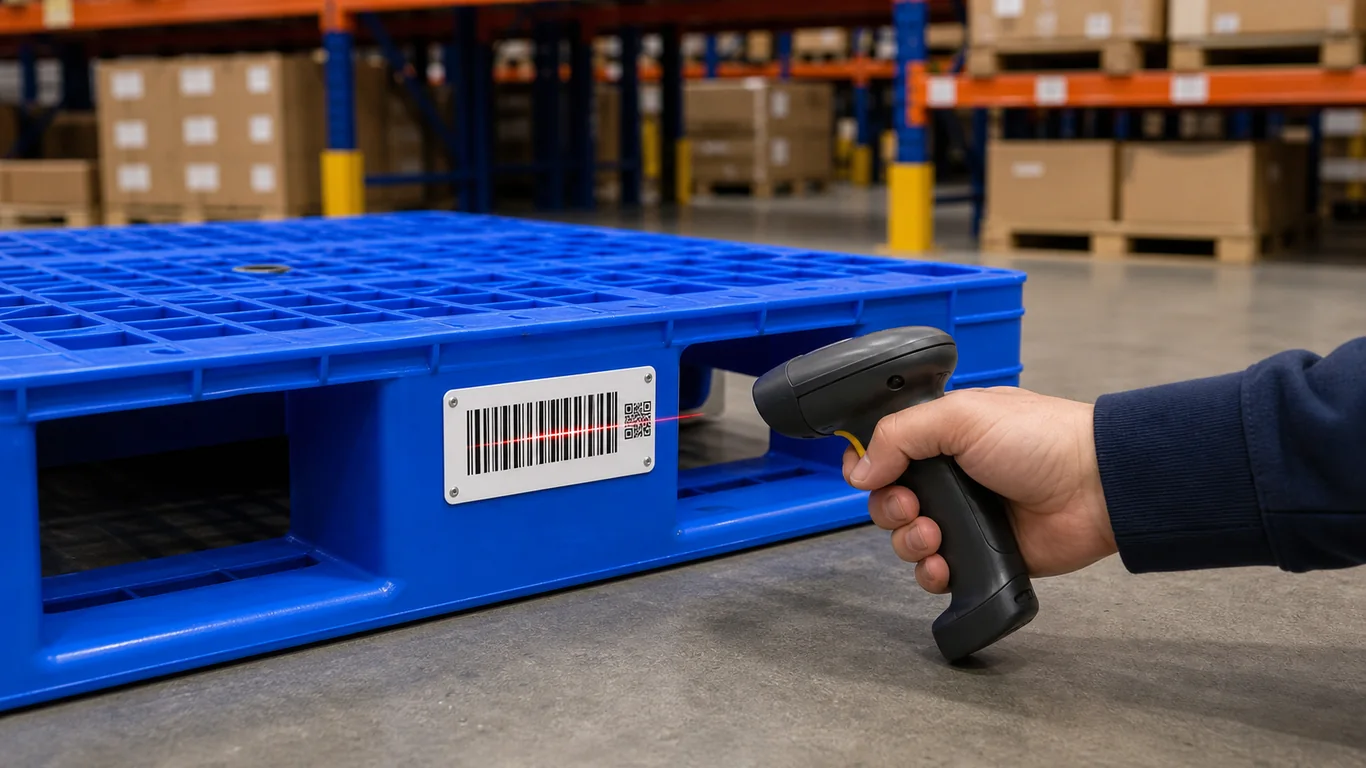
| Marking | Owner, pool, batch, direction, status and customer label needs | Moulded, printed or label area and durability limits | Marks stay readable and do not obstruct cleaning, stacking or identification |
Keep unknown items visible. A blank test field is not a zero and a missing limit is not permission to invent one.
Treat manual handling as a task, not a crate label
NIOSH identifies force, repetition, posture, twisting or carrying, contact stress and bulky lifting as work-related musculoskeletal risk factors. Their importance depends on intensity, frequency and duration. This is why an empty-crate weight or a comfortable-looking handle cannot establish that a picking task is safe.
During the trial, observe actual workers and the actual task: filled mass, hand position, lift height, reach, carry distance, repetition, crate separation force, pinch points and any correction needed when a stack is misaligned. The responsible employer or site safety team decides the assessment and controls. The supplier should describe the product interface, not approve the job.
Run the route trial from fill to return
- Freeze the sample identity. Record model, revision, material route, dimensions and visible marks.
- Build the real load. Use representative goods, fill pattern, liner or divider, and the approved support condition.
- Exercise every state. Erect or lock, stack, move, store, deliver, empty, fold or nest, restrain and separate as the route requires.
- Check interfaces. Include shelves, pallets, conveyors, dollies, vehicles, washing equipment and label systems that actually touch the crate.
- Inspect after use. Record deformation, cracks, failed locks, rough contact, trapped residue, unreadable marks, unstable stacks or unexpected manual effort.
- Decide with limits. State the accepted model, route, load and conditions; quarantine the sample when identity, evidence or a critical result is unresolved.
For produce loops, keep this general acceptance decision connected to the separate return-to-use cleanliness check . A structurally acceptable crate is not automatically released for a hygiene-controlled use.
Send a bounded request, not “best crate”
Use the plastic crates and boxes category to identify formats, then send the goods, usable internal size, filled mass, handling route, required stack/fold/nest behavior, environment, quantity and destination. Ask which statements are declarations, which are supported by a traceable test record and which still require your route trial.
Baoheng can help screen an available direction and provide a paid sample when the product and order conditions are confirmed. The buyer may arrange its own third-party pre-shipment inspection. Price, material, performance, evidence, sample cost and lead time remain model- and order-specific. Organize the input on the selection-support page or send it through the inquiry form ; the comparison matrix above can be used without contacting us.
Decision boundary
Approve the evidence chain, not a category word. The supplier declaration identifies what is offered, the test record shows only what its recorded scope supports, and the buyer trial decides whether that exact crate fits the named route. When the three layers do not point to the same model and condition, the decision is not ready.