Buying Guides
Before You Price a Plastic Tank: Classify the Liquid and Duty
Separate non-potable water, drinking-water and chemical service before comparing plastic tank capacity, material, fittings and price.
A request for “a 1,000-litre plastic tank” is not ready for price comparison. The same nominal volume can describe non-potable process water, drinking water or a chemical mixture, while the required evidence, material, fittings, venting, support and operating limits are different.
Classify the liquid and operating duty first. Then compare an exact tank configuration—not a generic plastic tank by capacity alone. If the liquid, concentration, temperature or applicable rule is still unknown, keep that field open rather than letting a supplier assume it.
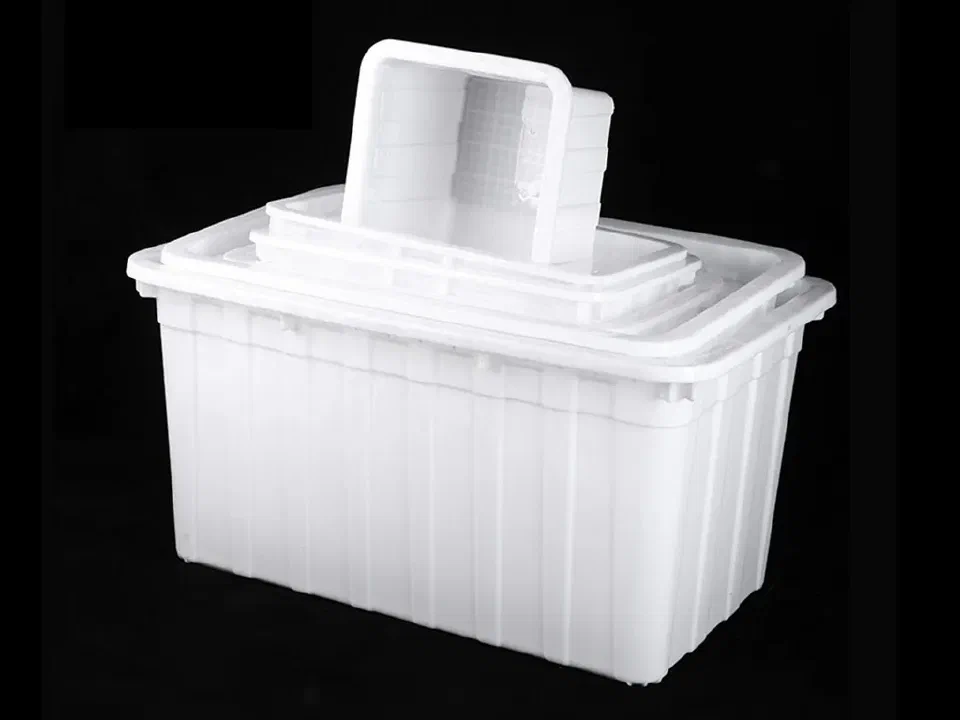
The product image shows rectangular open-top tanks in Baoheng’s current range. It is a shape reference, not evidence that a pictured model is suitable for drinking water, a chemical, pressure or any stated capacity.
Choose one evidence route before comparing models
| Intended service | Define before enquiry | Evidence to request for the exact configuration |
|---|---|---|
| Non-potable water | Water source and quality, storage purpose, working volume, temperature, indoor/outdoor location, sunlight, cleaning and discharge route | Exact material and dimensions, operating limits, drawing, fittings, vent or open-top arrangement, support and care instructions |
| Drinking water | Country and project rule, water temperature and treatment, required contact time, all wetted components and the authority or customer evidence requirement | Current listing, certificate or other accepted evidence tied to the exact tank material, model and wetted components; do not accept “food-grade plastic” as a substitute |
| Chemical or process liquid | Chemical name, concentration, density, temperature, contaminants, fill and withdrawal rates, cleaning chemicals, abnormal conditions and hazard controls | Written compatibility basis for the exact material and conditions, tank design limits, fitting and gasket materials, venting, support, secondary containment and applicable engineering review |
These routes can overlap. A treated process-water tank may still need a chemical-compatibility review. A drinking-water installation may also have structural, seismic, wind, hygiene or local plumbing requirements. Record every applicable route instead of choosing the most convenient label.
Potable water is an exact-product evidence question
NSF/ANSI/CAN 61 establishes health-effects criteria for materials, components, products and systems in contact with drinking water. NSF describes testing and certification as a product evaluation path, including formulation review, testing, a facility audit and ongoing maintenance of certification. A resin name, colour, catalogue category or generic “water tank” description does not prove that an exact tank is certified.
For a drinking-water project, identify the jurisdiction and the authority, consultant or customer that accepts the evidence. Check the exact listed manufacturer, model or series, material, capacity range, use conditions and wetted components. Include lids, fittings, gaskets, valves, coatings and joining materials where they contact the water. Confirm that the listing is current and that the proposed configuration stays inside its scope.
Baoheng’s verified facts do not include a potable-water certification or food-contact report for any tank. Do not infer one from the availability of new resin, HDPE, PP or a white product. If accepted exact-model evidence is mandatory and unavailable, the correct result is “not demonstrated,” not an informal approval.
Chemical service needs the whole condition set
“Acid,” “alkali” or “detergent” is too broad for a compatibility decision. Record the chemical name, concentration or formulation, density, normal and cleaning temperature, expected contaminants, fill frequency, residence time and possible upset conditions. Obtain the current safety data sheet and involve the responsible process, environmental and safety specialists.
ASTM D1998-21 is active, but its published scope is specific: one-piece rotationally moulded polyethylene, flat-bottom upright cylindrical tanks of 1,900 litres (500 gallons) and above, installed vertically above ground for atmospheric service. It excludes portable tanks and non-atmospheric-pressure vessel design, and it sends pressure, vacuum, higher-temperature and externally imposed-force cases to other applicable requirements. The standard is useful for defining a possible evidence family; citing it does not show that a rectangular tank, another construction or a quoted model complies.
Compatibility also belongs to the complete tank assembly. Ask about the tank resin and manufacturing method, fittings, gaskets, valves, flexible connectors, fasteners and any lining. Check whether dilution, mixing, agitation, filling, emptying, cleaning or contamination can change temperature or concentration. A chart entry without these conditions is only a screening input.
Freeze the installation interfaces
A tank operates as part of a system. Record these interfaces before requesting comparable quotations:
- Capacity: required working volume, maximum fill level, freeboard or surge allowance, unusable heel and how the level is controlled;
- Liquid: exact identity, concentration, density, temperature range, quality requirement and cleaning medium;
- Location: indoor or outdoor use, above-ground or other installation, access, sunlight, weather, wind, seismic and impact exposure as applicable;
- Support: a continuous, level foundation or other exact support required by the manufacturer, plus floor loading and settlement review by the responsible engineer;
- Filling and withdrawal: source, pump or gravity arrangement, normal and maximum rates, isolation, overflow and drain route;
- Venting: air or vapour movement for filling, withdrawal and temperature change, including any scrubber or emission-control interface;
- Connections: sizes, locations, materials, gaskets, valves, flexible sections, pipe support and loads that must not be transferred into the tank wall;
- Inspection and cleaning: access, safe isolation, residue removal, drainage, drying, inspection points and return-to-service criteria;
- Delivery: overall dimensions, mass, lifting method, doorway or site access, packaging, quantity and destination;
- Governance: applicable law, customer specification, insurer requirement and the people authorized to approve the liquid, structure and installation.
A current tank manufacturer’s installation, operation and maintenance resources treat foundation, venting, flexible connections, fittings and model-specific instructions as linked decisions. Use that as a reminder to request the selected supplier’s current manual and drawing; do not copy another manufacturer’s limits onto a Baoheng or any other tank.
Compare supplier evidence without stretching it
Use a simple evidence matrix. For each claim, record the exact model and revision, document title and date, issuing party, applicable material and configuration, operating limits, exclusions and who checked it. Separate:
- a supplier statement;
- a current drawing or manual;
- a material or compatibility basis;
- an independent listing, certificate or test report when the project requires one; and
- buyer-side engineering, hygiene, environmental or regulatory approval.
One item cannot silently replace another. A material data sheet is not a tank drawing. A drinking-water listing is not chemical compatibility. A standard’s scope is not proof of model compliance. A sample confirms only what the agreed inspection or trial actually examines.
Baoheng’s confirmed supply range includes plastic water tanks, rectangular tanks and round drums. Exact model, material, dimensions, construction, capacity, fittings, certification, compatibility, quantity, price and lead time must be confirmed for the order. Products outside the confirmed self-manufactured categories may be supplied through partner factories working to Baoheng requirements; Baoheng remains the customer-facing supplier and after-sales contact. This guide does not claim that every tank is made in Baoheng’s own factory.
Copy this tank enquiry brief
Service route: [non-potable water / drinking water / chemical or process liquid / combined]
Project location and rule: [country, site, authority/customer specification, version]
Liquid: [name, grade/formulation, concentration, density, contaminants]
Temperature: [normal, cleaning, minimum and maximum]
Volume: [working volume, maximum fill, freeboard/surge, residual heel]
Operation: [batch/continuous, fill and withdrawal rates, residence time, mixing/agitation]
Installation: [indoor/outdoor, above ground, foundation/support, wind/seismic/impact inputs]
Connections: [inlet, outlet, drain, overflow, vent, instruments, sizes, locations, materials]
Piping: [pump/gravity, pipe support, flexible connection, isolation]
Cleaning and inspection: [method, chemicals, access, drainage, release criteria]
Evidence required: [drawing/manual, material, compatibility, listing/certificate, test or inspection]
Delivery: [quantity, access limit, destination, target date]
Open items: [owner and date for each unresolved condition]
Send this brief to suppliers unchanged so that capacity, fittings and price are compared against the same duty. Keep unknowns visible until the responsible party closes them.
Review Baoheng’s rectangular plastic tank range for available shapes, then use the selection support route to organize the application details.
Send the completed tank brief for an exact-model discussion . A paid sample can be discussed after the product and order conditions are confirmed; it does not replace project approval, compatibility evidence or installation engineering.