Buying Guides
Commercial Waste Bins: Approve the Cleaning Route Before You Buy
Specify the bin, lid, cleaning method, wash-water route, storage area and return-to-service check as one commercial waste-bin system.
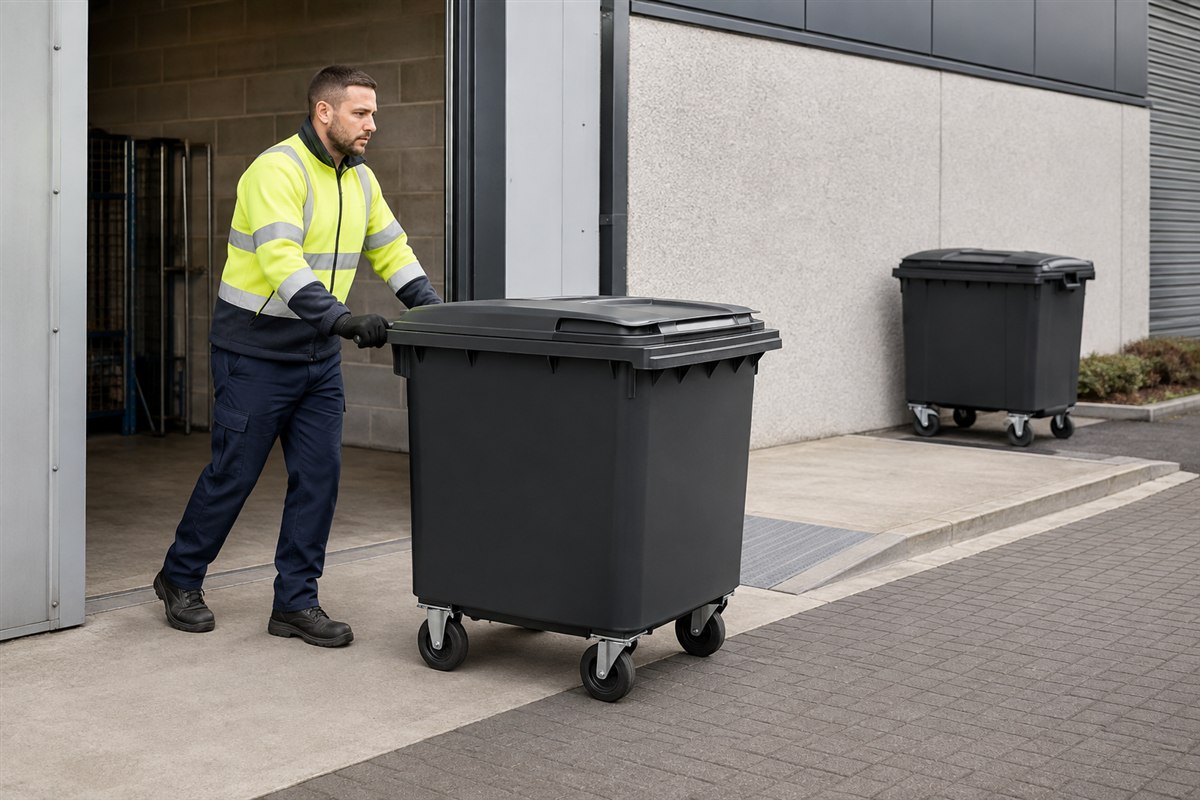
A bin that fits the collection vehicle can still fail the cleaning route. The lid may trap residue, a drain opening may be left uncontrolled, the wash area may discharge to the wrong place, or nobody may own the return-to-service decision.
Approve the bin, waste stream, cleaning location and wastewater route as one system. A supplier can confirm available product features for an exact model and order. The buyer, facility operator, waste contractor and local authority remain responsible for deciding what the site requires and where wash water may go.
Start with the site rule, not a universal wash schedule
Before comparing bins, record the jurisdiction, facility type, waste stream and collection contract. A food-service site, office, factory and municipal collection point may have different hygiene, drainage and access requirements. Hazardous, clinical, sharp or otherwise controlled waste needs its own competent review and is outside this general guide.
The FDA Food Code 2026 is a model for U.S. retail and food-service jurisdictions; it is not automatically law everywhere. Its refuse provisions connect receptacle selection with durability, cleanability, leak resistance, covers where applicable, capacity, placement, good repair, drain plugs, cleaning and wastewater disposal. That makes it a useful question set—not a certification for a bin.
The NSW EPA commercial and industrial facilities guide takes a facility-level view. It calls for cleanable bin-storage areas, suitable water and sewer drainage, keeping bin wash water out of stormwater, vermin control and assigned cleaning responsibility. Its New South Wales scope must stay explicit.
Use the applicable local rule, sewer or trade-waste conditions, collector instructions and facility controls as the decision source.
Define what will soil the bin
Cleaning cannot be specified from capacity alone. Record:
- the accepted waste stream and common residues;
- whether liquids, food residue, broken bags, powders or sharp edges can occur;
- liner type and whether liners are mandatory, optional or prohibited;
- indoor or outdoor storage, time between collections and likely weather exposure;
- pest, odour and leakage concerns;
- the maximum filled condition and how the bin is moved and emptied.
Keep the stream identity aligned with the colour, aperture and label specification . A cleaning instruction cannot correct a bin that is routinely receiving the wrong material.
Turn the cleaning route into product questions
Ask about the exact model or drawing. Do not infer performance from a generic product family.
| Decision | Confirm before ordering | Why it matters |
|---|---|---|
| Body and internal geometry | Surfaces, corners, ribs, seams, handles and areas that can retain residue | The wash method must reach and drain from the actual geometry |
| Lid and access | Lid type, hinges, locks, apertures, opening clearance and whether parts can be safely held open | Covers affect pest access, cleaning reach and drying |
| Liquid control | Whether the model has an opening or drain plug, how it is secured, and the approved position during use and washing | An uncontrolled opening can leak in service or send wash water to the wrong place |
| Wheels and fittings | Wheel, axle, brake, handle and lifting-interface exposure to water and cleaning chemicals | The body may look clean while moving or lifting parts remain damaged or contaminated |
| Labels and markings | Cleaning resistance of labels, printing and identification; replacement method | A clean bin that loses its stream or asset identity is not ready for service |
| Parts and repair | Replaceable lids, wheels, plugs and fasteners; inspection and quarantine criteria | Damaged components should not be hidden by washing |
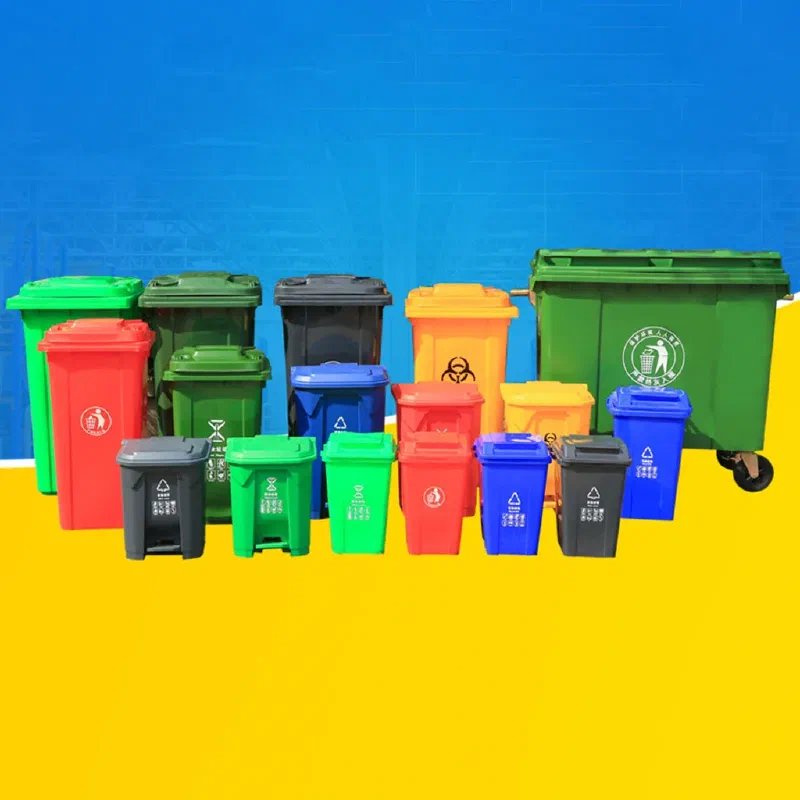
Baoheng supplies plastic waste bins and can review colour, logo, size, printing and packaging options for a specific product and order. Exact materials, drain features, spare parts, cleaning limits, cost, quantity and lead time must still be confirmed. No food-contact, hygiene or regulatory certification is implied.
Approve where and how the bin will be cleaned
Choose on-site or approved off-site cleaning deliberately. Record who moves the bin, who empties it, who cleans it and who releases it. For the actual cleaning location, confirm:
- whether solids are removed before washing;
- water source and any pressure or temperature limits;
- detergent or other chemical, concentration, contact time and material-compatibility approval;
- manual brush, spray, washer or contractor method;
- how lids, plugs, wheels and removable parts are handled;
- where solids, rinse water and concentrated residues are captured;
- the approved sewer, trade-waste or other disposal route;
- separation from food, packaging, equipment, doors and traffic;
- drying position and weather protection;
- personal protection and site safety controls determined by the responsible employer.
Never direct wash water to a stormwater drain by assumption. The permitted destination depends on local requirements and the contamination present. The bin supplier cannot approve the site’s discharge route.
Copy this acceptance sheet into the purchasing file
Site and authority: [location, facility type, responsible authority or rule, revision date]
Waste and residue: [accepted stream, excluded materials, usual soil, liner]
Collection: [collector, frequency, filled-mass limit, lifting interface]
Bin: [model/drawing, capacity, material if confirmed, lid, aperture, lock, wheels, brakes, plug]
Cleaning location: [on-site/off-site, surface, water, access, separation]
Method: [pre-clean, equipment, chemical, concentration, temperature, contact time, rinse]
Wastewater: [solid capture, approved discharge or collection point, responsible approver]
Drying and storage: [drain position, drying endpoint, covered storage, pest control]
Release checks: [cleanliness, dryness, damage, lid, plug, wheels, brake, label, odour]
Ownership: [cleaner, inspector, release authority, record location]
Change triggers: [waste, liner, chemical, cleaning equipment, site, model, part or collector change]
Attach the current local instruction or permit reference. Do not replace it with a copied number from another site.
Run one representative cleaning and return-to-service trial
Use the intended bin configuration and a representative, safely prepared soil condition. Include the real lid, liner, labels, wheels and plug. Observe the complete path: emptying, transfer to the wash point, pre-cleaning, washing, rinse-water capture, drainage, drying, inspection, storage and return to the collection point.
Check whether residue remains in corners or fittings; water pools; the lid can be controlled safely; the plug remains present and secure; labels stay readable; wheels, brakes and lifting points still work; and the clean bin can be stored without new contamination. Keep the push-route trial , lift-interface check and collection-day safety check as separate decisions.
A single trial confirms only the tested configuration and route. It does not prove sanitation effectiveness, chemical compatibility over repeated cycles, legal compliance or performance for another model.
Release, quarantine or revise
Release the bin only when the site-defined checks pass and its identity remains clear. Quarantine it if residue, odour, pooled water, an unsecured plug, damaged lid or wheels, unreadable marking, unknown chemical exposure or an unapproved repair leaves the condition uncertain.
Reapprove the route when the waste stream, liner, cleaning chemical, washer, wastewater permission, storage area, collector interface or bin model changes. Repeated cleaning difficulty may call for a different lid, geometry, part or process—not a stronger unsupported claim.
For an exact-model discussion, send the intended capacity, waste stream, liner, cleaning method, wash-water route, lid, wheels, lifting interface, quantity and destination through the product selection form . Baoheng can review available product options; the facility must approve its own cleaning and wastewater controls.
The purchasing boundary is practical: approve the container and the route that returns it to service, not the container in isolation.