Buying Guides
Waste Bin Colours and Labels: Approve the Stream Before the Bin
Turn a collector-approved waste stream into a bounded bin body, lid, aperture, label and receiving specification without assuming a universal colour code.
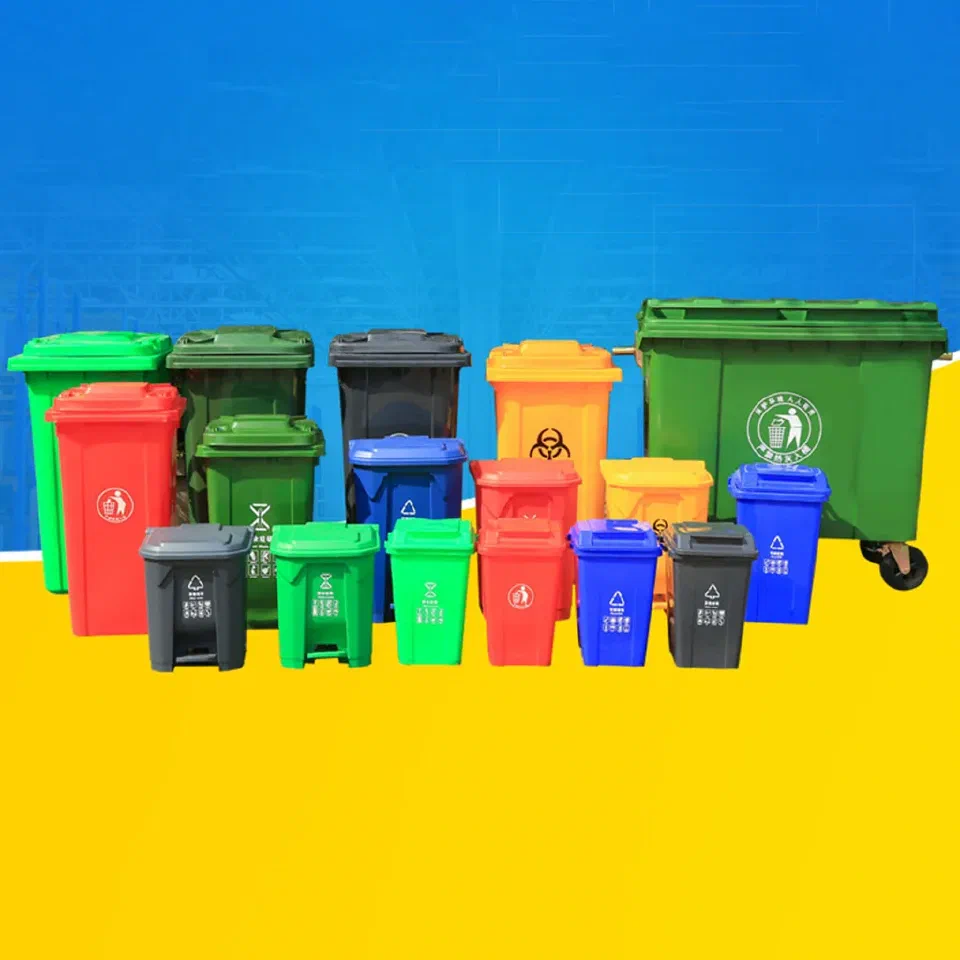
A colour name is not a complete waste-bin specification. “Blue recycling bin” can mean one thing to one collector and something different at another site. Even where a colour scheme is formally used, the body, lid, aperture, label and accepted materials still have to describe the same service.
Use this order: approve the waste stream first, then approve the bin and sign as one configuration. The collector or responsible authority defines what it will accept. The buyer turns that instruction into a product and receiving specification. The bin supplier can describe and produce the agreed physical options, but cannot approve a local collection service.
Freeze the service before choosing colours
Obtain the current written instruction from the organisation that will collect or process the waste. Record the service, site and start date, because a rule from another location or an old contract may not transfer.
The instruction should answer:
- which materials are accepted, excluded or need a separate collection;
- whether materials may be mixed or must remain in separate streams;
- whether bags or liners are allowed and which types;
- capacity, collection frequency and any filled-mass restriction;
- required container, lid, aperture, lock, colour, label or identification;
- how contamination, rejected loads and service changes are handled;
- who can approve the final configuration.
England’s workplace recycling guidance illustrates the service-first principle. It requires defined separation of dry recyclables, food waste and non-recyclable waste, tells workplaces to follow their collector’s instructions for dry recycling, and recommends clear signs plus changes to bin locations or numbers when contamination recurs. It does not create one worldwide bin-colour code.
New South Wales uses a more specific regional approach. NSW EPA standard recycling signs link common waste streams to stated body and lid colours and to standard sign colours. That is useful when the NSW scheme applies. It is not a colour answer for a buyer in another jurisdiction.
Specify four identification layers together
Do not approve any one layer on its own.
| Layer | Put in the purchasing specification | Failure to prevent |
|---|---|---|
| Container identity | Exact model or drawing, capacity, dimensions, wheel and lifting configuration, revision | The right artwork arrives on the wrong container or service interface |
| Body and lid | Separate colour references for body and lid, finish, permitted variation and a physical approval sample where colour matters | A written colour name produces visibly different batches or conflicts with the local scheme |
| Aperture and access | Open lid, slot, round opening, flap, restricted access or lock; opening dimensions and authorised users | The sign says one stream while the opening accepts the wrong items or blocks intended ones |
| Label and placement | Approved artwork, words, icons, languages, colour values, size, material, adhesion or moulding method, and exact positions | A correct label is unreadable, covered, reversed, washed off or separated from the user decision point |
Colour can support recognition, but it should not carry the whole message. State the waste stream in words and use the collector-approved icon or artwork where supplied. If several languages or low-literacy users are expected, test whether the wording and symbols are understood rather than adding unapproved symbols by guesswork.
Copy this acceptance sheet into the RFQ
Use one sheet for each site and service combination.
Site and service: [location, collector, contract or service reference, effective date]
Accepted stream: [materials accepted, excluded and separately collected]
Users and placement: [who uses the bin, indoor/outdoor position, lighting and viewing direction]
Container: [model, capacity, dimensions, wheels, lifting interface and revision]
Body/lid: [body colour reference, lid colour reference, physical sample approval]
Aperture/access: [type, dimensions, flap or lock, authorised access]
Label: [artwork file/revision, wording, languages, icons, colour values, size, material and positions]
Collection controls: [liners, filled condition, collection frequency and handover rule]
Receiving checks: [sample method, colour comparison, artwork, placement, function and decision owner]
Change triggers: [collector instruction, waste stream, site, bin model, colour batch, artwork or aperture change]
Attach the collector’s instruction and controlled artwork instead of rewriting them from memory. Where an authority provides mandatory files or colour values, use that current source rather than sampling a colour from a screen or photograph.
Test the decision where people discard waste
Before a volume order, place an agreed sample where the real decision happens. Include the people who use, clean, move and empty the bin, plus the collector or service owner where their approval is required.
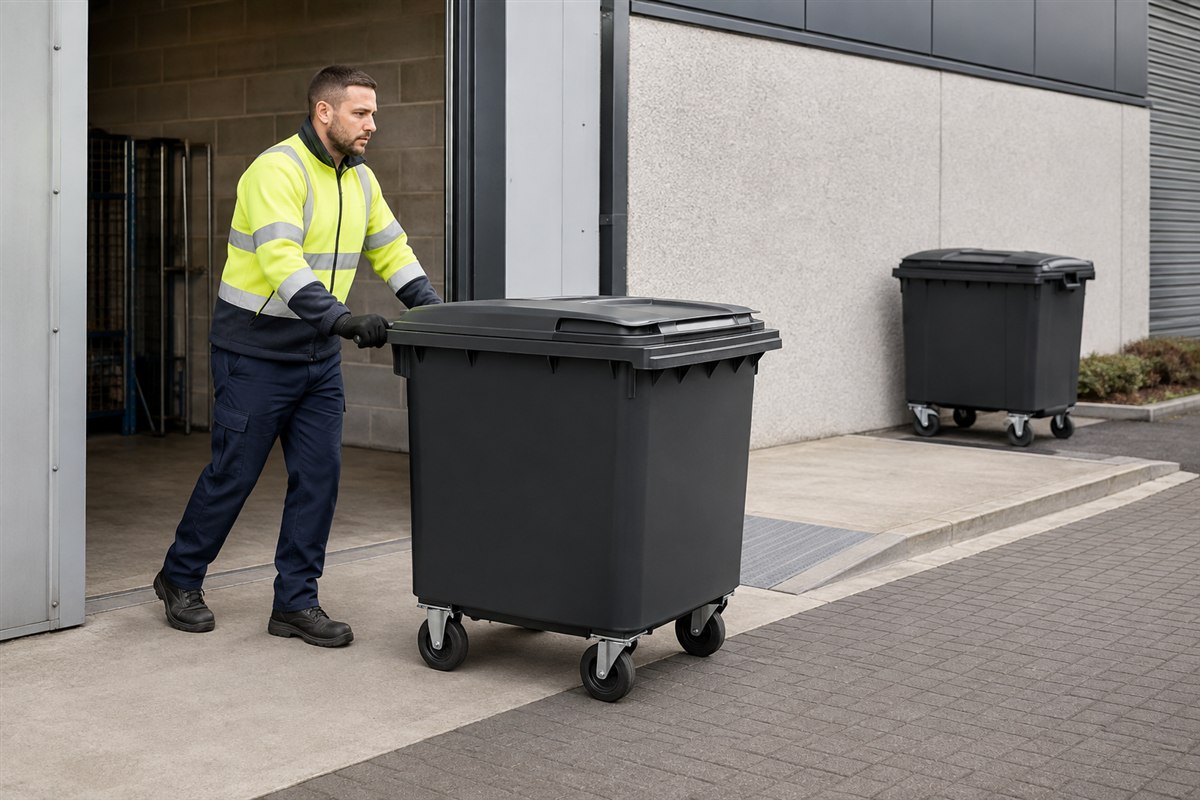
Check whether the correct label is visible on approach; the aperture suggests the intended item; the lid, flap or lock works with the expected waste; cleaning does not detach or obscure the label; and the bin remains identifiable when grouped with other streams. Also check the separate physical interfaces: wheels and handles on the push route , and the receiver or trunnions against the collection vehicle .
Record what users actually confuse, but do not turn one brief demonstration into proof that contamination will fall. If the wrong item repeatedly reaches a bin, investigate the stream instruction, placement, number of bins, wording, aperture and nearby competing bins together.
Inspect deliveries against the approved combination
Receiving staff need more than a purchase-order description such as “green bin with recycling sticker.” Give them the approved sample or controlled references and a short check:
- Confirm the model, capacity and revision.
- Compare body and lid separately with the approved references under suitable light.
- Operate the aperture, flap, lid and lock.
- Verify every artwork revision, language, icon and colour.
- Measure label and aperture positions where placement affects use.
- Check that labels are secure and surfaces remain cleanable.
- Quarantine mixed, damaged, unreadable or unapproved configurations.
Keep collection-day access and unusual-content controls in the separate collection-day safety check . A correct colour does not make an unsafe storage or vehicle interface acceptable.
Reapprove after a service or product change
Repeat the decision when the collector changes accepted materials, a site adds a new waste stream, artwork changes, a different bin model or lid is introduced, the aperture is modified, or users consistently misunderstand the existing arrangement. A colour-and-label decision belongs to the recorded service and configuration, not to every site forever.
For a model discussion, first obtain the collector’s current specification, then send the required capacity, body and lid colour references, aperture or lock, artwork, quantity, site conditions and destination through the product selection form . Baoheng can review colour and printing options for the selected product and order. Exact availability, cost, quantity and lead time still require confirmation.
The purchasing boundary is simple: the service defines the stream; the approved bin configuration makes that decision visible and usable.