Buying Guides
Live-Poultry Transport Containers: Approve the Route, Not a Bird Count
Accept a reusable poultry transport crate or tray against the actual birds, loading system, stack, vehicle, weather, journey, cleaning route and damage controls.
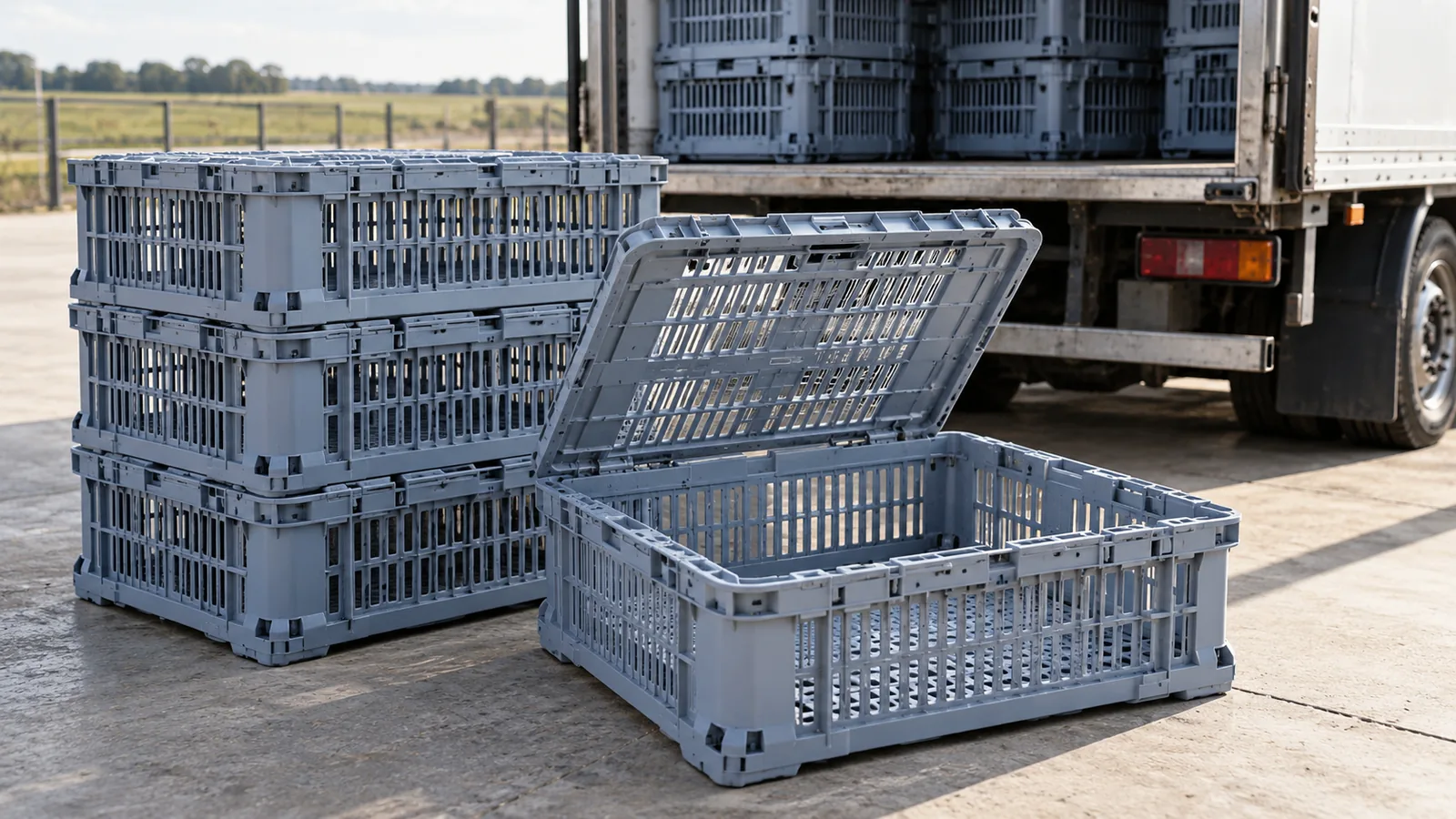
A live-bird container cannot be approved from its nominal capacity or the size of its ventilation openings alone. The result depends on the species and category of bird, live weight and condition, catching and loading method, container opening, stack, vehicle airflow, weather, waiting time, journey and unloading route.
Approve the recorded bird–container–vehicle–route combination, not a universal “birds per crate” claim. A supplier can confirm features and documents for an exact model. The responsible farm, integrator, processor, carrier, animal-welfare team and competent authority must decide the applicable rule and approve the route.
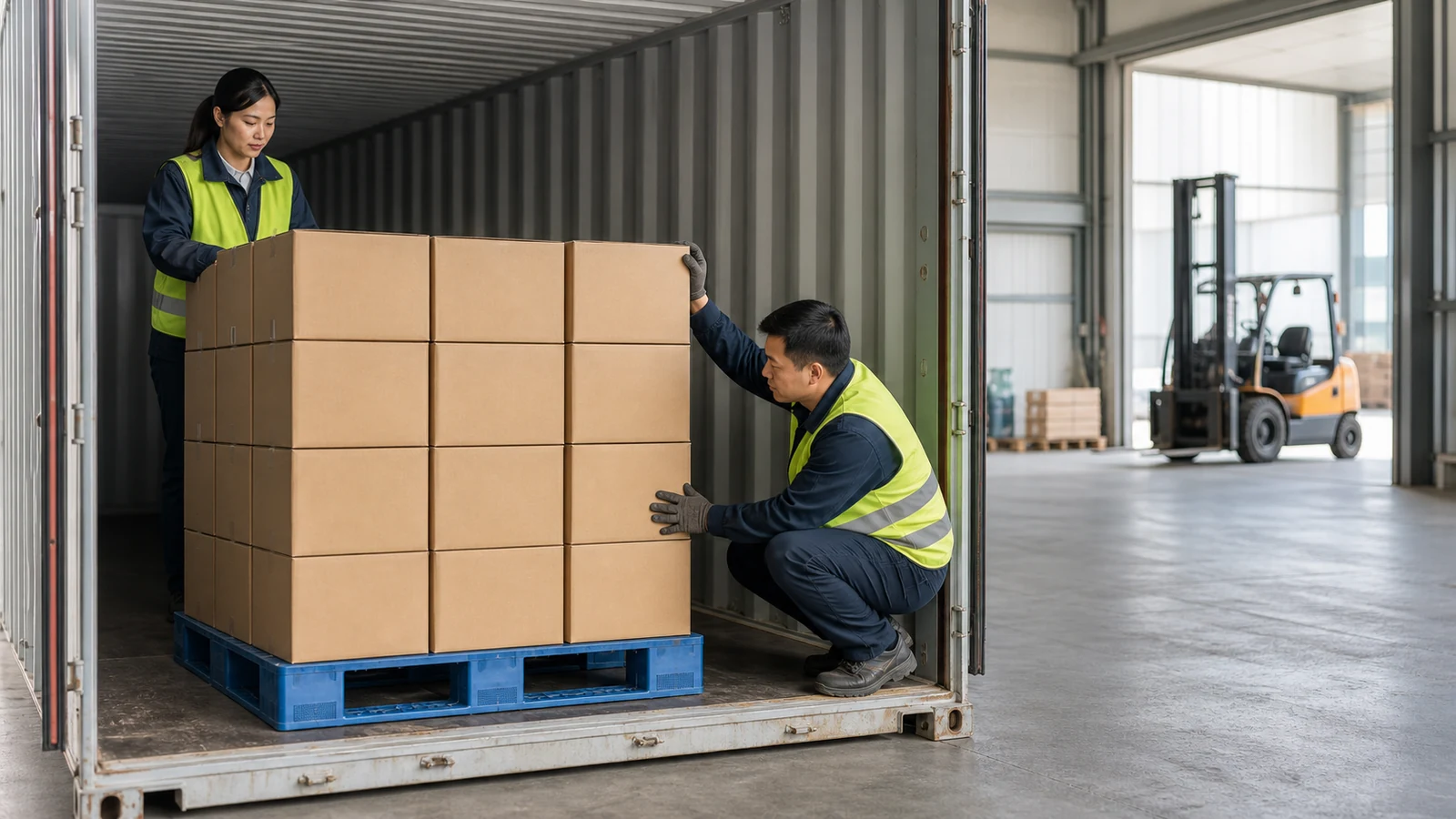
The cover is an AI-generated application illustration. It is not a photograph of a Baoheng model, customer site or approved transport route.
Start with the governing route
Record the origin, destination, jurisdiction, journey stages and responsible operator before comparing containers. For an EU route, Council Regulation (EC) No 1/2005 links transport and loading equipment with injury prevention, sufficient floor area and height, weather protection, ventilation and journey conditions. Its poultry space allowances vary by bird category and live weight, and the regulation says adjustments may be needed according to physical condition, weather and likely journey time. That is a route decision—not a supplier’s universal capacity table.
The WOAH Terrestrial Code, Chapter 7.3 is international animal-welfare guidance. It connects container design with species, size and weight and addresses injury, ventilation, weather, cleanability, waste containment, route planning and emergencies. It does not certify a product or replace local law.
If the destination, bird category or controlling rule is unknown, leave it open in the request for quotation. Do not fill the gap with a familiar stocking number.
Freeze the exact system before the trial
Compare suppliers against one controlled record. Mark unsupported fields “unknown” and assign an owner to close them.
| Record area | Freeze before trial | Why it matters |
|---|---|---|
| Birds | Species, production category, live-weight range, condition, feathering and exclusions | Space, headroom, grip, heat and injury risks change with the actual birds |
| Container | Supplier, exact model/drawing/revision, external and internal dimensions, tare mass, openings, door or lid, floor and edges | Similar-looking containers can load and release differently |
| Load | Birds per container as a trial input, loading method, operator, opening orientation and stop conditions | A count is only meaningful for the defined birds and route |
| Stack and module | Containers per module, rows, stack height, location in vehicle, restraint and damaged-container rule | Stacking can block airflow, change stability or hide defects |
| Vehicle and journey | Vehicle/body, airflow system, sensor locations, loading order, stops, distance, duration and seasonal condition | Moving and stationary conditions may be very different |
| Hygiene and return | Dirty/clean segregation, cleaning method, drainage, drying, inspection and release owner | A cleanable design still needs a controlled operating route |
Keep the exact sample identity in the purchase specification and incoming inspection. A trial result does not automatically transfer to another mould, revision, vehicle, bird category, season or loading method.
Inspect the loading and release interfaces
Use representative birds only under a competent, authorized welfare procedure. Before a live trial, conduct an empty-container and handling review. Check:
- usable opening dimensions and whether wings, legs, heads or hands can meet pinch, sharp or escape points;
- internal height and floor condition for the actual bird category;
- how doors or lids close, latch, reopen and remain secured through stacking and movement;
- whether loading orientation remains visible after containers enter a module or vehicle;
- manual and mechanical handling points, including any tilt, impact or drop likely in normal work;
- unloading access and the ability to release birds without forcing them against projections;
- a clear rejection rule for cracks, distortion, missing parts, rough repairs, insecure closures or contaminated surfaces.
The UK Animal Welfare Committee opinion on poultry catching, carrying and loading highlights system-level risks involving openings, floors, stacking, ventilation, heat and humidity, cleaning, leakage, damage and loading method. Its scope is Great Britain and expert advice; it also cautions that no single method is best in every circumstance.
Verify airflow in the assembled load
Vent area on one empty container does not prove ventilation in a full vehicle. Map the intended stack and inspect which openings are blocked by adjacent containers, dividers, vehicle walls, covers, labels or restraint. Include locations most likely to receive weak airflow.
Define checks for loading, waiting, moving, planned stops, delay and arrival. Record ambient conditions, vehicle state, observations or approved sensor readings, and the person authorized to stop or reduce loading. The responsible welfare and transport team—not the container supplier—sets acceptable conditions and emergency actions.
Do not market one successful trial as a safe maximum density or safe temperature. Repeat or narrow the approval when bird type, weather, route, vehicle configuration or dwell time materially changes.
Close the cleaning and damage loop
Before purchase, identify the soil and contamination hazards, cleaning location and responsible hygiene owner. Confirm the exact-model material and care information the supplier can support, then have the operator define chemical, concentration, water temperature, contact time, mechanical action, rinse, drainage, drying and release criteria.
Inspect floors, corners, ribs, closures, hinges, joints, stacking contacts and identification areas. Keep dirty, cleaned, held and released containers distinguishable. A container that is visually clean but cracked, distorted, rough, insecure or unable to drain and dry should follow the site’s hold or rejection process.
Baoheng’s confirmed supply range includes poultry transport products. Exact model, material, dimensions, loading features, documentation, sample terms, quantity, cost and lead time require confirmation for the order. No public certification, third-party test report, food-contact approval, bird capacity or route performance is claimed by this guide.
Copy this route-acceptance record
Route and rule: [origin, destination, authority/customer rule, version, journey stages]
Birds: [species/category, live-weight range, condition, exclusions]
Container: [supplier, model/drawing/revision, dimensions, tare, opening, floor, closure]
Loading: [method, trained operator, trial count, orientation, stop conditions]
Module/stack: [containers per module, rows, height, restraint, vehicle locations]
Airflow and weather: [system, blocked-opening review, checks/sensors, stationary and moving conditions]
Journey: [distance, duration, stops, delay plan, emergency contacts without personal data]
Unloading: [opening sequence, release method, observations, responsible person]
Cleaning: [soil, method, chemical approval, drainage, drying, release]
Damage rule: [inspect, hold, repair/reject, record owner]
Evidence: [photos/records, no personal information, deviations, corrective action]
Decision: [approved combination, limits, unresolved items, approver, date]
Treat any unresolved welfare, legal, airflow, cleaning or exact-model question as an open condition—not as a passed item.
What to send for a useful model discussion
Send the bird category and live-weight range, target jurisdiction, loading method, required internal and external dimensions, proposed trial count, stack/module layout, vehicle interface, journey and weather range, cleaning route, expected quantity and delivery destination. See Baoheng’s poultry and egg handling application and turnover crate range for context.
Request an exact-model discussion and sample route . A paid sample can be discussed after product and order conditions are confirmed; it does not replace the buyer’s route approval.