Buying Guides
Egg Tray Pallet Systems: A Sample Acceptance Record Before Bulk Purchase
Validate an egg-tray pallet system by recording the egg, tray, stack, labels, cleaning ownership and real handling route before a bulk order.
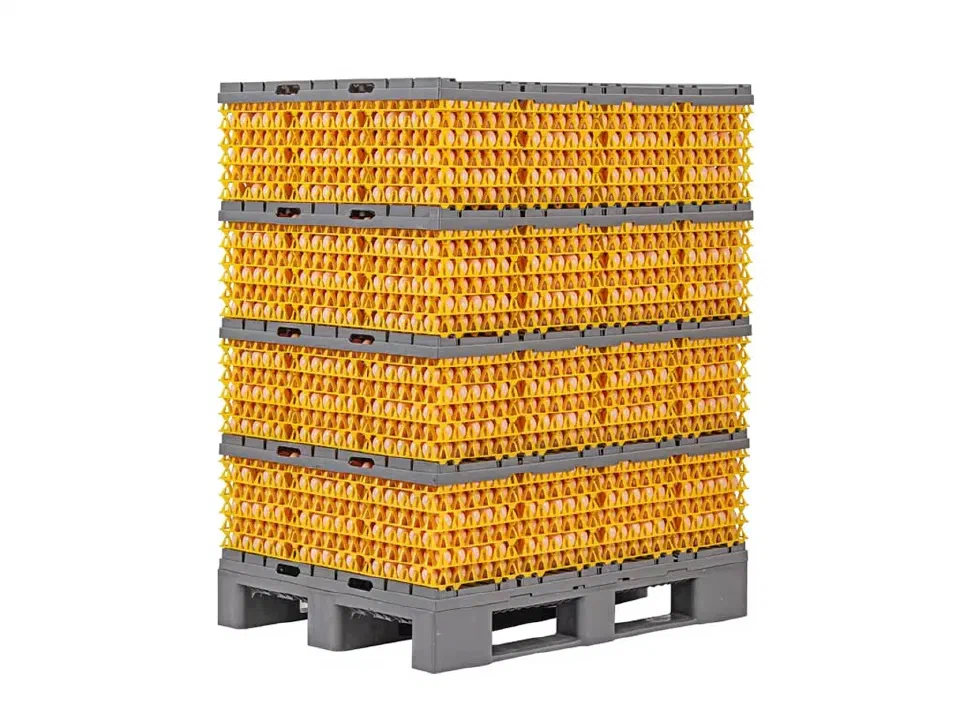
An egg-tray pallet system is not one item. It is a working stack made from the eggs, tray pockets, tray orientation, layers, dividers, restraint, base pallet, labels and handling route. A pallet can fit the floor and still fail because the tray pocket is wrong, a divider moves, the stack leans, a label disappears during washing or the vehicle route creates unacceptable damage.
Before a bulk order, freeze one representative system and run it through the real route. Approve the recorded combination, not a generic statement that a tray or pallet is “compatible.”
This guide is a procurement and sample-trial framework. It does not certify food contact, hygiene, legal compliance, a safe stack height or a breakage rate. The responsible producer, packing centre, food-safety team, carrier and market operator must set and approve their own requirements.
Start with the egg and market, not the pallet
Identify the egg species, destination market, quality or weight grade, dimensional range and condition before choosing the tray. Rules are not interchangeable between markets.
For example, the current consolidated EU egg marketing regulation applies to hen eggs within its stated scope. It defines Class A weight grades and requires specified identification on transport packaging. Those rules can shape an EU route, but they do not automatically apply to duck, quail, hatching or industrial eggs, or to another market.
The USDA Egg Grading Manual uses U.S. quality and weight classes and describes checks at individual, carton and case levels. Treat that as a market-specific reference, not a universal tray specification.
Record the controlling customer specification or regulation. If it is unknown, keep it open; do not convert a familiar grade name into a dimensional assumption.
Freeze the exact sample system
Use the same identity fields for every supplier. Where a fact is unavailable, write “unknown” and assign who must confirm it.
| Record area | Freeze before the trial | Why it matters |
|---|---|---|
| Eggs | Species, market grade or dimensional range, condition and representative variation | Pocket contact and damage risk can change with the actual egg |
| Tray | Supplier, model, mould or revision, material declaration, pocket count, external dimensions and orientation marks | A similar-looking tray may not stack or locate in the same way |
| Stack | Trays per layer, layers, divider model and position, total height and restraint | Each interface affects alignment, lean and movement |
| Base | Pallet model and revision, footprint, deck contact and fork direction | The pallet supports the stack but does not approve it |
| Route | Fill point, storage, lifting, vehicle, distance, unloading, empty return and environmental transitions | The trial must reproduce the interfaces that can change the result |
| Ownership | Supplier declarations, buyer acceptance owner and unresolved approvals | Product facts, route results and regulatory decisions are different evidence layers |
Photograph or otherwise identify the approved sample without exposing personal data. Keep the revision visible in the purchase specification and incoming inspection. A passed sample cannot control production if the tray, divider or pallet changes without notice.
Separate physical fit from transport identification
Labels do not make a stack stable, but a stable stack can still be unusable when required batch information is lost.
For an EU route within Regulation (EU) 2023/2465, transport packaging identification includes the producer’s name and address, producer code, number and/or weight of eggs, laying date or period, and dispatch date. The information remains until the eggs are removed for immediate grading, marking, packing or processing. Other markets or customers may require different fields.
During the sample trial, record:
- which surface carries the transport identifier;
- who creates, applies, checks and removes it;
- whether the label remains readable after stacking, restraint, moisture and cleaning;
- whether it blocks a vent, contact point, inspection area or wash path;
- how tray, stack and batch identity stay linked when a load is split.
Do not market a label area as regulatory compliance. The responsible operator decides the applicable rule and label content.
Assign cleaning and release ownership
The Codex Code of Hygienic Practice for Eggs and Egg Products says transport should minimize breakage, damage and contamination and that egg-hauling vehicles should permit easy and thorough cleaning. It does not approve a chemical, cycle or reusable plastic carrier.
Before the trial, the buyer’s hygiene owner should define:
- soil and contamination hazards to remove;
- whether trays, dividers and pallet share one cleaning route;
- chemical, concentration, water temperature, contact time and mechanical action;
- rinse, drainage and dry-release criteria;
- inspection points for pockets, ribs, joints, label areas and damaged surfaces;
- segregation of dirty, cleaned, held and released carriers.
Ask the supplier only for model-specific material and care information it can support. Chemical compatibility, food-contact documentation and the buyer’s release decision remain separate. Baoheng currently has no public food-contact certification or third-party test report confirmed for this system.
Run the representative route
Write stop conditions before starting. Use normal operators and equipment under controlled supervision, and do not continue after an unsafe or contamination-related observation.
- Inspect the empty system. Confirm identity, cleanliness, dry condition, cracks, deformation, sharp damage, locking or locating features and readable marks.
- Load representative eggs. Use the recorded grade or dimensional range and normal orientation. Note rocking, excessive grip, loose pockets or damaging contact.
- Build the specified stack. Add the approved tray count, dividers and restraint. Measure total height and observe alignment, lean and unsupported edges.
- Move through every interface. Include floor staging, lift entry, acceleration, braking, turns, vibration, vehicle restraint, unloading and any cold, wet or wash transition that belongs to the real route.
- Inspect after each critical handoff. Record cracked or displaced eggs, tray movement, divider shift, pallet deflection, contact damage, label loss and operator correction.
- Clean and release where applicable. Run the buyer-approved process, then inspect drainage, dryness, residue, odour, trapped soil, surface damage and mark readability.
- Decide the bounded result. Approve, revise or reject the named combination and list unresolved conditions. Do not generalize it to another egg, tray, stack, pallet or route.
Copyable sample-acceptance record
Project / destination market:
Applicable customer or legal specification:
Egg species and grade / dimensional range:

Tray supplier, model and revision:
Pocket count and orientation:
Tray external dimensions and declared material:

Trays per layer / number of layers:
Divider model and locations:
Restraint method:
Completed stack height and mass:

Base pallet model and revision:
Deck contact and fork direction:

Route tested:
Vehicle / handling equipment:
Temperature, moisture and dwell conditions:

Required transport identifier and location:
Label retained and readable: yes / no / not tested

Cleaning owner and approved process:
Dry-release criteria met: yes / no / not applicable

Egg damage observations:
Tray / divider movement:
Stack lean or loss of engagement:
Pallet deformation or damage:
Operator intervention required:

Decision: approve / revise and retest / reject / held for evidence
Approved scope and limits:
Unresolved item, owner and due condition:
Change triggers requiring revalidation:
Decision owner and date:
Use counts and inspection methods chosen by the responsible buyer. This record deliberately supplies no universal acceptance percentage.
Revalidate changes, not just failures
Repeat the relevant checks when the egg grade or size range, tray mould or revision, pallet, divider, number of layers, restraint, vehicle, fork direction, cleaning process, label, temperature or route changes. Also stop and review after unexplained damage, leaning, jamming, retained soil or repeated operator correction.
A clean trial does not guarantee every future load. It gives the buyer a controlled baseline for the named system and a practical way to detect unapproved changes.
Prepare a quote-ready request
Review the existing egg tray transport pallet system and poultry and egg handling application pages, then send the egg format, tray drawing or sample, stack pattern, route, cleaning method, quantity and destination port. Baoheng can help screen an available model direction and arrange a paid sample after the product and order conditions are confirmed.
Use the inquiry form for a formal request. Material, dimensions, performance, evidence, sample cost and delivery timing remain model- and order-specific. The acceptance record above can be used before contacting us.
Decision boundary
Approve one traceable combination: egg, tray, stack, divider, restraint, pallet, label, cleaning method and route. If one of those is unknown or changes, the system decision is not complete—even when every component looks acceptable by itself.