
Buying Guides
Plastic Pallets for Beverage Four-Way Shuttle Warehouses
Choose plastic pallets for a beverage four-way shuttle warehouse by checking the unit load, rack support, pallet underside, storage conditions and a sample trial.
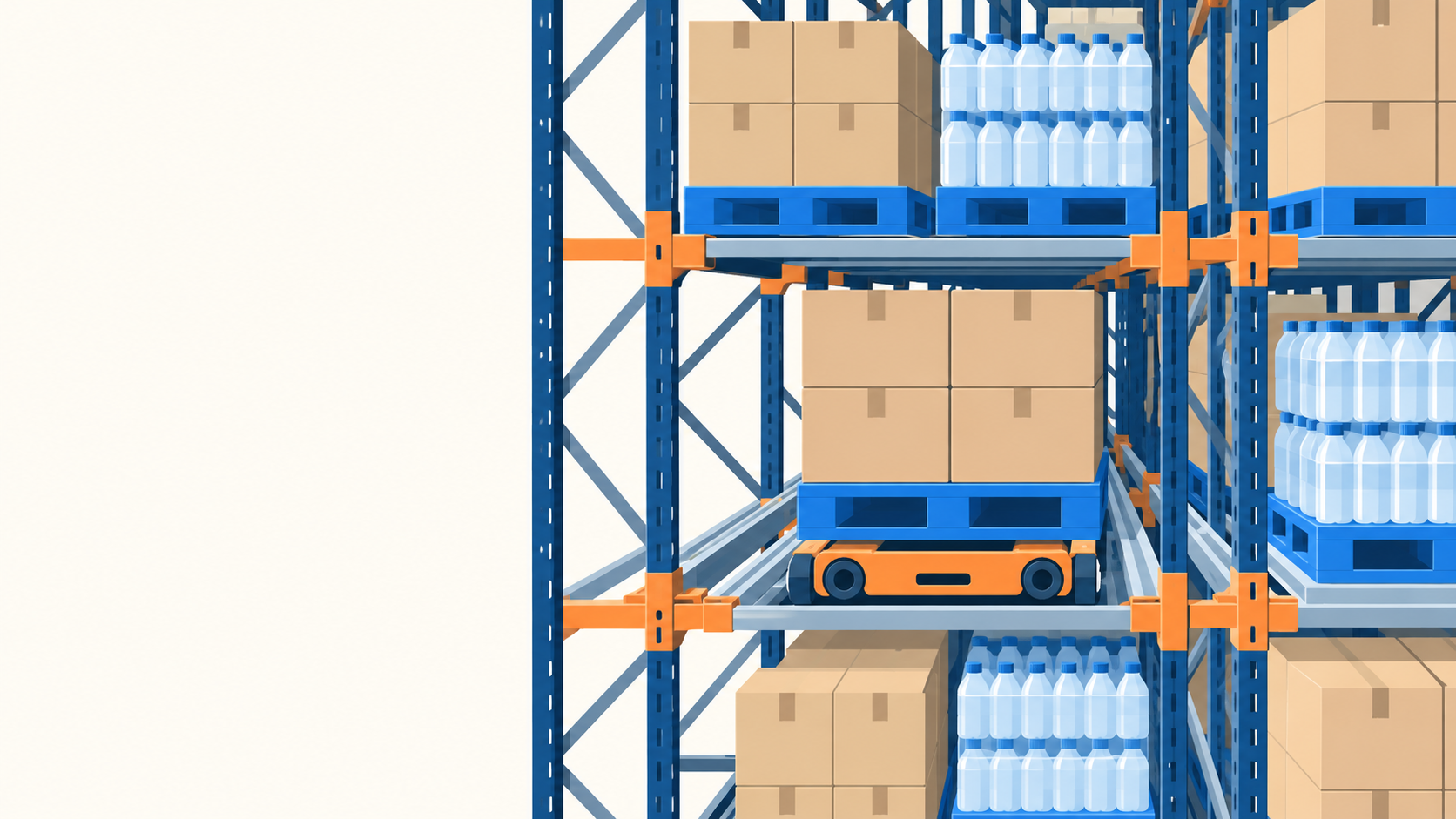
When finished beverages enter a four-way shuttle warehouse, the plastic pallet passes through infeed conveyors, lift transfers, shuttle handling and rack storage. Dimensions and a stated load rating alone cannot establish suitability. The pallet’s underside must work with the equipment, and its support in the storage location must be understood.
First establish the complete unit load. Then ask the warehouse system supplier to confirm the pallet interface requirements and rack support arrangement. Baoheng can use those details to narrow down candidate pallets and arrange a sample trial.
1. Identify the complete unit load
Finished beverages may be packed in cartons or shrink-wrapped packs, with or without interlayer sheets. Check the current stacking plan: packs per layer, number of layers, whether the load overhangs the pallet, and the approximate overall height and maximum weight. Include the pallet and any packaging that travels with it in the total unit weight.
A four-way shuttle’s rated capacity describes what the equipment can move. It is not the load capacity of a particular plastic pallet. Assess the pallet against the actual load distribution, support points, operating temperature and storage time.
2. Check how the storage location supports the pallet
Which parts of the pallet underside rest on the supports? What are the support spacing and contact width? Does the pallet enter lengthwise or crosswise? These relationships are more useful than a broad claim that a pallet is “rackable.”
A loaded pallet may deflect downward. In automated storage, check its loaded condition and whether enough clearance remains for shuttle travel and retrieval. The system supplier’s support drawing, pallet orientation and permitted deflection are key references. If a product’s load data uses different support conditions, assess that difference separately.
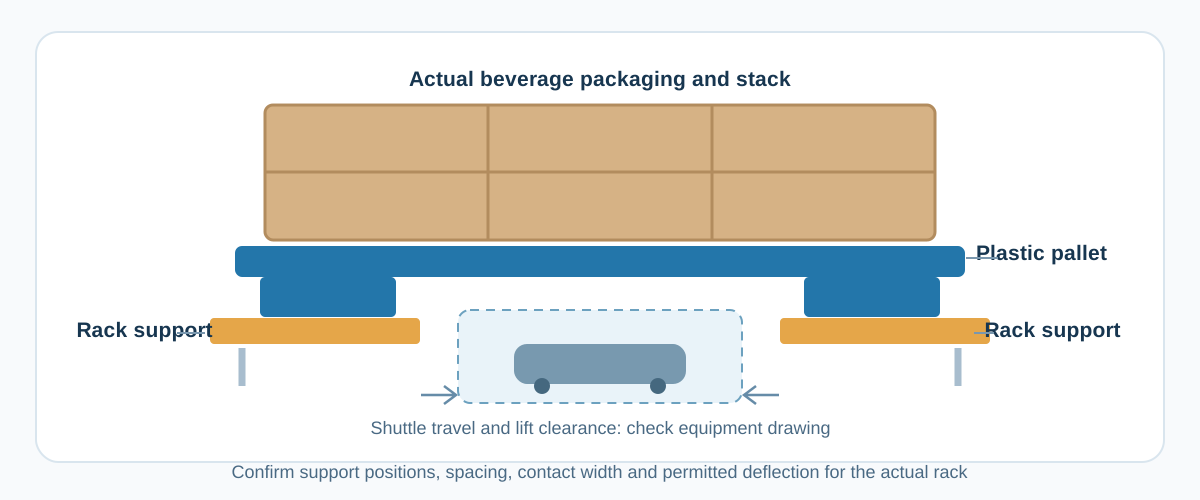
Figure 1. Principle of rack support and clearance beneath the pallet; this is not a project drawing. Confirm support positions, spacing and permitted deflection with the system supplier.
3. Check the underside interface of three-runner and grid-base pallets
The Chinese terms “川” and “田” describe broad underside layouts: three runners and a grid-like base. Neither label proves compatibility with a four-way shuttle. Runner, foot and opening positions can vary within each type.
For a candidate product, send its dimensioned drawing and underside drawing to the system supplier. Confirm the entry orientation; space for shuttle entry and lifting; where the equipment and rack contact the pallet; and whether its structure meets positioning and detection needs. An equipment positioning tolerance is not the pallet’s manufacturing tolerance.
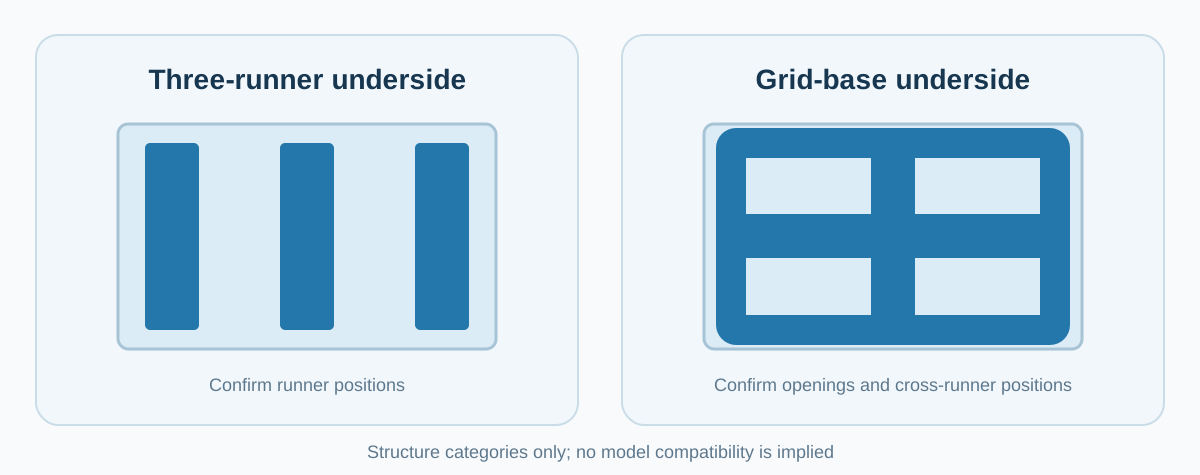
Figure 2. Simplified underside categories. Check the actual runners, feet, openings and dimensions against the product and its drawings.
4. Consider storage time, temperature and reinforcement together
Finished beverages may remain in a storage location for some time. Tell the pallet supplier about cold areas or circulation between ambient and cold conditions. Short-term data at room temperature cannot establish performance during long storage or at low temperature.
Whether steel-tube reinforcement is needed depends on the candidate pallet, rack support and actual load. Reinforcement alone does not establish suitability. If a reinforced pallet is selected, keep the tube layout, specification and product configuration consistent between the trial sample and later purchases.
5. Run a sample through the full infeed and retrieval route
Test a candidate pallet at the steps that exist in the project: infeed conveying, lift transfer, shuttle storage and retrieval, rack storage and outbound handling. Use the real packaging and stacking plan, and agree in advance on unit weight, temperature, observations and acceptance criteria. Confirm equipment operation and sustained storage performance separately.
Baoheng can provide samples; the model and delivery arrangements can be discussed for the project. After validation, retain the approved pallet drawings, product configuration and acceptance conditions for purchasing. If existing pallets will also be used, inspect them for damage, visible deformation and missing underside parts. A new sample’s result cannot establish the condition of old pallets.
Start with the information you already have
For a new beverage warehouse, a retrofit or replacement pallets in an existing four-way shuttle system, tell Baoheng the approximate pallet size, beverage packaging, unit weight and any special conditions such as cold storage. Photos of the current pallet and its underside, or a sample, can help narrow the options.
The next step is to compare those options with the system supplier’s pallet interface requirements and rack support drawing, then decide which products merit a sample trial. Final suitability depends on the specific product and project validation.